

Maddy summaryHJRES 88 is a resolution seeking to block a Department of Education rule that would have improved income-driven repayment options for federal student loan borrowers. The rule, published in the Federal Register on July 10, 2023, targeted the William D. Ford Direct Loan Program and the Federal Family Education Loan (FFEL) Program. This resolution uses the Congressional Review Act process to disapprove the rule, preventing it from taking effect and preserving the current repayment structure. If enacted, it would stop the proposed changes to repayment terms without altering existing loan policies.
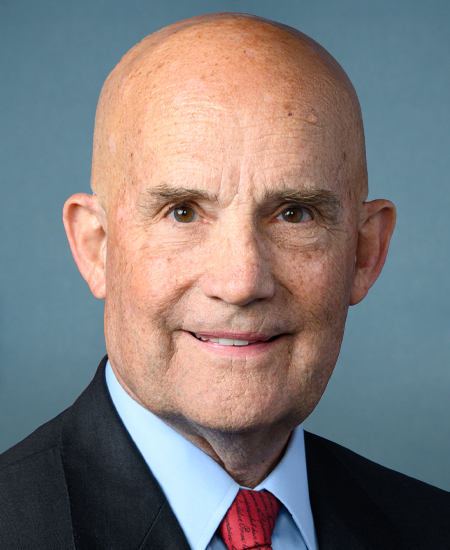
Rep. Keith Self
Sponsored bills
This resolution disapproves of the United Nations' recommendations to reduce meat consumption in their global food systems' road map and opposes the use of federal resources to reduce meat consumption.
Maddy summaryHR 6477 amends immigration law to tighten border inspection procedures and reform parole eligibility. It restricts parole for applicants deemed inadmissible under specific sections, mandates return to contiguous countries (like Mexico) for certain land-border arrivals pending processing, and limits parole to narrowly defined urgent humanitarian cases (e.g., critical medical needs, funerals) or significant public benefits (e.g., law enforcement cooperation). The bill also requires states to sue the federal government if detention/return rules are violated and mandates annual reporting on parole use. These changes directly affect applicants arriving at land borders, particularly those seeking parole for medical, family, or law enforcement reasons.
Maddy summaryHR 4468, the Choice in Automobile Retail Sales Act of 2023, blocks the Environmental Protection Agency (EPA) from finalizing or enforcing a specific proposed rule setting emissions standards for 2027+ light-duty vehicles. It amends the Clean Air Act to prevent future EPA regulations from mandating specific vehicle technologies or limiting the availability of new vehicles based on engine type (e.g., gasoline vs. electric). The bill directly affects EPA rulemaking authority and automakers' compliance with emissions standards, ensuring new vehicle options remain diverse without technology mandates. This is a procedural change to federal emissions regulations, not a direct consumer or industry mandate.
Maddy summaryThis bill requires the President to block transactions involving "covered Iranian funds" processed by foreign or international financial institutions. These funds refer specifically to money transferred from South Korea to Qatar under certain Iran sanctions waivers. The law imposes sanctions under existing U.S. authorities to block all U.S.-related transactions with institutions handling these funds. Sanctions can be lifted if Iran stops supporting terrorism and dismantles its weapons programs, as certified by the President. The bill directly affects global financial institutions processing these specific Iranian-linked transfers.
Maddy summaryHRES 905 is a House resolution commemorating the 200th anniversary of the Monroe Doctrine, first articulated by President James Monroe in 1823. The resolution formally recognizes the doctrine's historical significance in establishing U.S. policy against foreign colonization in the Western Hemisphere and its enduring influence on U.S. foreign policy. It resolves that the House will "commemorate" the anniversary, "reassert" the U.S. position against foreign malign influence threatening Western Hemisphere democracies, and "recognize" the doctrine's principles as a foundational element of U.S. foreign policy. This is a purely ceremonial resolution with no new policy or funding implications.
Maddy summaryHRES 899 is a resolution recognizing the Suicide Awareness and Remembrance (SAR) Flag as a national symbol to honor military and veterans who died by suicide and promote mental health awareness. It designates the SAR Flag - created by veteran Kevin W. Hertell - as the official emblem for raising public awareness about military and veteran suicide, which affects over 20 veterans daily. The resolution requires the SAR Flag to be displayed year-round alongside U.S. and POW/MIA flags at all federal buildings. This procedural measure aims to reduce stigma around mental health care for service members and veterans without creating new laws or funding.
Maddy summaryHR 6504, the Protect American Gun Exporters Act, blocks the Department of Commerce from implementing a pause on new export licenses for specific firearm exports (items under Commerce Control List numbers 0A501, 0A502, 0A504, and 0A505). The bill directly affects U.S. gun exporters by preventing the Commerce Secretary from enforcing the October 2023 pause or similar restrictions on these exports. Key provisions prohibit the Secretary from taking any action to carry out the pause unless it follows standard regulatory processes, including a required impact analysis and compliance with the Administrative Procedure Act and Congressional Review Act. This bill does not create new export rules but stops the existing pause on certain firearm exports.
Maddy summaryHRES 683 is a non-binding resolution expressing the House's support for diplomatic efforts to encourage Mexico to fulfill annual water delivery commitments under the 1944 U.S.-Mexico treaty. The treaty requires Mexico to deliver an average of 350,000 acre-feet of water annually (over a 5-year cycle) to the U.S., but Mexico has historically delayed deliveries until the cycle ends. The resolution specifically acknowledges water shortages faced by South Texas farmers and urges Mexico to meet its annual obligations, while supporting negotiations for more reliable water agreements. It does not create new legal requirements but formally encourages diplomatic action to address the delivery delays.
Maddy summaryThe SCREEN Act requires online platforms that host pornographic content for profit to implement age verification technology to block minors from accessing such material. It applies to platforms operating in the U.S. market or interstate commerce that create, host, or distribute content deemed "harmful to minors" (including pornography). Platforms must publicly disclose their verification methods, secure user data collected for age checks, and prevent minors from accessing prohibited content. The Federal Trade Commission will enforce these requirements through audits, treating violations as unfair business practices under existing law.