

Maddy summaryThis bill requires U.S. agencies maintaining federal sanctions lists to notify each other within 30 days when an individual or entity is added to one list, then review whether they should be added to other lists within 90 days. It applies to six specific sanctions lists, including Treasury’s blocked persons list, Commerce’s Entity List, and Defense’s military end-user list. Agencies must report to Congress within one year on how they implemented the coordination process and whether it led to additional sanctions. The goal is to prevent gaps where sanctioned parties could evade restrictions by operating outside a single list’s scope.
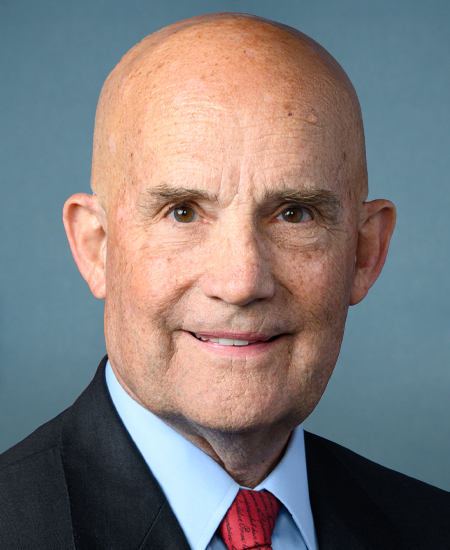
Rep. Keith Self
Sponsored bills
Maddy summaryThis bill denies immigration benefits to individuals who participated in, supported, or facilitated Hamas attacks against Israel starting October 7, 2023. It amends immigration law to make such individuals inadmissible (barred from entering the U.S.) and ineligible for any immigration relief, including asylum or other protections. The law requires annual reports from the Homeland Security Secretary tracking how many people are denied entry or removed under these provisions. It directly affects non-U.S. nationals involved in Hamas-related violence against Israel since the October 7, 2023, attacks.
Maddy summaryHCONRES 58 is a symbolic congressional resolution denouncing socialism in all its forms. It does not create new laws or affect any policies, as it is a non-binding statement of opinion. The resolution cites historical events and quotes from Founding Fathers to argue that socialism leads to authoritarianism and economic harm, referencing examples like the Soviet Union and Venezuela. It formally "denounces" socialism and opposes implementing socialist policies in the U.S., but has no legal effect on citizens or government actions. This is a procedural resolution, not a policy measure.
Maddy summaryHRES 912 is a ceremonial resolution recognizing the 75th anniversary of the Battle of the Chosin Reservoir (November 27-December 13, 1950) during the Korean War. It commemorates the military campaign involving U.S. and UN forces, highlighting their resilience against Chinese forces amid extreme cold, the evacuation of over 105,000 troops, and the valor of units like the 1st Marine Division. The resolution urges the House to honor the sacrifices of service members who suffered over 10,500 battle casualties and 7,310 nonbattle casualties (primarily from frostbite). As a non-binding commemorative measure, it does not create new policies or affect any individuals or entities.
Maddy summaryThis bill prohibits federal funds from being used to cover any abortion-related expenses for individuals classified as "illegal aliens" under immigration law. It specifically blocks taxpayer money from paying for travel, lodging, meals, childcare, translation, doula care, or patient education services connected to abortion access. The law directly affects non-citizens who are inadmissible or deportable under specific immigration statutes (as defined in the Immigration and Nationality Act). It applies to all federal programs and funds, restricting assistance for abortion services beyond the procedure itself.
Maddy summaryThis bill would pause most visa issuances and immigration status approvals until specific conditions are met under immigration law. It prohibits access to public schools for unauthorized immigrants, restricts citizenship eligibility to children born in the U.S. with at least one U.S. citizen or permanent resident parent, and bars certain benefits like Medicare, food assistance, and student loans for most non-citizens. The bill also imposes a $100,000 fee on H-1B work visa applications starting in 2026, terminates the Optional Practical Training program for international students, and repeals the Diversity Visa lottery program. These provisions directly affect immigrants seeking visas, students, and applicants for specific immigration pathways.
Maddy summaryThis bill prohibits Medicare-approved medical residency programs from requiring residents to undergo abortion training without their voluntary consent. It specifically bans programs from making such training mandatory (requiring residents to "opt-in" rather than "opt-out") or from discriminating against residents who refuse this training or do not perform abortions. The law directly affects medical residents in Medicare-funded postgraduate training programs across the U.S., ensuring they cannot be forced into abortion-related clinical experiences or penalized for declining them.
Maddy summaryHR 6019 repeals a requirement that Senate offices must be notified when legal requests seek Senate data. Specifically, it removes Section 213 of the 2026 appropriations act, which mandated that Senate offices be informed about legal processes requesting disclosure of Senate data. This change directly affects Senate offices by eliminating a procedural notification step for legal requests involving their data. The bill makes no other policy changes, solely removing this specific administrative requirement.
Maddy summaryHR 5946, the "Stamp Out Veterans Medical Debt Act," creates a special postage stamp sold by the U.S. Postal Service to raise funds for paying veterans' outstanding medical debt. The bill requires all revenue from stamp sales to be transferred directly to the Department of Veterans Affairs (VA), where it is used to reduce unresolved copayments and coinsurance bills for veterans who received care through VA facilities or the Community Care Program. The stamp must be available by Veterans Day each year and has no sales limits, allowing public contributions to directly offset veterans' medical debt. This bill directly affects veterans with unpaid medical bills and enables the public to support debt relief through a simple postage purchase.
Maddy summaryHR 5107, the Common-Sense Law Enforcement and Accountability Now in DC Act (CLEAN DC Act), repeals D.C. Law 24-345 (the 2022 Comprehensive Policing and Justice Reform Amendment Act). This bill directly affects Washington, D.C.'s policing and justice systems by reversing all changes made under that 2022 law. The key mechanism is a straightforward repeal, restoring all prior District laws as if the 2022 reform had never been enacted. The bill does not introduce new provisions but undoes existing reforms to the District’s law enforcement framework.