

Stop COVID-19 Test Surprise Medical Bills Act of 2021 This bill modifies provisions requiring health insurance plans to cover COVID-19 (i.e., coronavirus disease 2019) diagnostic testing services at no cost, without prior authorization, and without medical management requirements. The bill specifies that a plan may not make determinations about the circumstances surrounding individuals' tests, such as why they sought testing or whether they showed symptoms of COVID-19. The bill also specifies that plans may encourage individuals to obtain tests from lower priced providers as long as such efforts do not delay, or impede access to, testing. The bill also requires the Department of Health and Human Services (HHS) to survey and report on the cash prices of testing services and the compliance of providers with the requirement to publish such prices. Additionally, HHS, jointly with the Department of the Treasury and the Department of Labor, must issue guidance clarifying the process for submitting claims for testing services.
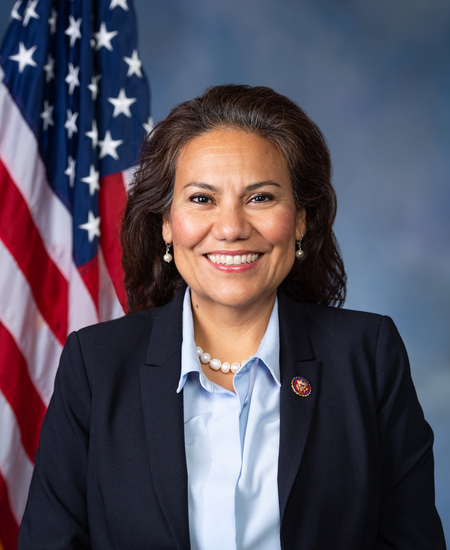
Rep. Veronica Escobar
Sponsored bills
Emergency Water is a Human Right Act This bill creates a grant program, administered by the Department of Health and Human Services, to provide funds to states and Indian tribes to assist low-income households that pay a high proportion of household income for drinking water and wastewater services. Further, any entity receiving financial assistance under this grant program must ensure that no home energy service or public water system service is or remains disconnected or interrupted during the COVID-19 (i.e., coronavirus disease 2019) public health emergency.
Ally's Act This bill requires private health insurance plans to cover certain hearing devices and systems (e.g., bone-anchored auditory implants) and related items and services. The bill also imposes limits on cost sharing.
This resolution expresses the sense that it is the federal government's duty to develop and implement a Roadmap to Freedom immigration reform plan by (1) promoting full citizenship, (2) protecting and strengthening a fair process centered on family unity, (3) promoting and preserving diversity by encouraging immigration from underrepresented countries, and (4) establishing a just and humane system to uphold immigration laws.
Global Health, Empowerment and Rights Act This bill establishes that a foreign nongovernmental organization shall not be disqualified from receiving certain U.S. international development assistance solely because the organization provides medical services using non-U.S. government funds if the medical services are legal in both the United States and the country in which they are being provided. Such foreign organizations shall not be subject to requirements relating to their use of non-U.S. funds for advocacy or lobbying activities, other than those that apply to U.S. nongovernmental organizations. Current U.S. policy prohibits various foreign assistance from going to a foreign nongovernmental organization unless it agrees to not perform or actively promote abortions.
Raise the Wage Act of 2021 This bill increases the federal minimum wage for regular employees over a 5-year period, for tipped employees, and for newly hired employees who are less than 20 years old. The bill sets forth a schedule of annual increases in the federal minimum wage for individuals with disabilities. The Department of Labor shall no longer issue special certificates for the payment of subminimum wages to such individuals after the final wage increase under this bill for such individuals takes effect. Labor shall provide, upon request, technical assistance and information to employers to (1) help them transition their practices to comply with wage increases and other requirements under this bill for individuals with disabilities, and (2) ensure continuing employment opportunities for such individuals. The bill eliminates the separate minimum wage requirements for tipped, newly hired, and disabled employees. After a specified period, these employees shall be paid the same minimum wage as regular employees. Labor must publish any increase in the minimum wage in the Federal Register and on its website 60 days before it takes effect.
Health Care Fairness for Military Families Act of 2021 This bill modifies the extension of dependent coverage under TRICARE by allowing a dependent under the age of 26 to be covered without an additional premium. Additionally, the bill authorizes such coverage of dependents without a premium regardless of whether they are eligible to enroll in an employer sponsored plan.
Border Business COVID-19 Rescue Act This bill establishes and provides funding for a program whereby the Small Business Administration (SBA) must make loans to border businesses directly impacted by COVID-19 (i.e., coronavirus disease 2019). A border business is any entity, otherwise eligible for an SBA disaster loan, that (1) has its principal office in the United States, (2) has annual revenue of up to $500,000, and (3) is located within 25 miles of the U.S. border. The SBA shall make loans of up to $500,000 to border businesses, and these loans must have a zero percent interest rate. Loan recipients must use the funds to mitigate the effects of COVID-19 on their business, including by (1) providing paid sick leave to employees unable to work because of the pandemic, (2) making rent or mortgage payments, (3) purchasing personal protective equipment, or (4) paying for logistical expenses associated with border closures due to the pandemic. Recipients may also request an advance on the loan, which shall not be less than $10,000. Further, certain recipients may be forgiven up to 100% of the loan, less any amount received under other specified COVID-19 economic relief programs.
Federal Firefighter Pay Equity Act This bill modifies certain pay calculations that are used to determine retirement and annuity benefits for federal firefighters. Specifically, the bill adjusts the method of determining the average pay of a federal firefighter by adding one-half of a firefighter's basic hourly rate multiplied by the number of overtime hours included as part of such firefighter's regular tour of duty.
Incentivizing Medicaid Expansion Act of 2021 This bill provides an enhanced federal matching rate to every state that expands Medicaid coverage for individuals who are newly eligible under the Patient Protection and Affordable Care Act, regardless of when such expansion takes place. Under current law, the enhanced Federal Medical Assistance Percentage (FMAP) is equivalent to 100% in 2014 through 2016, 95% in 2017, 94% in 2018, 93% in 2019, and 90% thereafter. The bill retains this enhanced FMAP, but bases it on a term of years rather than on specific dates. The bill applies retroactively.