

Maddy summaryHR 3965, the PEARL Act, requires U.S. Customs and Border Protection (CBP) to establish a 3-year pilot program adopting dogs from local animal shelters to train as support dogs for CBP’s existing Support Canine Program. The program must begin within 60 days of the bill’s enactment and will terminate three years after its start date. This bill directly affects CBP by creating a new mechanism to source and train support dogs from animal shelters, rather than purchasing or acquiring them through other means. The legislation focuses solely on implementing this specific pilot program with no additional policy changes.
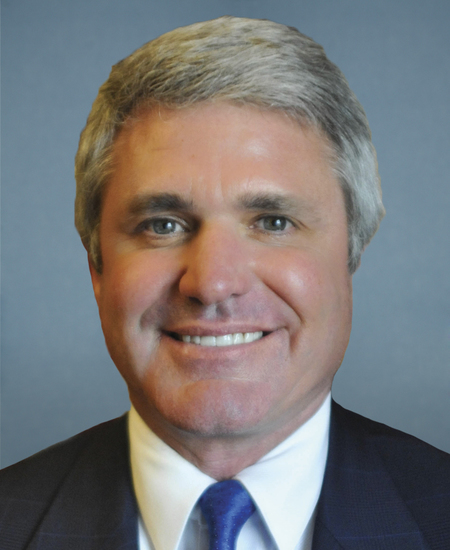
Rep. Michael T. McCaul
Sponsored bills
Maddy summaryHRES 782 is a non-binding House resolution expressing condolences to victims of the July 4, 2025, catastrophic floods in Texas, which caused at least 135 deaths (including 37 children) and widespread destruction. It honors first responders who rescued over 850 people and community heroes like camp staff who saved children, while committing the House to stand with affected Texans. The resolution does not create new laws or allocate funds - it formally mourns the loss of life, recognizes acts of courage, and urges prioritization of rebuilding infrastructure and support for vulnerable residents. This symbolic gesture was introduced by multiple Texas representatives and referred to the Transportation Committee.
Maddy summaryThis bill expands a tax credit for companies building facilities that manufacture semiconductors, semiconductor equipment, or semiconductor materials. It clarifies which materials count as qualifying (including direct materials like chip substrates and indirect materials like cleaning chemicals used in production) and extends the credit's deadline from 2026 to 2031. The changes directly affect semiconductor manufacturers investing in new facilities or equipment by making the tax credit more broadly applicable and longer-lasting.
Maddy summaryThis bill requires all new passenger vehicles manufactured for sale in the U.S. to include AM radio as standard equipment (not an optional add-on) by 2027-2028, depending on manufacturer size. It mandates that AM radio receivers must be easily accessible to drivers and allows compliance through digital AM broadcast technology. During a transition period, manufacturers must clearly label vehicles without AM radio but cannot charge extra for this feature. The bill also mandates a GAO study on AM radio's role in emergency alerts and includes a 10-year sunset provision for the rule. It preempts state laws regarding AM radio access in vehicles.
Maddy summaryHRES 863 is a symbolic House resolution honoring veterans from Texas, recognizing the state's status as home to nearly 1.6 million veterans - the highest in the U.S. - including over 203,000 women veterans and 11 House members who are veterans. The resolution does not create new laws or alter policies but expresses the House's commitment to supporting veterans through existing VA programs, particularly addressing challenges like mental health care, homelessness, and job transitions. It emphasizes Texas's significant military legacy, including over 22,000 Texan lives lost in World War II and 102 Medal of Honor recipients. As a commemorative resolution, it has no binding effect but serves as a formal acknowledgment of Texas veterans' service.
Maddy summaryThis is a procedural resolution (HRES 860), not a bill with legislative effect. It expresses the U.S. House of Representatives' support for former President Trump's 2020 decision to redesignate Nigeria as a "Country of Particular Concern" (CPC) under religious freedom laws. The resolution commends this action due to documented religious persecution in Nigeria, including violence against Christians and minority religious groups. It does not create new policy or alter U.S. assistance; it solely states congressional support for holding Nigeria accountable for religious freedom violations.
Maddy summaryHR 5838, the "Combatting the Persecution of Religious Groups in China Act," directs the U.S. government to consider Chinese officials responsible for severe religious freedom abuses - such as arbitrary detention, forced labor, or restrictions on faith - for potential sanctions under the Global Magnitsky Act. The bill requires the State Department to designate China as a "country of particular concern" for religious freedom violations under existing law and to strengthen diplomatic efforts supporting religious minorities like Christians, Muslims, and Falun Gong practitioners facing repression. It mandates U.S. diplomacy to demand the release of detained religious prisoners, ensure humane treatment including access to family and medical care, and encourage international cooperation against these abuses. The bill outlines specific U.S. policy actions but does not impose direct restrictions on China or alter Chinese domestic laws.
Maddy summaryHRES 824 is a ceremonial House resolution recognizing the religious and historical significance of Diwali, the festival of lights. It acknowledges Diwali’s meaning across Hindu, Sikh, and Jain traditions - symbolizing light over darkness, good over evil, and marking spiritual milestones like Guru Hargobind’s release and Lord Mahavira’s Nirvana. The resolution expresses respect for Indian-Americans and the global Indian diaspora, highlighting Diwali’s role in U.S. religious diversity. As a non-binding recognition, it does not create new laws, policies, or funding, but formally honors the cultural observance.
Maddy summaryThis bill adds Medicare coverage for multi-cancer early detection screening tests (blood or biological tests analyzing cell-free DNA) starting January 1, 2028. It directly affects Medicare beneficiaries aged 68 and older (starting in 2028, with the age limit increasing by 1 year annually), requiring tests to be FDA-cleared and deemed reasonable/necessary by the Secretary for early cancer detection across multiple organ sites. Payment will initially match current stool DNA test rates before 2031, then shift to a lower rate or new payment system after 2031, with limits preventing more than one test per year. The bill explicitly states it does not alter coverage for existing cancer screenings like breast, colorectal, or prostate cancer tests.
Maddy summaryThe Pray Safe Act of 2025 establishes a federal Clearinghouse within the Department of Homeland Security to provide houses of worship, faith-based organizations, and nonprofit groups at risk of threats with evidence-based safety resources. The Clearinghouse will publish online best practices for security planning, facility safety, and incident response, while listing existing federal and state grant programs to help these organizations implement these measures. It requires annual updates based on user feedback and includes a centralized resource section for contacts like Protective Security Advisors and Fusion Centers. The program expires four years after enactment and does not create new funding but coordinates existing federal and state safety resources.