

Maddy summaryHR 703, the Main Street Tax Certainty Act, makes a key tax deduction permanent for small business owners. It removes the temporary sunset provision (subsection (i)) from Section 199A of the tax code, ensuring the qualified business income deduction remains available for eligible small businesses. This change directly affects pass-through business owners (like S-corps, partnerships, and sole proprietorships) who currently qualify for this deduction. The permanent change takes effect for tax years starting after December 31, 2025.
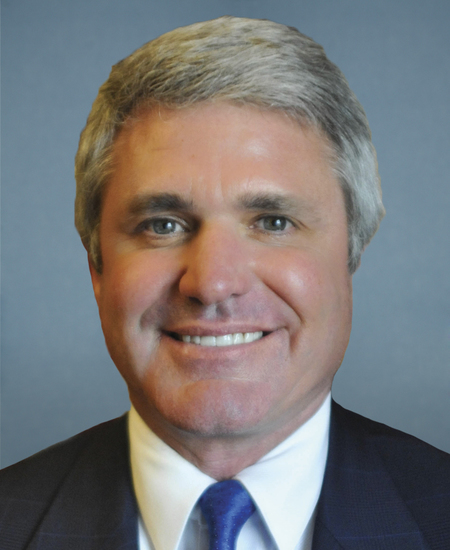
Rep. Michael T. McCaul
Sponsored bills
Maddy summaryHR 584, the "No Medicaid for Illegal Immigrants Act of 2025," would amend the Social Security Act to prohibit states from providing Medicaid coverage to non-citizens who are not lawfully admitted for permanent residence or permanently residing in the U.S. under legal status. This bill directly affects undocumented immigrants who currently qualify for Medicaid in some states. The key provision inserts a new requirement that states cannot offer Medicaid benefits (except for specific emergency care) to these individuals under any state Medicaid plan or waiver. The change would prevent federal Medicaid funding from being used for this group, effectively eliminating their eligibility.
Maddy summaryHRES 50 is a symbolic resolution, not a bill with policy changes. It declares that states bordering Mexico have the constitutional right under Article I, Section 10 to defend against "paramilitary, narco-terrorist cartels" and criminal actors at the southern border. The resolution states that states like Texas, Arizona, New Mexico, and California were "invaded" or faced "imminent danger" from these groups from 2021-2024, and that the federal government failed to protect them. It makes no new laws or allocate funds - only asserts a constitutional interpretation for states to act unilaterally. (Note: This is a procedural resolution; no concrete policy change is enacted.)
Maddy summaryHR 450, the FORCE Act, prevents the U.S. government from removing Cuba from the State Sponsors of Terrorism list. It requires the President to make a specific determination under the 1996 LIBERTAD Act before Cuba can be removed. The bill directly affects Cuba's international designation status and U.S. foreign policy actions toward the country. It does not change existing law but blocks any removal until the specified determination is made. The provision applies to both the President and the Secretary of State.
Maddy summaryHR 245, the Grant Integrity and Border Security Act, requires all applicants for federal grants to certify they have not violated U.S. immigration laws related to harboring or bringing in undocumented immigrants in the past decade. It directly affects state and local governments, nonprofits, and other entities receiving federal grants by mandating this certification and enabling agencies to withhold funds if violations are confirmed. Key provisions include requiring agencies to withhold funds based on information from Homeland Security, convictions under immigration law, or credible reports, and obligating the Attorney General to share conviction details with the Office of Management Budget within 90 days. The bill aims to prevent federal grant funds from supporting organizations that breach immigration laws, focusing on accountability for grant recipients.
Maddy summaryThis bill directs the Department of Homeland Security to implement the Migrant Protection Protocols (MPP) as outlined in a 2019 policy memo. It requires migrants seeking asylum at the U.S. border to remain in Mexico while their cases are processed, rather than being allowed to stay in the U.S. pending a hearing. The bill does not create new rules but mandates the reinstatement of a policy that was previously in effect from 2019 to 2021. This would directly affect asylum seekers arriving at the U.S.-Mexico border. The policy change would apply to all migrants covered by the existing MPP framework.
Maddy summaryThis bill renames a U.S. Postal Service facility in Fritch, Texas, to the "Chief Zeb Smith Post Office." It designates the specific location at 107 North Hoyne Avenue as the official name for all federal references, including documents, maps, and records. The bill makes no policy changes - it solely updates the facility's name for administrative purposes.
Maddy summaryThis bill renames a U.S. Postal Service facility in Corpus Christi, Texas (located at 802 North Tancahua Street) as the "Captain Robert E. 'Bob' Batterson Post Office." It affects only the official naming of this specific post office and all related federal references. The bill requires that any future federal document, map, or record referencing the location must use the new name. It does not create new policies, allocate funding, or impact postal services. This is a purely commemorative measure with no substantive policy changes.
Maddy summaryThis bill extends funding for the Gabriella Miller Kids First Pediatric Research Program at the National Institutes of Health (NIH) through 2028, replacing the previous 2014-2023 authorization. It directs NIH to administer pediatric research funds through its Division of Program Coordination (instead of the "Common Fund") and requires NIH to coordinate pediatric cancer and disease research while prioritizing projects that avoid duplicating existing NIH work. The bill also mandates a report to Congress within five years detailing funded pediatric research projects and their advancements. This directly affects NIH's pediatric research funding structure and oversight, focusing on cancer and other childhood diseases.
Maddy summaryThis bill denies federal funds to states or localities (sanctuary jurisdictions) that restrict sharing immigration status information or refuse to comply with federal detainer requests under specific circumstances. It specifically blocks funding intended for services like food, shelter, healthcare, legal aid, or transportation for undocumented immigrants. The funding cutoff begins 60 days after enactment or the next fiscal year start. An exception applies if a jurisdiction cooperates when an undocumented immigrant is a crime victim or witness.