

Puppies Assisting Wounded Servicemembers for Veterans Therapy Act or the PAWS for Veterans Therapy Act This bill implements a program and a policy related to service dog therapy for veterans. Specifically, the bill requires the Department of Veterans Affairs (VA) to implement a five-year pilot program to provide canine training to eligible veterans diagnosed with post-traumatic stress disorder as an element of a complementary and integrative health program. Eligible veterans are those who are enrolled in the VA health care system and have been recommended for participation by a qualified mental health care provider or clinical team. The VA must seek to enter agreements containing specified elements with accredited nongovernmental entities that have demonstrated ability to provide canine training. Veterans who participate in the program are authorized to adopt the dog they assisted in training if their health provider determines it is in the best interest of the veteran. The VA must establish processes to document and track the progress of participating veterans with respect to health benefits and improvements. The Government Accountability Office must brief Congress and submit a report on the program. The bill also authorizes the VA to provide service dogs to veterans with mental illnesses, regardless of whether they have a mobility impairment.
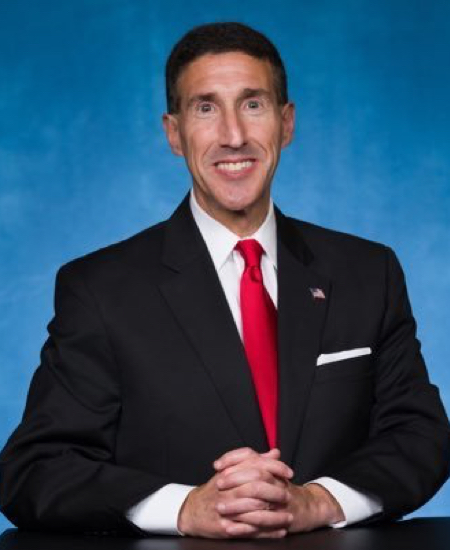
Rep. David Kustoff
Sponsored bills
This resolution condemns the President's failure to heed military and intelligence advisors about the speed and nature of the Taliban offense in Afghanistan and urges the President to commit to maintaining the evacuation operation as long as necessary to evacuate any U.S. citizen, lawful permanent resident, or Afghan partner who requests evacuation assistance .
Border Security for America Act of 2021 This bill addresses border security and related issues. For example, the bill requires the Department of Homeland Security (DHS) to resume all activities to construct a border barrier system along the U.S.-Mexico border that were underway or planned prior to January 20, 2021; requires DHS to deploy, in addition to physical barriers, tactical infrastructure and technology to achieve situational awareness and operational control of the southwest border; authorizes U.S. Customs and Border Protection (CBP) to carry out a program to acquire innovative commercial items through a competitive selection of proposals; imposes certain requirements for DHS border security technology acquisition programs that have a total expenditure of at least $300 million; requires CBP to implement certain technologies, including a program to establish a biometric exit data system at ports of entry; requires CBP to increase or maintain certain staffing levels for agents, officers, processing coordinators, and other positions; requires CBP to implement a workload staffing model for the U.S. Border Patrol and for CBP's Air and Marine Operations; and provides statutory authority through FY2026 for Operation Stonegarden, a Federal Emergency Management Agency program that provides grants to states and territories involved in certain active CBP border security operations.
Deter Obnoxious, Nefarious, and Outrageous Telephone Calls Act of 2021 or the DO NOT Call Act of 2021 This bill increases and establishes criminal penalties, which include imprisonment for up to one year, for an intentional violation of the prohibition on automated telephone marketing and messaging. In addition, a person may be imprisoned for up to three years for an aggravated violation of such prohibition if the person (1) previously has been convicted of such an offense, (2) initiates a certain high volume of such calls during specified periods of time, (3) commits the offense in the furtherance of a felony, or (4) causes losses of at least $5,000 during any one year period to one or more persons. The bill also increases from $10,000 to $20,000 the fine for intentionally transmitting misleading or inaccurate caller identification information.
UNRWA Accountability and Transparency Act This bill makes changes to U.S. foreign policy in matters concerning the United Nations Relief and Works Agency for Palestine Refugees in the Near East (UNRWA). For purposes of this policy, the bill defines Palestinian refugee as a person who (1) resided from June 1946 to May 1948 in Mandatory Palestine (a region controlled by Britain until 1948), (2) was personally displaced as a result of the 1948 Arab-Israeli conflict, and (3) has not accepted citizenship or other permanent adjustment in status in another country. The bill withholds U.S. funding for the UNRWA unless the Department of State makes certifications concerning the UNRWA's staff, partners, and funding. Specifically, the State Department must certify that neither UNRWA staff and partners nor its funding and facilities are affiliated with terrorism or engaged in the dissemination of anti-American, anti-Israel, or anti-Semitic ideologies. Additionally, the State Department must certify that the UNRWA is subject to comprehensive financial audits by an independent auditing firm and is unaffiliated with any financial institutions that the United States considers to be complicit in money laundering or terror financing. The bill also requires the State Department to implement a plan to encourage other countries to align their activities and efforts regarding the UNRWA with U.S. policy objectives, including the phase out of the UNRWA by resettling Palestinian refugees in countries other than Israel and in territories not controlled by Israel. The State Department must report to Congress on this plan.
Alexander Lofgren Veterans in Parks (VIP) Act This bill makes the America the Beautiful-National Parks and Federal Recreational Lands Pass available, without charge, to members of the Armed Forces, veterans, and Gold Star Families. The pass covers the entrance fee and standard amenity recreation fee for all federal recreational lands and waters.
Protecting the Right to Organized, Transparent Elections through a Constitutionally Trustworthy Electoral College Act (PROTECT Electoral College Act) This bill temporarily suspends federal election security grants and conditions receipt of future grants on certain state certifications. The bill also requires a study on the 2020 presidential election. Specifically, the bill suspends through July 1, 2022, election security grants. During this time period, new grants may not be awarded and previous grant funds may not be expended. Further, the bill conditions receipt of future election security grants on a state legislature certifying certain matters, including that the state's mail-in voter verification procedures are specifically established in statute. The state legislature must also certify that unless there is a statute that specifically authorizes the practice, the state (1) does not provide mail-in ballots to voters unless a voter specifically requests a ballot; and (2) does not permit third parties, except for a voter's family member or caregiver, to return a voter's completed ballot. The bill prohibits election assistance funds from being used to further an election procedure that is not expressly set forth in state statute. Additionally, the Government Accountability Office must study and report on the administration of the 2020 presidential election. The report must analyze specific matters for each state that received election security grants, including an analysis of a state's use of these grants and any subsequent actions taken by its state legislature.
Consumer Financial Protection Commission Act This bill removes the Consumer Financial Protection Bureau from the Federal Reserve System, converts the bureau into an independent commission, and modifies its leadership structure. Specifically, the bill eliminates the positions of director and deputy director and establishes a five-person commission appointed by the President and confirmed by the Senate.
This bill directs the Federal Emergency Management Agency (FEMA) to consider any period during which a property was continuously covered by either private flood insurance or flood insurance offered through the National Flood Insurance Program (NFIP) to be a period of continuous insurance coverage, including for the purposes of NFIP subsidies.
This resolution denounces socialism and opposes the implementation of socialist policies in the United States.