

Protecting America's First Responders Act of 2021 This bill makes changes to the Public Safety Officers' Benefits (PSOB) program. The PSOB program provides death, disability, and education benefits to public safety officers and survivors of public safety officers who are killed in the line of duty or permanently disabled as a result of catastrophic injuries sustained in the line of duty. Among the changes, the bill expands the public safety officers eligible for coverage under the PSOB program to include firefighters whose primary duty during an emergency response is to secure the scene or manage traffic and cadets or trainees in candidate-officer training; extends coverage under the PSOB program to certain public safety officers responding outside their jurisdiction; increases the interim benefit amount payable on a claim for death benefits and requires the interim amount to be adjusted annually for inflation; increases the benefit amount payable on a death or disability claim that has been pending for more than 365 days on the date of the final determination; allows the Department of Justice (DOJ) to use investigative tools, including subpoenas, to expedite the processing of claims and obtain information or documentation from third parties (e.g., public agencies); specifies that an injury resulting from a neurocognitive disorder qualifies as a catastrophic injury for the purposes of disability benefits; requires (currently, authorizes) DOJ to provide retroactive education benefits to qualifying children and spouses; specifies that hearing officers appointed to review claims are special government employees (i.e., employees who perform temporary duties for a limited period of time) and are authorized to conduct examinations; and allows responders to the World Trade Center or their surviving family members to file claims for death or disability benefits in certain circumstances.
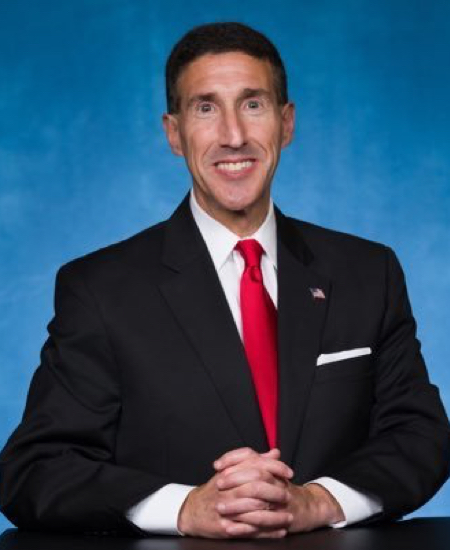
Rep. David Kustoff
Sponsored bills
Fiscal State of the Nation Resolution This concurrent resolution requires the congressional budget committees to conduct an annual joint hearing to receive a presentation from the Comptroller General regarding (1) the Government Accountability Office's audit of the financial statement of the executive branch, and (2) the financial position and condition of the federal government.
Equal Treatment of Public Servants Act of 2021 This bill phases in a new funding formula for determining benefit amounts under the windfall elimination provision (WEP). The WEP reduces Social Security retirement and disability benefits for those who receive pensions for certain non-covered employment. The new formula adjusts an individual's total lifetime earnings based on the proportion of those earnings subject to Social Security payroll taxes. It applies to individuals who (1) become eligible for Social Security benefits after 2061, and (2) have earnings from non-covered service performed in a year after 1977. Beneficiaries who become eligible for benefits between 2023 and 2061 receive the higher of their benefit calculated under the existing WEP or the new formula. In addition, certain beneficiaries currently impacted by the WEP receive an additional payment. The Social Security Administration must include non-covered earnings in Social Security account statements and must study the feasibility of partnering with certain pension systems to address data sharing issues related to non-covered pensions.
NCAA Accountability Act of 2021 This bill establishes due process and notice requirements for the investigations carried out by certain intercollegiate athletic associations and related organizations. Specifically, the requirements apply to interstate athletic associations, conferences, or other organizations with authority over intercollegiate athletics or that administer intercollegiate athletics and that have at least 900 member institutions. Such organizations must establish and administer due process requirements for the investigation of any member institution, student athlete enrolled in such member institution, or other individual for infractions of the athletic association's bylaws or failure to meet the conditions and obligations of membership. The Department of Justice must establish procedures for (1) individuals and entities to file complaints, (2) the investigation of complaints that have a substantial probability of validity, and (3) the investigation of other violations of this bill.
Portal for Appraisal Licensing Act of 2021 This bill establishes a central portal for real estate appraisers and real estate appraisal management companies to apply for and to renew certain licenses, certifications, and registrations. The portal must provide connectivity with state agencies and include the ability to pay fees. The Department of Justice must provide access to criminal history information to state officials for required background checks.
State, Local, Tribal, and Territorial Fiscal Recovery, Infrastructure, and Disaster Relief Flexibility Act This bill allows states, tribes, territories, and localities to use certain COVID-19 relief funds for new categories of spending, including for natural disasters and infrastructure projects. It also makes changes to expenditure deadlines and other aspects of this funding. Specifically, recipients may use funds for emergency relief from natural disasters and associated negative economic impacts of natural disasters. In addition, recipients may use a portion of their COVID-19 relief funds for designated infrastructure projects, such as nationally significant freight and highway projects. Furthermore, the bill allows recipients to expend COVID-19 relief funds on these types of infrastructure projects until September 30, 2026. Under current law, recipients must expend the funds by December 31, 2024. Other changes in the bill include (1) modifying eligibility and allocation requirements for funding set aside for counties and Indian tribes that are near public lands, (2) allowing Indian tribes an additional year to expend their COVID-19 relief funds, and (3) establishing a process for government entities to decline COVID-19 relief funds and requiring any declined funds to be used to reduce the federal deficit.
Simon Crosier Act This bill requires hospitals and other health care providers, as a condition of Medicare and Medicaid participation, to have certain written policies and procedures in place that limit the implementation of do-not-resuscitate (DNR) orders for unemancipated minors in accordance with specified criteria. Among other provisions, such policies and procedures must (1) require the informed consent of at least one parent and a reasonable attempt to contact the other parent before instituting a DNR order, (2) allow either parent to refuse to consent to a DNR order, and (3) allow a parent to transfer a minor to another facility after being informed of an intent to institute a DNR order.
This resolution honors and congratulates the Tennessee Farm Bureau Federation on its 100th anniversary and commemorates the Tennessee Farm Bureau Federation for its service to the farmers and rural communities in the state of Tennessee.
This resolution recognizes and appreciates the dedication and devotion demonstrated by the men and women of law enforcement. It also condemns calls to defund, disband, dismantle, or abolish the police.
Safeguarding Educational Institutions, Colleges, Universities, and Research Entities from China's Attempts to Misappropriate Property of the United States Act of 2021 or the SECURE CAMPUS Act of 2021 This bill prohibits certain Chinese citizens from receiving visas to participate in graduate or post-graduate studies in science, technology, engineering, or math (STEM) and contains other related provisions. This prohibition applies to F (academic student) and J (exchange visitor) visas and does not apply to citizens or permanent residents of Taiwan or Hong Kong. (China considers Taiwan a Chinese province. Hong Kong is a special administrative region within China, and most of its permanent inhabitants are Chinese citizens.) The Department of State may waive this prohibition on a case-by-case basis for national security purposes or if the applicant is a member of a religious or ethnic group that is systematically oppressed by the Chinese Communist Party. Institutions of higher education in the federal Student and Exchange Visitor Program must annually certify that no prohibited Chinese citizens are permitted to participate in the institution's graduate or post-graduate STEM programs. A recipient of a federal STEM research grant must certify that the recipient (1) is not a Chinese citizen or a participant in a Chinese government foreign researcher recruitment program (a program that compensates individuals to conduct STEM-related research and development), and (2) will not knowingly use grant funds to employ such an individual. Entities that receive certain federal research or education assistance shall not knowingly employ any individual participating in a Chinese government foreign researcher recruitment program. An individual who recruits or performs research for such a program must register as an agent of a foreign principal.