

Maddy summaryThe Union Integrity Act protects union employees who report labor law violations, testify, file complaints, or object to illegal practices from retaliation by their union. It prohibits unions from terminating or discriminating against these employees and requires the Secretary of Labor to investigate complaints within 60 days, ordering remedies like reinstatement, back pay, and compensation if violations are found. Employees can file complaints within 180 days of retaliation, and the law prevents unions from requiring employees to waive these protections through employment agreements or arbitration. This bill directly affects union employees and unions by strengthening whistleblower safeguards in labor relations.
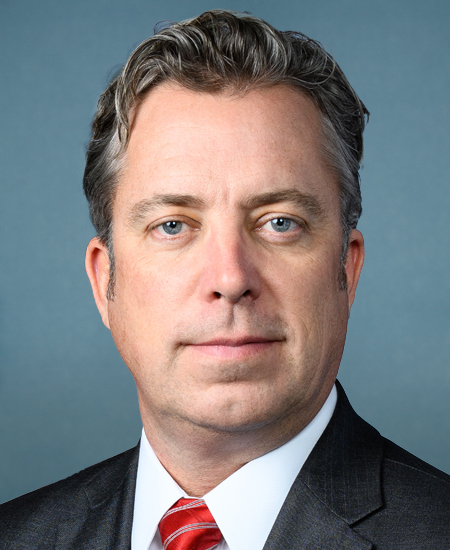
Rep. Andrew Ogles
Sponsored bills
Maddy summaryHR 720, the Davis-Bacon Repeal Act, would eliminate the Davis-Bacon wage requirements for federal construction projects. It directly affects federal contractors working on projects funded by the government, removing a longstanding rule that required them to pay prevailing wages. The bill repeals Subchapter IV of Chapter 31 in Title 40 of the U.S. Code, which established these wage standards. The repeal would take effect 30 days after enactment but would not impact existing contracts or bids outstanding on that date.
Maddy summaryHR 646, the SHORT Act, clarifies firearm definitions under federal law to exclude antique firearms and certain collector items from the "firearm" category. It removes restrictions on short-barreled rifles and shotguns used lawfully by eliminating specific prohibitions in federal law and preempts state laws imposing taxes or registration requirements on these weapons. The bill also mandates the destruction of federal records related to short-barreled rifles, shotguns, and other weapons defined under the National Firearms Act within 365 days of enactment. This directly affects owners of these specific firearms, particularly collectors and individuals possessing short-barreled weapons legally under federal law. The key mechanisms include revised definitions, federal preemption of state regulations, and record destruction requirements.
Maddy summaryThe Restoring Military Focus Act (HR 678) repeals the Chief Diversity Officer position in the Department of Defense and prohibits the creation of similar roles. It specifically eliminates two existing positions: the Chief Diversity Officer (under pre-2021 Title 10, U.S. Code) and the Senior Advisor for Diversity and Inclusion (under the 2021 National Defense Authorization Act). The bill bans federal funding for any new position that matches or closely resembles these roles. This directly affects the Department of Defense's organizational structure by removing diversity-focused leadership roles and preventing their replacement.
Maddy summaryHR 582, the Credit Union Board Modernization Act, changes the required meeting frequency for boards of directors at federal credit unions. It replaces a simple "monthly" requirement with tiered schedules based on each credit union's performance rating under the Uniform Financial Institutions Rating System. Top-rated credit unions (ratings 1 or 2) must meet at least six times yearly, with one meeting per fiscal quarter. Lower-rated credit unions (ratings 3, 4, or 5) must meet monthly, and new credit unions must meet monthly for their first five years. This directly affects all federal credit unions by adjusting their board meeting obligations based on their regulatory rating.
Maddy summaryHR 605, the Special Drawing Rights Oversight Act of 2023, requires the U.S. government to seek congressional approval before allocating IMF reserve assets (SDRs) to certain countries. It strengthens oversight by extending consultation periods with Congress from 90 to 180 days, requiring 25% of U.S. IMF quotas to be considered in decisions, and adding new prohibitions: no SDR allocations may be made to countries the President identifies as having committed genocide or repeatedly supported international terrorism without specific congressional authorization. The bill directly affects the U.S. Treasury and President, who currently have authority to approve such allocations without Congress. This changes current practice, which allows unilateral Treasury decisions that could provide billions in unconditional liquidity to countries like China, Russia, Iran, and Venezuela.
Maddy summaryThis bill would prohibit the FDA from approving new abortion medications or investigational uses of existing ones. It would restrict currently approved abortion drugs to in-person administration only in clinics, hospitals, or medical offices by certified providers who can handle complications like ectopic pregnancy or severe bleeding. The law requires detailed adverse event reporting (excluding patient identifiers) to the FDA by both manufacturers and prescribers, and mandates provider certification covering pregnancy assessment, surgical intervention capabilities, and patient safety documentation. These provisions apply directly to healthcare providers, patients seeking medication abortions, and manufacturers of abortion drugs.
No Tax Dollars for the United Nation's Immigration Invasion Act This bill prohibits the federal government from making contributions to the United Nations (U.N.) International Organization for Migration, the U.N. High Commissioner for Refugees, or the U.N. Relief and Works Agency for Palestine Refugees in the Near East. The bill also requires the Government Accountability Office to report to Congress on federal funds provided to these U.N. agencies, including the amounts provided during FY2021 and FY2022 and any restrictions attached to such funding.
Maddy summaryThe Military Child Educational Freedom Act amends the tax code to allow active duty military families to deduct home school expenses as private school costs for federal income tax purposes. It specifically applies to military members or their spouses on active duty who use home schools recognized by state law as home or private schools. The bill changes the Internal Revenue Code definition of "private school" to include such home schools for education expense deductions. This change takes effect for tax years beginning after the bill's enactment.
This concurrent resolution calls on the President to abandon the One China policy in favor of one that recognizes Taiwan as an independent country that is not a part of China. The resolution also urges the President to bolster diplomatic and economic relations between the United States and Taiwan through specified means.