This resolution calls on the President to abandon the One China policy in favor of one that recognizes Taiwan as an independent country that is not a part of China. The resolution also urges the President to bolster diplomatic and economic relations between the United States and Taiwan through specified means.
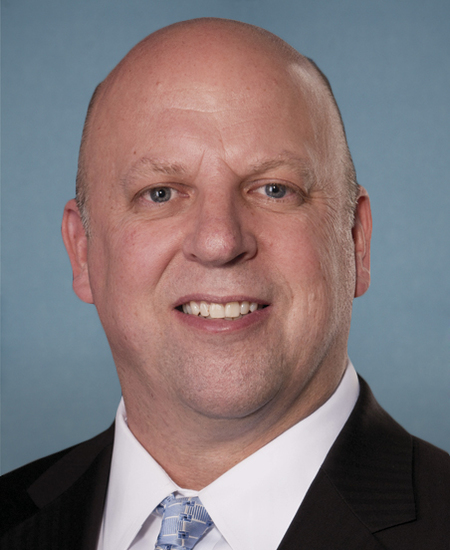
Rep. Scott DesJarlais
Sponsored bills
Telehealth Modernization Act This bill modifies requirements relating to coverage of telehealth services under Medicare. Specifically, the bill extends certain flexibilities that were initially authorized during the public health emergency relating to COVID-19 (i.e., coronavirus disease 2019). Among other things, the bill allows (1) rural health clinics and federally qualified health centers to serve as the distant site (i.e., the location of the health care practitioner); (2) the home of a beneficiary to serve as the originating site (i.e., the location of the beneficiary) for all services (rather than for only certain services); and (3) all types of practitioners to furnish telehealth services, as determined by the Centers for Medicare & Medicaid Services.
Main Street Tax Certainty Act This bill makes permanent the tax deduction for qualified business income. (Under current law, the deduction expires after December 31, 2025.) Qualified business income is defined as the net amount of qualified items of income, gain, deduction and loss with respect to any trade or business, excluding capital gains or losses, dividends, interest income, or income earned outside the U.S.
This resolution opposes lifting specified sanctions on Iran and resolves that these sanctions may be terminated only after Iran has ceased providing support for acts of international terrorism and has dismantled its nuclear, biological, and chemical weapons and related technologies.
Living Donor Protection Act of 2021 This bill prohibits certain insurance carriers from discriminating against, and provides other protections for, living organ donors. Specifically, carriers may not deny, cancel, or otherwise impose conditions on policies for life insurance, disability insurance, or long-term care insurance based on an individual's status as a living organ donor. The bill also expressly specifies that recovery from organ-donation surgery constitutes a serious health condition that entitles eligible employees to job-protected medical leave. In addition, the Department of Health and Human Services must update educational materials on live organ donation to include information about the benefits of live organ donation and about access to insurance for living organ donors.
This resolution commends Peyton Manning on being named to the Pro Football Hall of Fame and for his philanthropy and generosity.
Improving Confidence in Veterans' Care Act This bill prescribes oversight requirements for the Department of Veterans Affairs (VA) regarding health care professionals at VA medical centers. Specifically, the bill requires the VA to ensure each VA medical center consistently compiles, verifies, and reviews specified documentation for each VA health care professional (including contractors). The VA shall ensure that specified health care professionals hold an active Drug Enforcement Administration registration. Each VA medical center must implement (1) monitoring of the performance and quality of the health care delivered by each health care professional at the center, and (2) reviews of such care if an individual notifies the VA of any potential concerns relating to a failure to meet generally accepted standards of clinical practice. The bill imposes notification requirements in situations where the VA substantiates a concern relating to the clinical competency of, or quality of care delivered by, a current or former VA health care professional. The VA is prohibited from entering into a settlement agreement relating to an adverse action against a VA health care professional if such agreement includes terms that require the VA to conceal certain information from the employee's personnel file. Such prohibition does not apply to adverse actions determined to be prohibited personnel practices. The VA must provide mandatory training, at least biannually, to employees of each medical center who are responsible for specified tasks (e.g., those who are responsible for compiling, validating, or reviewing the credentials of VA health care professionals).
Lessening Regulatory Costs and Establishing a Federal Regulatory Budget Act of 2021 This bill establishes procedures and provides statutory authority to reduce the number of federal regulations. Specifically, it requires each agency to establish a regulatory reform task force chaired by a designated regulatory reform officer. Each task force must, among other duties (1) review each existing agency regulation; (2) estimate the potential cost savings of repealing or modifying each regulation; and (3) identify regulations that are appropriate for repeal, replacement, or modification based on cost, effectiveness, and impact on employment. The bill further provides statutory authority for the executive order prohibiting agencies from issuing a new regulation with an economic impact of at least $100 million without identifying two regulations for repeal that will offset the cost of the proposed new regulation. Agencies also must submit a list of all planned regulatory actions for inclusion in the semiannual Unified Agenda of Federal Regulatory and Deregulatory Actions, including (1) the estimated economic effect of each action, and (2) proposed deregulatory actions to offset the cost of each proposed new regulation. Additionally, the Office of Management and Budget must establish an annual regulatory budget for each federal agency that specifies the net allowable increase in regulatory costs for each agency during the next fiscal year.

Education Freedom Scholarships and Opportunity Act This bill allows individual and corporate taxpayers a tax credit for cash contributions to tax-exempt scholarship-granting organizations for elementary and secondary education expenses. It imposes a cap of $5 billion on the amount of contributions that qualify for a tax credit. The bill directs the Department of Education, in coordination with the Department of the Treasury, to establish, host, and maintain a web portal that (1) lists all eligible scholarship-granting organizations; (2) enables contributions to such organizations; (3) provides information about the benefits of this bill; and (4) enables a state to submit and update information about its programs and scholarship-granting organizations, including information on student eligibility and allowable educational expenses.
United States-Israel PTSD Collaborative Research Act This bill establishes a grant program for collaborative efforts between the United States and Israel to advance research on post-traumatic stress disorders. The Department of Defense, in coordination with the Department of Veterans Affairs and the Department of State, shall award grants to eligible academic institutions or nonprofit entities in the United States. Work shall be conducted by the eligible entity and an entity in Israel under a joint research agreement.