

Recycling and Composting Accountability Act This bill establishes data collection and reporting requirements concerning recycling and composting programs. For example, the Environmental Protection Agency must report on the capability of the United States to implement a national composting strategy for compostable materials in order to reduce contamination rates for recycling.
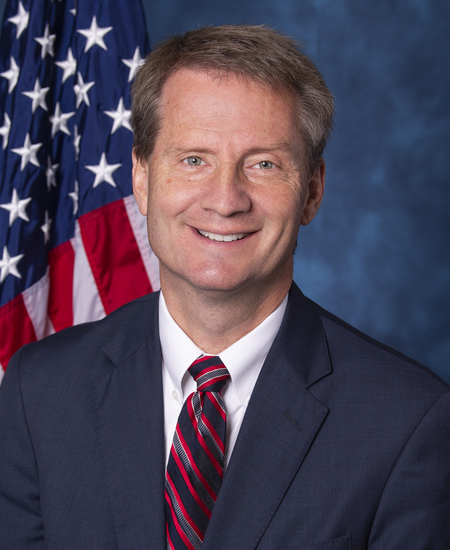
Rep. Tim Burchett
Sponsored bills
This resolution sets forth the rule for consideration of H.R. 1011 (Life at Conception Act), which declares that the right to life guaranteed by the Constitution is vested in each human being at all stages of life, including the moment of fertilization, cloning, or other moment at which an individual comes into being.
This resolution recognizes the exemplary service of the soldiers of the 30th Infantry Division of the Army, known as "Old Hickory," during World War II.
Ukraine Invasion War Crimes Deterrence and Accountability Act This bill requires the President to report to Congress on atrocities committed during Russia's invasion of Ukraine since February 24, 2022. Specifically, the report must describe in detail (1) U.S. government efforts to collect, analyze, and preserve evidence related to war crimes and other atrocities committed during the invasion; (2) media, public diplomacy, and information operations to make the Russian people, including their military and political leaders, aware of efforts to identify and prosecute those responsible for such atrocities; and (3) the process for a domestic, foreign, or international court or tribunal to obtain information from the U.S. government related to such atrocities.
Safe Schools Act This bill allows state and local educational agencies to use certain COVID-19 emergency relief funds to carry out school security measures (e.g., trainings and security assessments).
Countering Atrocities through Currency Accountability Act of 2022 This bill requires financial institutions and agencies to take specified special measures regarding foreign financial activity if the Department of the Treasury concludes that the measures are necessary to address human rights violations. These measures are applied upon a finding that a jurisdiction (or a financial institution, transaction, or type of account involving a jurisdiction) is of primary humanitarian concern. The measures include additional recordkeeping and reporting of transactions, beneficial ownership information, and information relating to payable-through accounts and correspondent accounts. If Treasury finds a payable-through or correspondent account involves foreign human rights violations, then Treasury is allowed to prohibit or impose conditions on that account. The bill establishes additional due diligence requirements for financial institutions managing a bank account or a correspondent account of a foreign person. Finally, Treasury must determine if the Xinjiang Uyghur Autonomous Region in China qualifies as a jurisdiction subject to the additional measures established by the bill.
Stop Iranian Drones Act This bill expands existing provisions requiring sanctions against individuals or entities that provide certain types of weapons to Iran. Specifically, the bill modifies the provisions by adding unmanned combat aerial vehicles to the list of weapons covered by the sanctions. The bill also requires the Department of State to periodically report to Congress on the identities of any Iranian entity that has attacked a U.S. citizen using an unmanned combat aerial vehicle. The President must designate any such entity as a foreign terrorist organization.
Building America's Health Care Workforce Act This bill extends certain flexibilities relating to training and competency requirements for nurse aides in Medicare skilled nursing facilities (SNFs) and Medicaid nursing facilities (NFs). Generally, SNFs and NFs may not hire nurse aides for longer than four months unless they meet certain training and certification requirements. The Centers for Medicare & Medicaid Services waived some of these requirements during the COVID-19 emergency period so as to allow facilities to maintain adequate staffing levels; the waiver ends in June 2022. The bill extends these flexibilities for at least two years after the bill's enactment and specifies that (1) any time worked by a nurse aide during the emergency period counts toward the 75 hours required for initial training, and (2) a competency evaluation may be conducted at the SNF or NF where the nurse aide is employed if the state does not offer such an evaluation at least once a week.
Manufactured Housing Affordability and Energy Efficiency Act of 2022 This bill provides that certain requirements must be met in order for energy conservation standards for manufactured housing (promulgated by the Department of Energy) to become effective.
This joint resolution nullifies the rule issued by the Centers for Disease Control and Prevention on February 3, 2021, that requires the use of face masks on planes, trains, buses, and other public conveyances and at transportation hubs to prevent the transmission of COVID-19.