

Feed America by Incentivizing Rural Meat Packing Act or the FAIR Meat Packing Act This bill allows an investment tax credit through 2026 for 25% of the basis of each livestock processing facility property placed in service during the taxable year. The amount of the credit may not exceed $250,000 in any taxable year and is not available to taxpayers whose gross receipts exceed $100 million in a taxable year. The bill defines livestock processing facility as a facility that slaughters livestock (i.e., cattle, sheep, goats, bison, swine, and poultry) for processing into meat and meat products and participates in a meat and poultry inspection program, The facility must employ an average of fewer than 500 employees and include property used for the intake or storage of livestock, the disposal or management of livestock waste, or the packaging, handling, warehousing, or storage of meat products. The bill also allows a refundable income tax credit for the startup and organizational expenditures of livestock processing facilities.
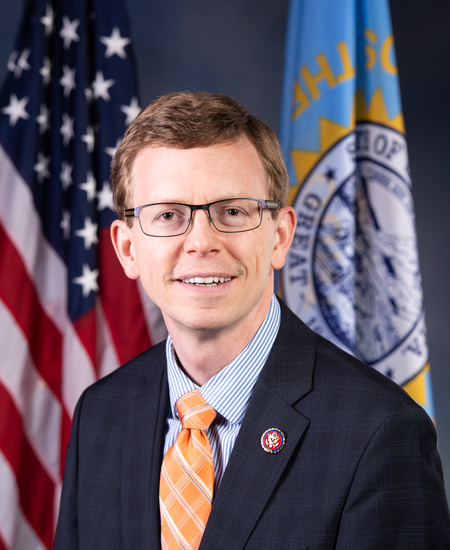
Rep. Dusty Johnson
Sponsored bills
Healthy Dog Importation Act This bill imposes requirements on the importation of live dogs. Specifically, the bill prohibits the importation of a live dog into the United States unless the Department of Agriculture (USDA) determines the dog (1) is in good health, (2) has received all necessary vaccinations and demonstrated negative test results as evidenced by a certificate from a licensed veterinarian, and (3) is officially identified by a permanent method approved by USDA. Additionally, dogs entering the United States for transfer must be at least six months of age and accompanied by a USDA permit. Transfer is defined as a change of ownership or control of an imported dog to another person, including by sale, adoption, exchange, or donation. USDA must provide an exception to any requirements under the bill for dogs that are transferred for (1) research purposes; (2) veterinary treatment under certain conditions, including appropriate quarantining; or (3) lawful importation into the state of Hawaii if the dog is not transported out of Hawaii for resale at less than six months of age. USDA also has enforcement authority under the bill.
This bill permits state, tribal, and territorial governments to use designated COVID-19 relief funding to support mental and behavioral health programs. Currently, this funding is available to eligible governments through December 31, 2024, for responding to the COVID-19 public health emergency or its negative economic impacts; supporting essential workers and businesses; maintaining government services; and investing in water, sewer, or broadband infrastructure.
Tribal Transportation Equity and Transparency Improvement Act of 2021 This bill revises certain programs related to tribal transportation. First, the bill revises the Tribal Transportation Program (TTP) by directing the Department of the Interior to (1) request proposals from Indian tribes to include additional transportation facilities in the National Tribal Transportation Facility Inventory, and (2) ensure that all nonconfidential information from the inventory is made available on its website. Next, the bill specifies that funding allocations (i.e., tribal shares) under the TTP must be determined using the facility inventory for the most recent fiscal year for which data is available instead of using FY2012 data. It also requires each Indian tribe that intends to include a proposed road in the inventory to complete and submit certain documentation for the road. It also requires independent audits by the inspectors general of Interior and the Department of Transportation, as well as the Government Accountability Office, to review the administration of the TTP. Additionally, the bill permits Indian tribes to use funds for carrying out highway safety programs in cooperation with states, counties, and other local subdivisions. It also increases the federal share for Indian tribes under the Nationally Significant Federal Lands and Tribal Projects Program and allows Indian tribes to use planning and design funds for grant applications under the program. Finally, the bill establishes the Tribal Transportation Advisory Committee, which must provide advice to Interior and study issues related to tribal transportation.
This resolution denounces socialism and opposes the implementation of socialist policies in the United States.
Value in Health Care Act of 2021 This bill makes a series of changes to certain methodologies and components used in the Medicare Shared Savings Program. The program enables accountable care organizations (ACOs) to receive payments for savings stemming from care coordination and management. Among other changes, the bill requires the Centers for Medicare & Medicaid Services to increase the shared savings rate for participating ACOs, as specified, and to establish a program that assists ACOs with start-up and operational costs of participation. The bill also extends certain incentive payments for health professionals who participate in eligible alternative payment models. The Government Accountability Office must report on health outcomes and racial disparities among beneficiaries who receive care from providers under alternative payment models compared to beneficiaries who receive care from providers under the traditional fee-for-service system.
Wildfire Prevention and Drought Mitigation Act of 2021 This bill categorically excludes forest management activities carried out on specified public lands from requirements to conduct environmental assessments and environmental impact statements. In order to be excluded from environmental review, the primary purposes of such activities must be to protect a municipal or tribal water source from damage caused by wildfire; improve watershed or habitat conditions; improve, maintain, or restore water yield or quality; improve, maintain, or restore snowpack; or adapt the forest landscape to an increased threat of drought. The bill limits the categorical exclusion to activities that manage up to 10,000 acres of land. However, activities that manage up to 30,000 acres of land may be categorically excluded from environmental review if the activities are located in areas that (1) are in a severe, extreme, or exceptional drought; or (2) have been in such droughts in the previous five years.
This bill provides supplemental FY2021 appropriations to the National Guard for its response to the events at the U.S. Capitol on January 6, 2021. The bill designates the funding as emergency spending, which is exempt from discretionary spending limits.
Year-Round Fuel Choice Act of 2021 This bill amends the Clean Air Act to address the limitations on Reid vapor pressure (a measure of gasoline's volatility) that are placed on gasoline during the summer ozone season. The bill applies the Reid vapor pressure requirements that are applicable to gasoline blended with 10% ethanol (E10) to gasoline blended with more than 10% ethanol. Thus, the waiver given to E10 gasoline, which allows an increase in the Reid Vapor Pressure volatility, is extended to gasoline blended with more than 10% ethanol.
Preserving Rules Ordered for The Entities Covered Through 340B Act of 2021 or the PROTECT 340B Act of 2021 This bill prohibits pharmacy benefit managers (PBMs) and health insurance plans from discriminating against health providers participating in the 340B drug pricing program, including pharmacies contracted with such providers to dispense 340B drugs. The 340B program allows certain providers to receive covered outpatient drugs at reduced prices from manufacturers. Specifically, PBMs and insurance plans may not reimburse 340B participants at a lower rate than other entities not participating in the program; impose differing terms (such as fees, charge-backs, or audits) on 340B participants; interfere with an individual's choice to receive drugs from a 340B participant; require 340B participants to identify which drugs fall within the program; or refuse to contract with a 340B participant on the basis that they utilize the program. Violations of this bill are subject to a civil penalty of not more than $5,000 per violation per day. These prohibitions also apply to prescription drug (Part D) sponsors under Medicare. The bill also provides for a process to prevent duplicate 340B drug discounts to states under Medicaid.