

Maddy summaryHRES 971 is a non-binding resolution condemning China's economic and military actions against Japan following Japanese officials' comments about Taiwan. It specifically addresses China's travel advisory (causing $1.2 billion in tourism losses), a ban on Japanese seafood imports, and military drills near Japanese territory. The resolution reaffirms U.S. support for the U.S.-Japan alliance under their mutual security treaty and calls on China to cease coercion. It emphasizes U.S. commitment to upholding a "free and open Indo-Pacific" based on international law. This resolution directly affects Japan's economy and security, with no new legal obligations but serving as a formal U.S. policy statement.
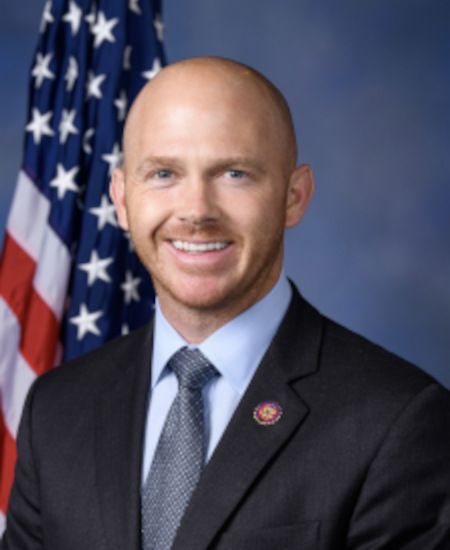
Rep. William R. Timmons IV
Sponsored bills
Maddy summaryThis resolution formally recognizes the 100th anniversary of the Sporting Arms and Ammunition Manufacturers' Institute (SAAMI), a trade organization founded in 1926. The bill commends SAAMI for developing industry standards that ensure firearms and ammunition are safe, reliable, and interchangeable. It acknowledges the organization's work in coordinating with government bodies, international standards groups, and industry stakeholders to maintain consistent safety practices. This measure is a ceremonial resolution that does not change any laws or regulations but serves to honor SAAMI's century of leadership in the firearms industry.
Maddy summaryThis bill requires all states to submit detailed data on Supplemental Nutrition Assistance Program (SNAP) fraud to the Department of Agriculture. The data must include information on fraud cases, enforcement actions, recoveries, and specific instances involving deceased individuals or false social security numbers. States must provide this information within 180 days of enactment for historical data and annually thereafter, with funds withheld if they fail to comply. The Secretary of Agriculture will compile and publish annual reports to Congress based on the submitted data.
Maddy summaryHR 7932, the HONOR Gold Star Families Act, increases the death gratuity paid to families of service members who died in the line of duty. It raises the current $100,000 payment to $200,000 for deaths occurring on or after January 1, 2026. The bill also adds an annual cost-of-living adjustment to this amount, increasing it each January 1 based on the previous year’s inflation rate as measured by the Consumer Price Index. This directly affects Gold Star Families - those who have lost a service member in military service - by providing a larger initial payment and ensuring future payments keep pace with inflation.
Maddy summaryThis bill, known as the Mail Ballot Integrity Act, would require states to stop sending unsolicited mail-in ballots to voters for federal elections. Under the law, individuals must actively request a mail-in ballot by submitting a written or electronic request that includes a sworn statement confirming they meet specific eligibility criteria. The bill limits who can receive these ballots to groups such as active-duty military personnel, students living away from home, clergy, people with disabilities, seniors aged 65 and older, and others with temporary mobility or residency issues. States could maintain lists of voters who previously qualified for mail-in voting, but only if those voters continue to meet the established eligibility requirements. The changes would take effect for federal elections occurring on or after the bill is enacted.
Maddy summaryThis bill, known as the SEEDS Act of 2026, would allow digital asset indexes to be included as eligible investments within Trump accounts, which are special tax-advantaged investment accounts. The legislation amends the Internal Revenue Code to add digital asset indexes to the list of permitted investments alongside other traditional assets. Additionally, the bill makes permanent a pilot program for Trump accounts that was previously set to expire in 2029, removing time limits on the program's operation. These changes would affect individuals who currently use or wish to use Trump accounts for investing, expanding the range of assets they can hold within these tax-advantaged structures.
Maddy summaryHR 7678, the Gun Owner Registration Information Protection Act, prohibits federal funding for state or local databases that track lawfully owned firearms or their owners. The bill allows federal funding for databases recording lost or stolen firearms but bans it for databases listing legal gun ownership. This means states cannot use federal money to create or maintain systems that compile information about legally owned guns. The bill directly affects state and local governments that rely on federal funds for firearm ownership databases.
Maddy summaryThis bill amends a 1996 law to require federal financial regulatory agencies (like the Fed, FDIC, and OCC) to review regulations every 5 years instead of every 10 years. It adds a new requirement for agencies to conduct an internal review assessing how regulations impact consumers' access to financial products, business availability of services, credit access, and overall economic costs. Agencies must quantify regulatory costs and recommend eliminating outdated, duplicative, or unnecessarily burdensome rules. The bill directly affects federal financial regulators by mandating these comprehensive, regular assessments of regulatory impact. It aims to streamline the regulatory process through structured, evidence-based reviews.
Respect State Housing Laws Act This bill eliminates a provision that requires a 30-day notice period before a landlord may begin eviction proceedings against a tenant in federally assisted or federally backed housing.
Protection of Women in Olympic and Amateur Sports Act This bill requires certified national governing bodies (NGBs) of amateur sports (e.g., USA Gymnastics) to prohibit a person whose sex is male from participating in an amateur athletic competition that is designated for females, women, or girls. Under the bill, male means an individual who has, had, will have—or would have, but for a developmental or genetic anomaly or historical accident—the reproductive system that at some point produces, transports, and utilizes sperm for fertilization.