

Flood Resiliency and Taxpayer Savings Act of 2021 This bill requires federal agencies to take specified actions to evaluate and mitigate the risk of floods to federally funded projects. Specifically, the bill directs federal agencies to evaluate the potential for flooding throughout the planned lifetime or duration of a federally funded project to reduce the risk of financial and property losses and prevent the disruption of critical services during floods. Further, federal agencies must consider certain data and information (e.g., the most recent flood insurance rate map published by the Federal Emergency Management Agency) when evaluating whether a federally funded project is in a floodplain. If the agency determines the data and information are not adequate for understanding the flood risks to the project, then the agency must use an alternative design standard outlined by the bill. Finally, the bill directs the Federal Interagency Floodplain Management Task Force to issue guidelines for federal agencies related to flood risk management.
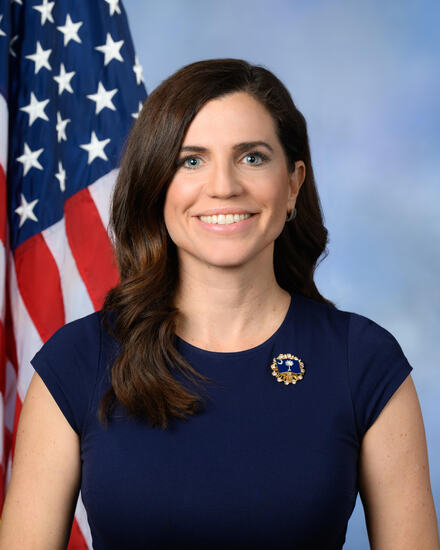
Rep. Nancy Mace
Sponsored bills
Reopen Schools Act This bill requires a local educational agency (LEA) to reopen its elementary and secondary schools as a condition for receiving certain supplemental education emergency relief funding. Specifically, an LEA must provide in-person instruction to at least 50% of its students in order to receive the full funding. An LEA that provides in-person instruction to at least some of its students shall have its funding reduced on a pro rata basis.
USPS Fairness Act This bill repeals the requirement that the U.S. Postal Service annually prepay future retirement health benefits.
Protecting Americans from Unnecessary Spread upon Entry from COVID-19 Act of 2021 or the PAUSE Act of 2021 This bill maintains immigration restrictions put in place under public health emergency authorities to prevent the introduction of COVID-19 (i.e., coronavirus disease 2019) from foreign countries. Specifically, the bill prohibits the Department of Health and Human Services from rescinding or reducing the stringency of the restrictions. It also prohibits the Department of Homeland Security from stopping or reducing enforcement of the restrictions. These prohibitions remain in effect until (1) federal and state COVID-19 emergency orders are lifted, and (2) the risk of introducing COVID-19 in or from Canada and Mexico is minimal.
Protecting Access to Post-COVID-19 Telehealth Act of 2021 This bill makes permanent several telehealth flexibilities that were initially authorized during the public health emergency relating to COVID-19 (i.e., coronavirus disease 2019), particularly with respect to Medicare coverage of telehealth services. For example, the bill permanently allows federally qualified health centers and rural health clinics to serve as the distant site (i.e., the location of the health care practitioner) for telehealth services under Medicare. Payment must be made in the same manner as for non-telehealth services, rather than in accordance with a separate methodology determined by the Centers for Medicare & Medicaid Services (CMS). The bill also permanently allows beneficiaries to receive Medicare telehealth services at any site, regardless of type or location, and grants the CMS general authority to waive any other requirements during any emergency period.
Military Child Educational Freedom Act This bill modifies the requirements for tax-exempt Coverdell education savings accounts to permit members of the Armed Forces serving on extended active duty or their spouses to use the accounts for certain education expenses incurred in connection with a home school that provides elementary or secondary education. The home school must be treated under state law as a home school or a private school.
No Abortion Bonds Act This bill denies a tax exclusion for the interest paid on state and local bonds that are used to provide a facility owned or used (for any purpose) by an abortion provider for more than 30 days during a year in which interest is paid on the bonds. An entity is not considered an abortion provider solely as a result of performing abortions if (1) the pregnancy is the result of an act of rape or incest; or (2) a woman suffers from a physical disorder, physical injury, or physical illness that would, as certified by a physician, place the woman in danger of death unless an abortion is performed, including a life-endangering physical condition caused by or arising from the pregnancy itself. The Department of the Treasury may exempt certain hospitals from being considered an abortion provider by making the name of the hospital available on Treasury's public website.
Parris Island Protection Act This bill prohibits the use of federal funds to close or realign Marine Corps Recruit Depot, Parris Island, in South Carolina, or to conduct any planning or other activity related to such closure or realignment.
This concurrent resolution authorizes the use of the rotunda of the Capitol to honor, upon death, the last surviving Medal of Honor recipient for acts performed during World War II, at the election of the individual or their next of kin.
Bicycle Commuter Act of 2021 This bill modifies provisions relating to the tax exclusion for employer-provided fringe benefits for bicycle commuting. Specifically, the bill (1) repeals the suspension (for the period between 2018 and the end of 2025) of the exclusion, (2) includes bikeshare (a bicycle rental operation providing for pick up and drop off) and low-speed electric bicycle within the definition of bicycle for purposes of the exclusion, and (3) modifies the limitation on the exclusion to provide for a specified monthly limitation amount (i.e., 30% of the parking fringe benefit amount).