

Maddy summaryThe Head Start Expansion and Improvement Act of 2026 broadens eligibility for early childhood education services by including recipients of various public assistance programs, such as food stamps and Medicaid, in the definition of qualifying families. The bill authorizes $36 billion annually from fiscal years 2027 through 2032 to support these expanded operations and creates a separate grant program providing $1 billion per year until 2030 for agencies to repair or upgrade aging facilities with safety hazards. Additionally, the legislation establishes a loan forgiveness program that cancels federal student loans for childcare workers who complete three years of full-time service in Head Start or Early Head Start programs. Finally, it authorizes $6.8 billion annually through 2032 to provide salary supplements to Head Start employees, with funding allocated based on local wage gaps and cost-of-living factors.
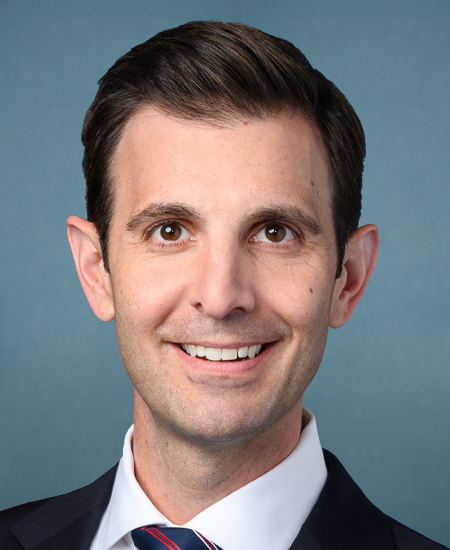
Rep. Christopher R. Deluzio
Sponsored bills
Maddy summaryThe Pathway to Trades Act requires colleges that receive Federal Perkins Loans to establish specific support systems for students interested in vocational careers. Institutions must appoint a faculty member to serve as a contact for trade students and create dedicated courses related to these fields. This legislation directly affects higher education schools participating in the Perkins Loan program by mandating these structural changes to their academic offerings.
Maddy summaryThe Build America Fund Act creates a new government entity called the Manufacturing Sovereign Wealth Fund to invest billions of dollars in U.S. companies for the purpose of rebuilding domestic industrial capacity and reducing reliance on foreign supply chains. This fund will make loans and equity investments in strategic sectors like advanced manufacturing and technology, but it will require companies to keep operations and intellectual property within the United States for at least 50 years. In exchange for this capital, the fund will hold veto power over decisions to offshore production, sell to foreign buyers, or move research abroad, and it will enforce strict labor standards and prohibit stock buybacks. The bill also establishes an Industrial Sovereignty Council to oversee these investments and introduces new fees on corporate stock buybacks, high-volume trading, and specific offshoring activities to help finance the fund. Additionally, the legislation creates a future tax credit for eligible individuals funded by the fund's profits and increases the corporate tax rate to generate further revenue for the program.
Maddy summaryThe Addictive Design Act of 2026 aims to protect youth under 18 from potential mental health risks associated with artificial intelligence chatbots by banning specific features designed to create emotional attachments. To support this goal, the bill establishes a government task force to study these impacts and provides funding for research and educational outreach to parents and teachers. The legislation also mandates that companies offering AI chatbots to minors must use age verification technology and delete user data within 24 hours. Companies that fail to comply with the ban on addictive design features or data privacy requirements face civil penalties of up to $10 million or $5,000 per violation, respectively.
Maddy summaryThis bill establishes federal protections and funding to expand access to in vitro fertilization and intrauterine insemination for individuals, military service members, and veterans. It requires most private health plans, Medicaid programs, and Medicare to cover these fertility treatments without imposing higher cost-sharing than other medical services. Additionally, the legislation mandates that the Department of Defense and the Department of Veterans Affairs provide specific fertility preservation and treatment benefits to uniformed service members and eligible veterans. The bill also includes preemption clauses that override state laws restricting these procedures and prohibits discrimination based on marital status, sex, or sexual orientation in the provision of care.
Maddy summaryThe Health Over Wealth Act requires for-profit corporations that own or invest in health care providers like hospitals and nursing facilities to submit detailed annual reports to the federal government on financial data, debt levels, staffing, and political spending. This legislation also mandates that hospitals notify the government 90 days before closing or reducing essential services and requires them to submit mitigation plans to protect patient access and staff. Additionally, the bill creates a task force to study the impact of private equity ownership on health care quality and gives the Secretary of Health and Human Services authority to deny licenses or impose penalties on firms that fail to comply with these transparency and accountability rules.
Maddy summaryThis bill expands federal election laws to prevent foreign nationals from influencing U.S. elections by tightening restrictions on domestic companies with significant foreign ownership or control. It requires businesses that are at least 50% owned by foreign individuals, or those with specific foreign influence, to file a sworn certification proving they are not foreign-controlled before making any political donations or spending money on election activities. Additionally, the law clarifies that these rules apply to state and local ballot initiatives and mandates that corporate political action funds certify their managers and board members are U.S. citizens or permanent residents. The legislation also prohibits recipients of funds from these businesses from using the money for further political contributions unless they receive and verify the required compliance certification.
Maddy summaryThe Public Safety Officers' Benefits Enhancement Act of 2026 modifies how public safety officers can claim federal benefits related to line-of-duty injuries. It simplifies the claims process by removing a requirement that injuries must be caused by factors other than pre-existing cardiovascular risks and extends the time limit for reporting certain incidents from 24 to 72 hours. These changes apply to any benefit claims that are pending or filed after the law is enacted. The bill directly affects public safety officers seeking compensation for work-related injuries.
Maddy summaryThis bill requires pharmacy benefits managers (PBMs) administering prescription drug benefits for federal employee health plans to reimburse pharmacies at specific rates, including the national average drug cost plus a small percentage or $50, whichever is lower. It prohibits PBMs from favoring their own pharmacies, restricting patient choice, or reducing pharmacy payments after claims are processed. The bill establishes $10,000 civil penalties for violations, with debarment from federal health plans after 10 penalties in 10 years. This directly affects PBMs, in-network pharmacies, and federal health benefit plans covering millions of federal employees and their families. The law aims to ensure fair reimbursement practices and maintain pharmacy choice under the Federal Employees Health Benefits Program.
Maddy summaryThis bill amends the FAST Act to adjust funding limits for federal permitting improvement programs. It directly affects agencies and projects that rely on these specific funding allocations under the existing law. The key provision replaces a $200 million funding cap with a $50 million cap in two sections of the FAST Act. These changes take effect on January 1, 2027, or upon enactment, whichever occurs later.