

Maddy summary# Summary of Digital Commodities and Blockchain Technology Regulatory Framework This comprehensive legislation establishes a new regulatory framework specifically for digital commodities and blockchain technology, creating a balanced approach that protects investors while fostering innovation. ## Key Components 1. **New Regulatory Structure**: - Creates new categories for digital commodity exchanges, brokers, and dealers under the Commodity Futures Trading Commission (CFTC) - Establishes "qualified digital asset custodians" as a new regulatory category - Defines "mature blockchain systems" with special regulatory treatment 2. **Core Requirements**: - Mandates segregation of customer assets and strict custody requirements - Requires robust risk management systems - Sets capital requirements for digital commodity brokers and dealers - Establishes new disclosure and reporting obligations - Defines "blockchain control persons" with special restrictions on selling digital commodities 3. **Innovation-Focused Provisions**: - Creates a "Strategic Hub for Innovation and Financial Technology" (FinHub) at the SEC - Establishes "LabCFTC" as a dedicated innovation lab within the CFTC - Provides exemptions for SEC-registered entities from certain CFTC requirements - Includes provisions for expedited hiring of digital commodities experts 4. **Studies and Research**: - Mandates studies on decentralized finance (DeFi) - Requires a study on non-fungible tokens (NFTs) - Directs a study on financial literacy among digital commodity holders - Requires a study on tokenized securities and derivatives 5. **Exclusions**: - Excludes decentralized finance activities from regulation - Excludes certain blockchain-related activities from regulatory requirements The legislation aims to create a functional regulatory framework that acknowledges the unique benefits and risks of digital commodities while ensuring investor protection, preventing market manipulation, and promoting the responsible development of this emerging technology within the United States. It seeks to prevent the shift of digital commodity development to less regulated countries by establishing a clear, balanced regulatory path.
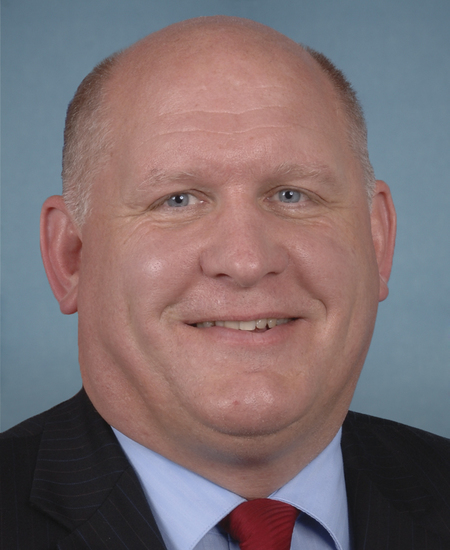
Rep. Glenn Thompson
Sponsored bills
Maddy summaryThe Right to Worship Act makes it unlawful for individuals to knowingly disrupt religious services or prevent people from entering houses of worship within 100 feet of an entryway during the hour before and after a scheduled service. The bill applies to conduct that meaningfully interferes with a service's normal operation or unreasonably hinders participation, while explicitly allowing free speech as long as it adheres to these specific time, place, and manner restrictions. Violators face escalating civil fines ranging from $2,500 for a first offense to $10,000 for subsequent offenses, assessed by the Attorney General. Additionally, the act permits aggrieved individuals, the U.S. Attorney General, or state attorneys general to file civil lawsuits seeking injunctive relief, compensatory damages, and attorney fees.
Maddy summaryThis resolution expresses support for designating July as Disability Pride Month to honor the contributions of the approximately 70 million American adults and over 3 million children with disabilities. The bill calls on individuals, interest groups, and organizations across the United States to observe the month with celebrations and activities that promote inclusion. Additionally, it urges everyone to actively work against the exclusion and discrimination that people with disabilities often face. While the measure does not create new laws or funding, it serves as an official statement of recognition and encouragement for community engagement during this time.
Maddy summaryThe Young Farmer Success Act expands student loan forgiveness to include individuals working full-time as employees or managers on farms and ranches. To qualify, these agricultural operations must generate at least $35,000 in gross revenue from selling agricultural products in 2026, with the required income increasing annually based on inflation adjustments. This change directly affects young people seeking loan relief who are currently employed in the farming and ranching sectors but were previously ineligible for this specific provision.
Maddy summaryThe Rural Hospital Cybersecurity Enhancement Act directs the Department of Health and Human Services to create a workforce development plan aimed at training cybersecurity professionals specifically for rural hospitals. This strategy requires the Secretary to consult with various federal agencies and healthcare representatives while focusing on partnerships, curriculum development, and identifying local security challenges. Additionally, the bill mandates the publication of free instructional materials and an awareness campaign to help rural hospital staff learn fundamental cybersecurity skills. The legislation does not authorize any new funding, relying instead on existing resources to implement these training and educational initiatives.
Maddy summaryThis bill reauthorizes and expands the Accelerating Access to Critical Therapies for ALS Act through 2031, extending funding for research into treatments for amyotrophic lateral sclerosis. It requires drug manufacturers to share interim clinical trial data with the FDA to better assess the progress of investigational drugs and clarifies that phase 3 clinical trial definitions include combined phase 2/3 trials and planned trials not yet enrolling participants. The legislation also mandates the FDA to publish an updated five-year action plan for ALS and other rare neurodegenerative diseases, including resource needs and coordination strategies with broader disease communities. Additionally, the bill requires the Government Accountability Office to submit a report on the program's implementation four years after enactment.
Maddy summaryThis bill amends the Child Abuse Prevention and Treatment Act to better support children raised by relatives or close family friends outside the foster care system. It requires states receiving federal grants to prioritize placing children with kin and to include kinship caregivers in training programs focused on trauma and substance use. The legislation also expands advisory boards and information networks to include organizations serving grandfamilies and representatives from these families. By adding specific requirements for grant recipients, the bill aims to ensure that services address the unique needs of kinship caregivers and the children they raise.
Maddy summaryThe Expand the Behavioral Health Workforce Now Act directs the Secretary of Health and Human Services to issue guidance to states within 12 months of enactment. This guidance will outline strategies to improve the education, training, recruitment, and retention of mental health and substance use disorder care providers participating in Medicaid and CHIP programs. A specific focus of these strategies is to enhance the capacity of the workforce in rural and underserved areas. The act also specifies that the guidance should explore how states can use existing federal waivers and authorities to achieve these workforce goals.
Maddy summaryThe Tuskegee Airmen Memorial Act of 2026 authorizes the organization Tuskegee Airmen, Inc. to build a commemorative monument on federal land in Washington, D.C., honoring the original Tuskegee Airmen who served in World War II. This legislation allows the group to accept private donations and cover all costs for the project without using federal funds, while requiring any leftover money to be deposited into specific government accounts. The bill also mandates that the memorial be constructed in compliance with existing federal standards for commemorative works.
Maddy summaryThe Wildfire Reduction Market Expansion Act of 2026 updates the Clean Air Act to broaden the definition of renewable biomass eligible for carbon credits. It specifically allows materials from forest management, such as slash, storm debris, and wood residuals, to be counted as renewable fuel if they come from sustainably managed lands or public forests designated for fuel reduction. The bill also includes vegetation cleared from defensible space around buildings and from wildfire risk reduction projects in the wildland-urban interface. By clarifying these categories and establishing certification requirements, the legislation aims to increase the supply of biomass available for generating renewable energy credits.