

Neighborhood Homes Investment Act This bill establishes a new business-related tax credit to finance home building and rehabilitation in neighborhoods that meet certain eligibility criteria relating to poverty rates, income, and home values. The credit is limited to 35% of the lesser of the qualified development cost (i.e., the cost of construction, substantial rehabilitation, demolition, and environmental remediation of residential properties) or 80% of the national median sale price for new homes. The credit applies to single family homes containing four or fewer residential units, condominiums, or houses or apartments owned by cooperative housing corporations.
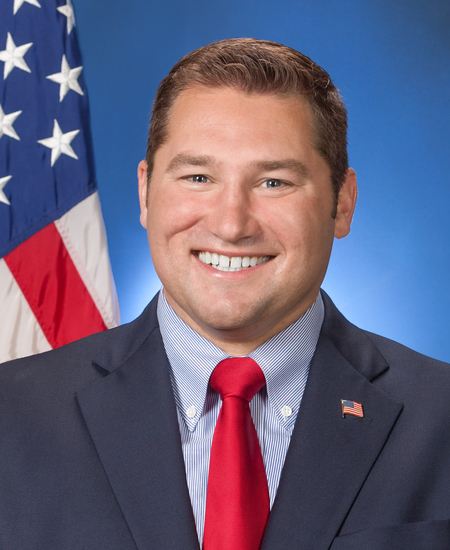
Rep. Guy Reschenthaler
Sponsored bills
Pennsylvania National Heritage Areas Reauthorization Act This bill reauthorizes in Pennsylvania through FY2036 the Rivers of Steel National Heritage Area, the Lackawanna Valley National Heritage Area, the Delaware and Lehigh National Heritage Corridor, the Schuylkill River Valley National Heritage Area, and the Oil Region National Heritage Area. The bill eliminates the limitation on the total amount that may be appropriated for the Rivers of Steel National Heritage Area, the Lackawanna Valley National Heritage Area, the Schuylkill River Valley National Heritage Area, and the Oil Region National Heritage Area.
This bill prohibits the use of federal funds (1) 15 days after its enactment, to support the mission of the National Guard in the District of Columbia in response to the attacks on the U.S. Capitol buildings and grounds on January 6, 2021; or (2) to install permanent fencing around the perimeter of any U.S. Capitol buildings or grounds. On January 7, 2021, in response to the attacks, razor wire fencing was erected to secure the perimeter of the U.S. Capitol; the fencing was initially to remain in place for 30 days and was kept in place through periodic extensions.
VA Billing Accountability Act This bill authorizes the Department of Veterans Affairs (VA) to waive the requirement that a veteran make co-payments for medications, hospital care, nursing home care, and medical services in certain situations. Specifically, a veteran may have such co-payments waived if (1) an error committed by the VA or a non-VA facility delayed co-payment notification to the veteran, and (2) the veteran received such notification later than 180 days (18 months in the case of a non-VA facility) after the date on which the veteran received the care or services. In requiring a veteran to make a co-payment for care or services provided at a VA or a non-VA medical facility, the VA shall notify the veteran not later than 180 days (18 months in the case of a non-VA facility) after the date on which the veteran received the care or services. If the VA does not provide notification by such date, it may not collect the payment, including through a third-party entity, unless the veteran is provided with (1) information about applying for a waiver and establishing a payment plan with the VA, and (2) an opportunity to make a waiver or establish a payment plan. Finally, the bill requires the VA to review and improve its co-payment billing internal controls and notification procedures.
Heartbeat Protection Act of 2021 This bill makes it a crime for a physician to knowingly perform an abortion (1) without determining whether the fetus has a detectable heartbeat, (2) without informing the mother of the results, or (3) after determining that a fetus has a detectable heartbeat. It provides an exception for an abortion that is necessary to save the life of a mother whose life is endangered by a physical (but not psychological or emotional) disorder, illness, or condition. A physician who performs a prohibited abortion is subject to criminal penalties—a fine, up to five years in prison, or both. A woman who undergoes a prohibited abortion may not be prosecuted for violating or conspiring to violate the provisions of this bill.
Just and Unifying Solutions To Invigorate Communities Everywhere Act of 2021 or the JUSTICE Act This bill addresses policies and issues regarding policing practices and law enforcement accountability. The bill funds state and local grants, incentivizes state and local reporting on the use of certain policing practices, creates new federal offenses for certain misconduct, and establishes best practices and training requirements. The bill funds state and local grants, including to support the use of body-worn cameras, to implement information sharing systems for disciplinary records of law enforcement officers, and to prohibit officers from engaging in sexual acts under color of the law. Further, it requires state and local governments that receive grants under the Edward Byrne Memorial Justice Assistance Grant program to report information related to use-of-force incidents and the use of no-knock warrants. At the federal level, the bill establishes new criminal offenses related to falsifying police reports and engaging in sexual acts under color of law. The bill directs the Department of Justice to develop training on de-escalation tactics, behavioral health crises, alternatives to the use of force, and the duty to intervene when another officer uses excessive force. Finally, the bill establishes and funds the National Criminal Justice Commission. Among other tasks, the commission must develop best practices for policing tactics and procedures.
Born-Alive Abortion Survivors Protection Act This bill establishes requirements for the degree of care a health care practitioner must provide in the case of a child born alive following an abortion or attempted abortion. Specifically, a health care practitioner who is present must (1) exercise the same degree of care as would reasonably be provided to any other child born alive at the same gestational age, and (2) ensure the child is immediately admitted to a hospital. Additionally, a health care practitioner or other employee who has knowledge of a failure to comply with the degree-of-care requirements must immediately report such failure to law enforcement. A health care practitioner who fails to provide the required degree of care, or a health care practitioner or other employee who fails to report such failure, is subject to criminal penalties—a fine, up to five years in prison, or both. An individual who intentionally kills or attempts to kill a child born alive is subject to prosecution for murder. The bill bars the criminal prosecution of a mother of a child born alive under this bill and allows her to bring a civil action against a health care practitioner or other employee for violations.
Taiwan PLUS Act This bill provides Taiwan with preferential treatment when receiving U.S. defense articles and services. Specifically, Taiwan shall be subject to the requirements and procedures that apply to certain U.S. partners and allies, such as North Atlantic Treaty Organization (NATO) member countries, South Korea, and Australia. Under this bill, certain defense transfers to Taiwan shall be subject to less stringent requirements, such as shorter waiting periods and higher minimum value thresholds before various oversight requirements kick in. Taiwan shall also be eligible to receive certain fee reductions and waivers related to defense transfers. Taiwan shall receive such treatment for the five-year period starting from this bill's enactment, and the Department of State may extend this treatment for additional five-year periods if doing so would support U.S. national security interests.
Stop Shielding Culpable Platforms Act This bill modifies provisions relating to the liability of a provider or user of an interactive computer service (e.g., a social media company) for material placed on its platform by another information content provider. Under current law, a provider or user of an interactive computer service is not considered the publisher or speaker of any information provided by another information content provider. The bill specifies that a provider or user of an interactive computer service may still be treated as a distributor of such information.
Whole Milk for Healthy Kids Act of 2021 This bill revises requirements for milk provided by the National School Lunch Program of the Department of Agriculture (USDA). Currently, schools participating in the program must provide milk that is consistent with the most recent Dietary Guidelines for Americans; USDA regulations require milk to be fat-free or low-fat and allow only fat-free milk to be flavored. The bill removes these restrictions and instead permits schools to offer students whole, reduced-fat, low-fat, and fat-free flavored and unflavored milk.