Promoting Apprenticeships through Regional Training Networks for Employers Required Skills Act of 2021 or the PARTNERS Act This bill establishes a grant program to promote registered apprenticeships and other work-based learning opportunities for small and medium-sized businesses within in-demand industry sectors, through the establishment and support of eligible partnerships.
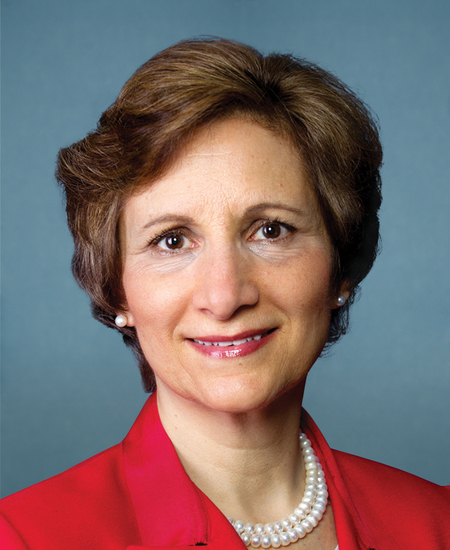
Rep. Suzanne Bonamici
Sponsored bills
National Office of New Americans Act This bill establishes the National Office of New Americans (NONA) within the Executive Office of the President to promote and support the integration of immigrants and refugees into the social, cultural, economic, and civic life of the United States. The NONA shall also establish the Federal Initiative on New Americans. The initiative shall establish a coordinated federal program to respond effectively to immigrant and refugee integration issues such as language learning, adult education and workforce training, health care, and naturalization.
This resolution condemns the military coup that took place in Burma (Myanmar) on February 1, 2021. It also calls on the Burmese military to (1) release all those detained arbitrarily in the coup, (2) restore all forms of communications, and (3) return to power all members of the civilian government.
Clean Corridors Act of 2021 This bill directs the Department of Transportation to award grants to certain governmental entities and planning organizations to install electric vehicle charging infrastructure and hydrogen fueling infrastructure along designated alternative fuel corridors.
Huntington's Disease Disability Insurance Access Act of 2021 This bill expedites payment of Social Security Disability Insurance (SSDI) benefits and eligibility for Medicare coverage for those with Huntington's disease. This is an inherited disorder that causes brain cells to die, including in areas of the brain that help to control voluntary movement. Specifically, the bill eliminates the 5-month waiting period for SSDI benefits and the subsequent 24-month waiting period for Medicare coverage for individuals with Huntington's disease. Under current law, individuals generally must wait five months after the onset of disability to begin receiving SSDI benefits and an additional 24 months to become eligible for Medicare.
Wise Investment in Children Act of 2021 or the WIC Act of 20 21 This bill expands eligibility for children to receive benefits under the Special Supplemental Nutrition Program for Women, Infants, and Children (WIC). The bill authorizes the Department of Agriculture to grant a waiver to a state, on request, that waives certification deadline requirements under the program if such state demonstrates there are unusual technological barriers to implementation, operational costs are not affordable within the nutrition services and administration grant of the state, or it is in the best interest of the program. If a waiver is granted, the bill extends eligibility for the program until the period that ends on the earlier of the sixth birthday of a child or when the child enters kindergarten; extends the certification period under the program for infants to up to two years, instead of the current one year; and increases the certification time under the program for postpartum women to a period of up to two years.

College Transparency Act This bill requires the National Center for Education Statistics to establish a secure and privacy-protected data system that contains information about postsecondary students. Specifically, the data system must evaluate student enrollment patterns, progression, completion, and postcollegiate outcomes, and higher education costs and financial aid; provide complete and customizable information for students and families making decisions about postsecondary education; reduce the requirements for reporting by institutions of higher education; and periodically match with other federal systems of data. The bill also establishes a postsecondary student data system advisory committee.
American Dream Employment Act of 2021 This bill establishes that, for the purposes of eligibility to be an officer or employee of an office of Congress, an individual shall be treated as a U.S. citizen if that individual has (1) employment authorization under the Deferred Action for Childhood Arrivals program, (2) employment authorization under a grant of deferred enforced departure, or (3) temporary protected status. (Generally, these programs and statuses allow eligible aliens to remain and work in the United States.)
Increasing Access to Quality Cardiac Rehabilitation Care Act of 2021 This bill accelerates and expands certain changes that are scheduled to take effect relating to the coverage of cardiac, intensive cardiac, and pulmonary rehabilitation programs under Medicare. Currently, such programs require physician supervision. Effective January 1, 2024, physician assistants, nurse practitioners, and clinical nurse specialists may also supervise these programs. The bill expedites the effective date of these changes to January 1, 2022, and also allows these practitioners to administer programs in their offices, prepare and sign treatment plans, and prescribe exercise.
Crisis Assistance Helping Out On The Streets Act or the CAHOOTS Act This bill allows state Medicaid programs to cover certain community-based mobile crisis intervention services for individuals experiencing a mental health or substance-use disorder crisis outside of a facility setting. Among other requirements, such services must be (1) provided by multidisciplinary teams composed of behavioral health professionals who are trained in trauma care and de-escalation techniques, (2) available 24-7, and (3) voluntary for the individual experiencing the mental health or substance-use disorder crisis. The bill provides an enhanced Federal Medical Assistance Percentage (i.e., federal matching rate) for such services, as well as specified funds for state planning and evaluation grants.