This bill reauthorizes through FY2036 the authority of the Department of the Interior to make any grants or provide any financial assistance for the Ohio & Erie National Heritage Canalway in Ohio. The bill increases the total amount that may be appropriated for the canalway.
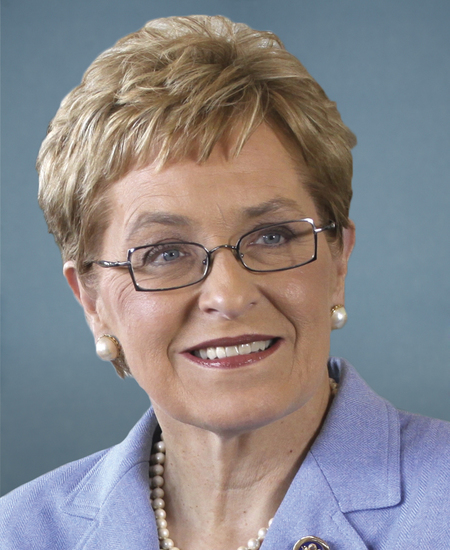
Rep. Marcy Kaptur
Sponsored bills
Ethan's Law This bill establishes a framework to regulate the storage of firearms on residential premises at the federal, state, and tribal levels. At the federal level, the bill establishes statutory requirements for firearms on residential premises to be safely stored if a minor is likely to gain access without permission or if a resident is ineligible to possess a firearm. An individual who violates the requirements is subject to criminal penalties. A firearm stored in violation of the requirements is subject to seizure and forfeiture. At the state and tribal levels, the bill requires the Department of Justice to award grants to implement functionally identical requirements for the safe storage of firearms.
COVID-19 Justice and Accountability Act This bill provides a cause of action for harm suffered as a result of a violation of certain federal laws relating to COVID-19 (i.e., coronavirus disease 2019) and suspends certain predispute arbitration agreements and joint-action waivers during the COVID-19 public health emergency. Specifically, individuals may bring a cause of action in U.S. district court against any person for harm suffered as a result of a violation of, or a failure to comply with, the Coronavirus Aid, Relief, and Economic Security Act (CARES Act), the Families First Coronavirus Response Act, or the Coronavirus Response and Relief Supplemental Appropriations Act, 2021. Further, during the COVID-19 public health emergency period and 180 days thereafter, no predispute arbitration agreement or joint-action waiver (an agreement to waive the right to participate in a joint, class, or collective action) is valid or enforceable with respect to employment, consumer, antitrust, or civil rights disputes.

Stephanie Tubbs Jones Uterine Fibroid Research and Education Act of 2021 This bill directs the Department of Health and Human Services (HHS) to expand research on, and take other actions to address, uterine fibroids. These are muscular tumors that grow in the wall of the uterus and may cause pain, heavy menstrual bleeding, and reproductive issues. In coordination with the National Institutes of Health and appropriate federal agencies, HHS must undertake research activities on uterine fibroids. In addition, HHS must establish a database of services furnished to individuals diagnosed with uterine fibroids under Medicaid or the Children's Health Insurance Program and must develop a report on federal and state expenditures for such services. Additionally, HHS must disseminate information on uterine fibroids to the public and to health care providers, including information on the elevated risk for minority women and available treatments.
Huntington's Disease Disability Insurance Access Act of 2021 This bill expedites payment of Social Security Disability Insurance (SSDI) benefits and eligibility for Medicare coverage for those with Huntington's disease. This is an inherited disorder that causes brain cells to die, including in areas of the brain that help to control voluntary movement. Specifically, the bill eliminates the 5-month waiting period for SSDI benefits and the subsequent 24-month waiting period for Medicare coverage for individuals with Huntington's disease. Under current law, individuals generally must wait five months after the onset of disability to begin receiving SSDI benefits and an additional 24 months to become eligible for Medicare.
This bill directs the Speaker of the House and the President pro tempore of the Senate to arrange for the award of three Congressional Gold Medals to the U.S. Capitol Police (USCP) and other law enforcement agencies that protected the U.S. Capitol on January 6, 2021. Following the award of these medals, one medal shall be given to the USCP, one medal shall be given to the Metropolitan Police Department of the District of Columbia, and one medal shall be given to the Smithsonian Institution and displayed with a plaque listing all law enforcement agencies that participated in protecting the Capitol on January 6, 2021.
Equality Act This bill prohibits discrimination based on sex, sexual orientation, and gender identity in areas including public accommodations and facilities, education, federal funding, employment, housing, credit, and the jury system. Specifically, the bill defines and includes sex, sexual orientation, and gender identity among the prohibited categories of discrimination or segregation. The bill expands the definition of public accommodations to include places or establishments that provide (1) exhibitions, recreation, exercise, amusement, gatherings, or displays; (2) goods, services, or programs; and (3) transportation services. The bill allows the Department of Justice to intervene in equal protection actions in federal court on account of sexual orientation or gender identity. The bill prohibits an individual from being denied access to a shared facility, including a restroom, a locker room, and a dressing room, that is in accordance with the individual's gender identity.
This resolution expresses support for the designation of Pi Day.
No Tax Breaks for Outsourcing Act This bill modifies the tax treatment of the foreign source income of domestic corporations. The bill includes provisions that modify calculations of the gross income of U.S. shareholders to include net CFC tested income in the current taxable year, apply limitations on the foreign tax credit on a country-by-country basis, limit the tax deduction for the interest expense of a U.S. corporation that is a member of a financial reporting group (i.e., a group that prepares consolidated financial statements according to generally accepted accounting principles or international financial reporting standards), modify the rules for the taxation of inverted corporations (i.e., U.S. corporations that acquire foreign companies to reincorporate in a foreign jurisdiction with income tax rates lower than the United States), and treat certain foreign corporations managed and controlled primarily in the United States as domestic corporations for tax purposes.
Protecting the Right to Organize Act of 20 21 This bill expands various labor protections related to employees' rights to organize and collectively bargain in the workplace. Among other things, it (1) revises the definitions of employee , supervisor , and employer to broaden the scope of individuals covered by the fair labor standards; (2) permits labor organizations to encourage participation of union members in strikes initiated by employees represented by a different labor organization (i.e., secondary strikes); and (3) prohibits employers from bringing claims against unions that conduct such secondary strikes. The bill also allows collective bargaining agreements to require all employees represented by the bargaining unit to contribute fees to the labor organization for the cost of such representation, notwithstanding a state law to the contrary; and expands unfair labor practices to include prohibitions against replacement of, or discrimination against, workers who participate in strikes. The bill makes it an unfair labor practice to require or coerce employees to attend employer meetings designed to discourage union membership and prohibits employers from entering into agreements with employees under which employees waive the right to pursue or a join collective or class-action litigation. The bill further prohibits employers from taking adverse actions against an employee, including employees with management responsibilities, in response to that employee participating in protected activities related to the enforcement of the prohibitions against unfair labor practices (i.e., whistleblower protections). Such protected activities include providing information about a potential violation to an enforcement agency, participating in an enforcement proceeding, initiating a proceeding concerning an alleged violation or assisting in such a proceeding, or refusing to participate in an activity the employee reasonably believes is a violation of labor laws. Finally, the bill addresses the procedures for union representation elections, provides employees with the ability to vote in such elections remotely by telephone or the internet, modifies the protections against unfair labor practices that result in serious economic harm, and establishes penalties and permits injunctive relief against entities that fail to comply with National Labor Relations Board orders.