

Maddy summaryThis bill prohibits the use of autopen devices or any other automatic signing mechanism for the President to sign engrossed bills, executive orders, pardons, or commutations. It requires the President to personally sign these documents, banning all other individuals or machines from doing so. The law also retroactively invalidates any past document signed in violation of this rule, regardless of when it was signed. This directly affects the President's signing authority and the legal validity of past executive actions involving machine signatures.
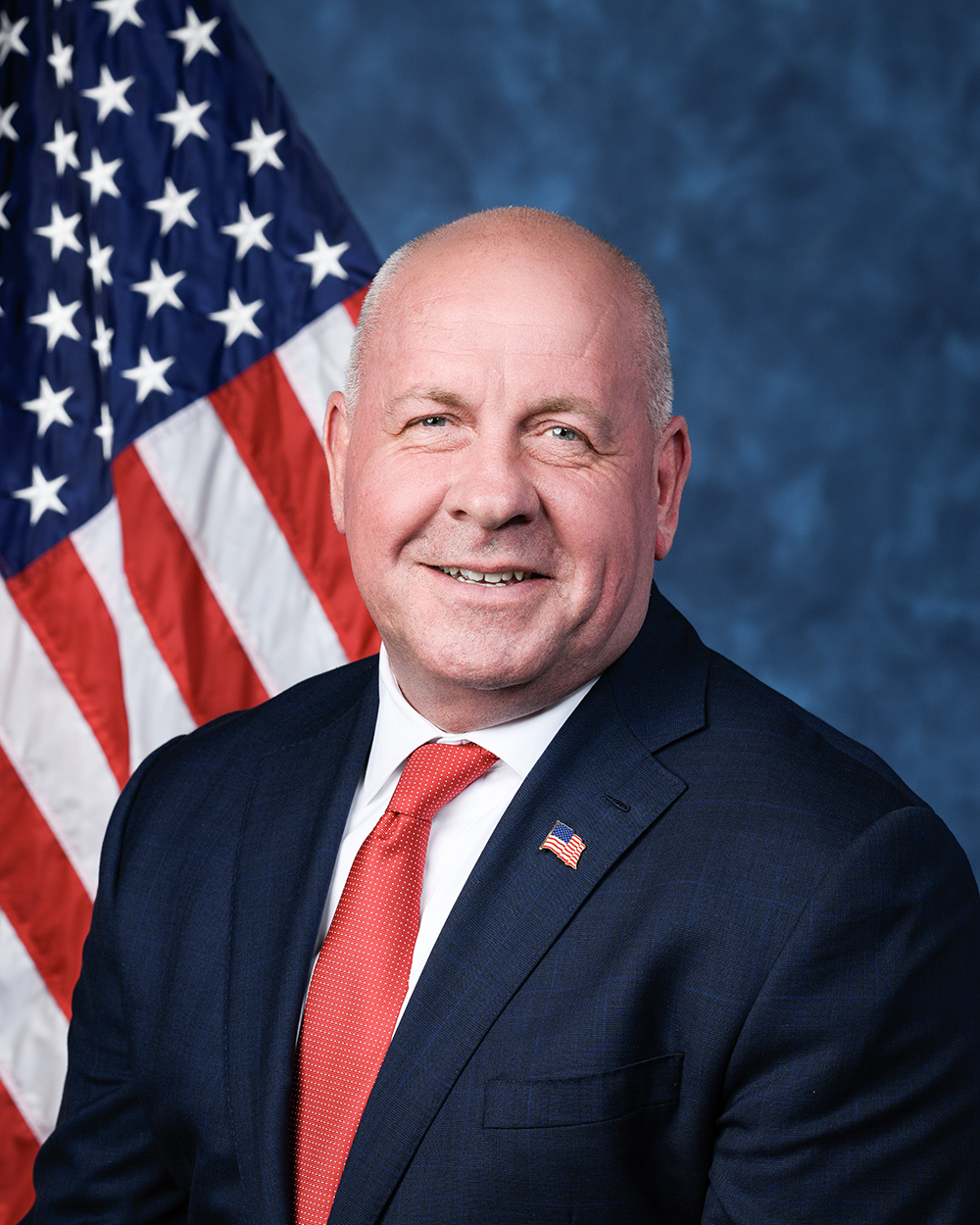
Rep. David J. Taylor
Sponsored bills
Maddy summaryHR 4382 authorizes the U.S. Mint to produce commemorative coins for the 2028 Los Angeles Olympics/Paralympics and 2034 Salt Lake City Winter Olympics/Paralympics. It specifies gold, silver, and half-dollar coin designs with defined mintage limits (e.g., up to 100,000 $5 gold coins for each event), all bearing inscriptions like "2028" or "2034" and standard coin features. A surcharge ($5-$50 per coin) is added to sales, with all funds directed to the respective Olympic committees to support event hosting and legacy programs like youth sports. The bill ensures no net cost to the government by requiring surcharge revenues to cover all design, production, and marketing expenses before funds are disbursed.
Maddy summaryHRES 571 is a symbolic resolution passed by the U.S. House of Representatives to commemorate the one-year anniversary of the July 13, 2024, attempted assassination of President Donald J. Trump in Butler, Pennsylvania. It condemns two assassination attempts against the President (in Butler and West Palm Beach), honors victims Corey D. Comperatore (who died shielding his family), David Dutch, and James Copenhaver (who were critically injured), and expresses gratitude to first responders. The resolution also condemns incitement of violence against political officials and calls for unity against political violence. As a non-binding resolution, it does not create new laws or policies but formally states the House’s position on these events.
Maddy summaryThe LEDGER Act (HR 4091) requires the Treasury Department to create a system tracking every government payment within 180 days of enactment. It mandates that all federal departments, agencies, and branches (executive, legislative, judicial) must report disbursements from every funding source, including how long funds remain available for spending. This system will detail each payment's origin, recipient, and timing across all government accounts. The bill directly affects all federal spending entities by standardizing expenditure tracking previously handled inconsistently.
Maddy summaryHR 3897, the Confidence in Clean Water Permits Act, clarifies compliance requirements for facilities holding permits under the Clean Water Act. It directly affects industrial and wastewater facilities by expanding what counts as "compliance" with permit conditions, including pollutants not explicitly listed but identified during application or operations. Key provisions require that water quality-based limits in permits must clearly specify the pollutant and describe how compliance is achieved - either through numerical limits or detailed narrative requirements. The bill also includes minor technical corrections to existing permit language. These changes aim to reduce ambiguity in permit enforcement without altering the underlying regulatory framework.
Maddy summaryHR 3870, the COAL POWER Act, repeals a specific Environmental Protection Agency (EPA) rule issued on May 7, 2024, which set emission standards for coal- and oil-fired power plants. This bill directly affects coal and oil-fired electric utilities by removing their requirement to comply with that particular EPA regulation (89 Fed. Reg. 38508). The key mechanism is a straightforward repeal, treating the rule as if it never took effect. The bill does not create new rules or alter existing environmental standards beyond this specific EPA action.
Maddy summaryHR 3881, the "Stop Dangerous Sanctuary Cities Act," denies certain federal grants to states or localities that restrict sharing immigration status information or comply with federal immigration detainers. Specifically, it defines "sanctuary jurisdictions" as those with policies prohibiting cooperation with federal immigration enforcement requests (under Sections 236/287 of the Immigration and Nationality Act). The bill blocks recipients from receiving Economic Development Administration grants and Community Development Block Grants if they are deemed a sanctuary jurisdiction. Local officials complying with federal detainers gain legal protections, including immunity from lawsuits, while jurisdictions violating the law face mandatory return of funds. The policy takes effect October 1, 2025.
Maddy summaryHR 1182, the Compressed Gas Cylinder Safety and Oversight Improvements Act of 2025, requires foreign manufacturers of gas cylinders used to transport hazardous materials in the U.S. to obtain annual safety approvals (with a possible 5-year extension under strict conditions) instead of indefinite ones. The bill mandates that these manufacturers answer specific safety-related questions about past penalties, sanctions, or compliance issues before approval and requires public comment periods for new applications. It also establishes a process for reevaluating approvals based on evidence of inaccurate information and strengthens oversight through annual inspections and cost recovery for foreign inspections. The law directly affects foreign cylinder manufacturers seeking to sell into the U.S. market, aiming to improve safety oversight through stricter, time-limited approvals and transparency.
Maddy summaryHR 589, the FACE Act Repeal Act of 2025, would repeal a federal law (Section 248 of Title 18, U.S. Code) that prohibited obstructing access to reproductive health care facilities through physical means, intimidation, or violence. This repeal would eliminate the federal criminal penalty for such conduct, meaning federal prosecutors could no longer charge individuals under this specific law. The bill applies to all pending or future federal prosecutions related to these actions. It does not affect state laws that may still regulate access to reproductive health care facilities.
Maddy summaryThe DTC Act of 2025 requires pharmaceutical companies to include a drug's list price (for a 30-day supply) in direct-to-consumer television and digital ads for prescription drugs covered by Medicare or Medicaid. It applies to ads for drugs costing $35 or more per 30-day supply, exempting lower-cost medications. Manufacturers must disclose the list price clearly by July 1, 2026, with penalties of up to $100,000 per violation for noncompliance. The bill aims to provide consumers with upfront pricing information to help them compare costs before filling prescriptions, particularly affecting drugs commonly advertised to Medicare beneficiaries.