

No Irresponsible Recovery or Reinvestment Expenditures Supporting Priorities Outside Necessary Surface Infrastructure Built Legitimately and Expediently Spending Act or the No IRRESPONSIBLE Spending Act This resolution provides that it shall not be in order for the House of Representatives to consider a bill containing an appropriation or authorization of more than $100 billion relating to infrastructure if the bill does not provide at least 50% of those funds to specified programs, initiatives, or projects (e.g., the construction or maintenance of highways, railways, airports, and waterways). A question of order on this percentage may be raised at any time.
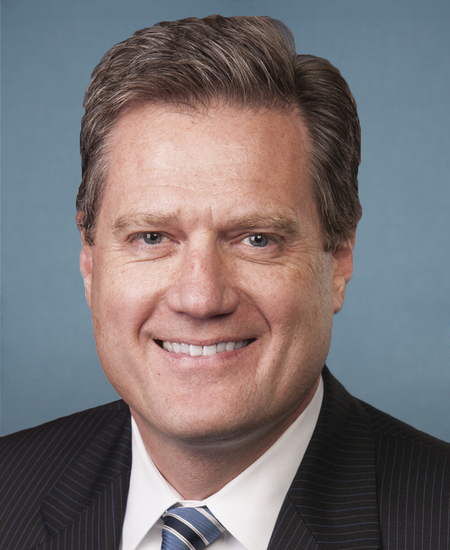
Rep. Michael R. Turner
Sponsored bills
This resolution condemns Iranian state-sponsored terrorist attacks against U.S. citizens and officials and Iranian dissidents and expresses support for the people of Iran who are engaged in legitimate and peaceful protests against the Iranian regime.
This resolution urges the Department of State to take action on unpaid Peruvian agrarian reform bonds by encouraging Peru to negotiate in good faith with U.S. bondholders regarding payment of these bonds.
Historic Tax Credit Growth and Opportunity Act of 2021 This bill increases the rehabilitation tax credit and modifies certain requirements for the credit. The bill increases the rate of the credit for qualified rehabilitation expenditures in taxable years beginning after December 31, 2019, and before January 1, 2027, after which the rate reverts to 20%. The bill increases the rate of the credit to 30% for certain small projects whose qualified rehabilitation expenditures do not exceed $2.5 million. The bill also expands the types of buildings eligible for rehabilitation by decreasing the rehabilitation threshold from 100% to 50% of project expenses. It also eliminates the basis adjustment requirement for the credit and modifies rules relating to tax-exempt use property eligible for the credit.
Resident Physician Shortage Reduction Act of 2021 This bill increases the number of residency positions eligible for graduate medical education payments under Medicare for qualifying hospitals, including hospitals in rural areas and health professional shortage areas. Current law provides for an increase of up to 200 positions per fiscal year beginning in FY2023, with a total increase of 1,000 positions; each hospital may receive up to 25 additional positions. The bill provides for an additional increase of 2,000 positions per fiscal year from FY2023-FY2029; during this period, each hospital may receive up to 75 additional positions in total under the bill and current law. Additionally, one-third of the positions that are made available under the bill must be allocated to hospitals that are already operating above applicable resident limits. The bill also requires the Government Accountability Office to report on strategies to increase the diversity of the health professional workforce, including with respect to representation from rural, low-income, and minority communities.
Military Retiree Survivor Comfort Act This bill addresses the overpayment of retired or retainer pay to a joint account (bearing the name of the decedent and the decedent's designated beneficiary) during the month of the death of a retired member of the armed forces. Specifically, the bill authorizes the Department of Defense (DOD) to forgive or offset the overpayment if the decedent was enrolled in the Survivor Benefit Plan (SBP). In the case of an offset, each of the first 12 SBP annuity payments after the death of the retired service member must be reduced by one-twelfth of the overpayment. If the decedent was not enrolled in the SBP, DOD is authorized to forgive the overpayment.
Emmett Till and Mamie Till-Mobley Congressional Gold Medal Act of 2021 This bill provides for the posthumous presentation of a Congressional Gold Medal in commemoration of Emmett Till and Mamie Till-Mobley. After the award the medal shall be given to the National Museum of African American History and Culture.
Military Family Violence Prevention Act This bill requires the Department of Defense (DOD) to take various actions and implement programs related to the prevention of and response to domestic violence and child abuse and neglect among military families. Specifically, the bill requires DOD to report on current and recommended staffing levels for the Family Advocacy Programs (FAPs) of the Armed Forces at each installation, ensure that appropriate statistical data on incidents report to the FAPs is shared among and across the Armed Forces, establish a pilot program to assess the feasibility and advisability of various mechanisms to inform families about the FAPs and resiliency training of the Armed Forces during their enrollment in the Defense Enrollment Eligibility Reporting System, report on the results of the study conducted by the Defense Department Advisory Committee on Women in the Services that includes information on initial entry points for use by members of military families seeking support for domestic abuse or child abuse and neglect, and modify internal policy related to FAPs to enhance collaboration among the specified DOD programs (e.g., the Defense Suicide Prevention Office). Each military department must improve the information available to military families on the services available in connection with domestic abuse or child abuse and neglect. Finally, the bill requires the Inspector General of DOD to report on best practices among military installations in prevention and response to domestic abuse and child abuse and neglect among military families.
Safe Step Act This bill requires a group health plan to establish an exception to medication step-therapy protocol in specified cases. A medication step-therapy protocol establishes a specific sequence in which prescription drugs are covered by a group health plan or a health insurance issuer. A request for such an exception to the protocol must be granted if (1) an otherwise required treatment has been ineffective, (2) such treatment is expected to be ineffective and delaying effective treatment would lead to irreversible consequences, (3) such treatment will cause or is likely to cause an adverse reaction to the individual, (4) such treatment is expected to prevent the individual from performing daily activities or occupational responsibilities, (5) the individual is stable based on the prescription drugs already selected, or (6) there are other circumstances as determined by the Employee Benefits Security Administration. The bill requires a group health plan to implement and make readily available a clear process for an individual to request an exception to the protocol, including required information and criteria for granting an exception. The bill further specifies timelines under which plans must respond to such requests.
Veterans Right to Expediency Act This bill requires the Department of Veterans Affairs (VA) to deliver notice of the denial of claims for VA benefits by certified mail.