

Save Money on Auto Repair Transportation Act or the SMART Act This bill limits design patent infringement liability for component parts used to repair the exterior of a motor vehicle. Specifically, the bill limits liability for infringement of a design patent that claims the appearance of a component part of a motor vehicle's exterior, such as a hood or fender. The act of making, offering to sell within the United States, or importing into the United States an article of manufacture (such as an exterior component part from an aftermarket manufacturer) that would otherwise infringe such a design patent shall not constitute infringement if the purpose of the article of manufacture is to repair a motor vehicle to restore it to its original appearance. In addition, 30 months after a motor vehicle with an exterior component part covered by a design patent is offered for sale in any country, it shall not constitute design patent infringement to use or sell within the United States an otherwise-infringing article of manufacture if the purpose of that article of manufacture is to repair the motor vehicle to restore it to its original appearance.
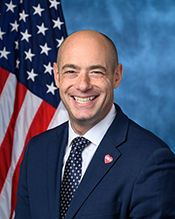
Rep. Greg Landsman
Sponsored bills
Maddy summaryThe Food Deserts Act creates a federal grant program to help establish grocery stores in underserved communities by funding state revolving funds. States receive capitalization grants (up to $150 million for FY2022) to provide low-interest loans to grocery stores that meet specific criteria, such as selling unprocessed, affordable healthy foods and matching 20% of the loan with non-federal funds. Priority is given to stores hiring local workers, offering nutrition education, sourcing from local farms, and having established supply chains. The program directly supports grocery store operators in areas with limited access to fresh food, aiming to improve community health outcomes through increased access to nutritious options.
Maddy summaryThis bill prohibits colleges receiving federal funds from retaliating against students who belong to single-sex social organizations (like traditional fraternities or sororities). It specifically bans schools from requiring students to waive membership rights as a condition of enrollment or taking adverse actions - such as disciplinary measures, denying financial aid, or restricting housing - solely based on their membership in these groups. The bill clarifies that institutions aren't required to officially recognize such organizations and can still take action for misconduct unrelated to the group's single-sex policy. It defines "adverse action" broadly to include denials of scholarships, housing, or leadership opportunities tied to membership. The law directly affects students in single-sex organizations and the federal funding policies of colleges under the Higher Education Act.
Maddy summaryHRES 228 is a non-binding resolution recognizing the Kingdom of Bhutan's responsibility for the oppression and forced eviction of over 100,000 Nepali-speaking Bhutanese citizens (Lhotshampas) during the 1980s and 1990s due to their identity, culture, and language. It directly urges Bhutan to release political prisoners, restore citizenship to those stripped of it, accept the return of refugees from Nepal, and establish a Truth Commission to investigate past human rights abuses. The resolution also notes that over 250,000 Lhotshampas inside Bhutan continue to face discrimination and loss of citizenship. As a statement of congressional position, it does not impose legal requirements but calls for specific reconciliation actions.
Maddy summaryThis bill authorizes a Congressional Gold Medal to honor the "Hello Girls" - female telephone operators who served in the Army Signal Corps during World War I. They provided critical battlefield communications in France (connecting 26 million calls), wore military uniforms, and faced combat risks, but were denied veteran benefits for 60 years due to being classified as civilian contractors. The medal recognizes their pioneering service, devotion, and the decades-long struggle to gain military recognition. The award follows similar recognition for other WWII women veterans and aims to correct the historical injustice they faced.
Maddy summaryThe PHIT Act of 2023 allows individuals and families to deduct certain fitness expenses as medical costs on their federal taxes. It covers gym memberships, fitness classes, and specific equipment used exclusively for exercise (like home workout gear), with a yearly limit of $1,000 ($2,000 for joint returns). Expenses for activities like golf, hunting, or non-exercise-focused facilities (e.g., private clubs) are excluded, and equipment must be used solely for physical activity. This directly affects taxpayers who pay for qualifying fitness programs, making these costs partially tax-deductible under revised IRS rules.
Maddy summaryHR 1538 creates a new "emerging business enterprise" designation for very small, young businesses (under 5 years old, with fewer than 25 employees or under 10% of industry size standards, and managers earning no more than 200% of average manager salaries). It requires federal agencies to set annual goals for awarding 3% of contracts to these businesses, prioritizing them if goals aren't met. The bill also waives SBA loan fees for eligible businesses and mandates agencies to report their progress to the Small Business Administration and Congress annually. These provisions aim to increase federal contracting opportunities for early-stage small businesses through defined eligibility, agency targets, and financial incentives.
Maddy summaryThis bill amends the World Trade Center Health Program to expand eligibility to include certain Department of Defense and Federal agency workers who responded to the September 11 attacks at the Pentagon and Shanksville, Pennsylvania. It establishes a 500-person enrollment cap for these responders, allows a broader range of licensed health care providers to conduct program evaluations, and creates two new funding mechanisms totaling $2.04 billion for the program through 2033. The bill also clarifies enrollment counts by excluding deceased individuals from program statistics and adjusts funding calculations to ensure continued support for affected responders and survivors. These changes directly affect 9/11 responders who worked at the Pentagon and Shanksville sites and their families participating in the health program.
Maddy summaryHR 1280, the Cerebral Palsy Research Program Authorization Act of 2023, creates a federal research program at the CDC to study cerebral palsy. The bill authorizes the CDC to fund research on diagnosis, treatment, prevention factors, health costs, and public health surveillance related to cerebral palsy, which affects over 1 million Americans. It allocates $5 million annually from 2024 through 2029 for these research activities. This program directly supports researchers and health systems by advancing scientific understanding of a condition with no known cure that impacts children and adults worldwide.
Maddy summaryThe Paycheck Fairness Act (HR 17) strengthens equal pay protections by amending the Fair Labor Standards Act. It prohibits pay discrimination based on sex, pregnancy, childbirth, sexual orientation, gender identity, and sex characteristics. The bill modifies employer defenses for pay differences to require demonstration that any disparity is job-related, consistent with business necessity, and accounts for the entire pay differential. It also prohibits employers from relying on wage history when making hiring decisions or setting pay, enhances penalties for violations, and requires the EEOC to collect compensation data disaggregated by sex, race, and national origin.