

Maddy summaryHR 6597, the LET’S Protect Workers Act, increases civil penalties for employers violating key labor laws to strengthen worker protections. It raises fines for child labor violations to up to $700,000 per incident causing death or serious injury, and doubles penalties for repeated wage/hour violations (up to $50,000 per violation). The bill also significantly boosts OSHA penalties (e.g., up to $800,000 for serious violations), adds new retaliation penalties for mine safety violations (up to $200,000 for repeat offenses), and clarifies that recordkeeping violations continue until corrected. These changes apply to employers across sectors, including manufacturing, agriculture, and mining, under the Fair Labor Standards Act, Occupational Safety and Health Act, and Mine Safety Act.
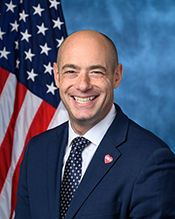
Rep. Greg Landsman
Sponsored bills
Maddy summaryThe Expanding Cybersecurity Workforce Act of 2025 establishes a new program under CISA to promote cybersecurity careers to underrepresented groups, including racial and ethnic minorities, veterans, formerly incarcerated individuals, people with disabilities, older adults (40+), and those from low-income or nontraditional educational backgrounds (like community colleges or HBCUs). The program requires CISA to tailor outreach to regional needs, partner with schools, unions, and community organizations, and report annually on workforce impact. It authorizes $20 million annually for fiscal years 2026-2031 to support these efforts, aiming to diversify the cybersecurity workforce through targeted recruitment and training.
Maddy summaryHR 6406, the Parental Workforce Training Act, provides federal grants to local workforce boards to help parents cover childcare costs while participating in job training programs. It directly affects parents with dependent children who are enrolled in employment and training activities under the Workforce Innovation and Opportunity Act (WIOA). The bill authorizes $10 million in funding to award competitive grants, allowing local boards to provide direct childcare subsidies to eligible individuals through their chosen providers (as long as they meet state/local quality standards). Local boards must report on participant enrollment and program completion rates within one year of grant implementation. This is a concrete policy change establishing a new childcare support mechanism within existing workforce programs.
Maddy summaryThis bill streamlines the process for broadband providers to install facilities in public rights-of-way near rail corridors and on railroad property. It requires providers to notify railroads when placing facilities in intersecting areas (with specific details) and to submit formal applications for railroad rights-of-way, including engineering plans and safety details. Railroads can only deny applications for safety reasons (like infrastructure damage or passenger risk) and must charge providers only for actual safety-related costs. Disputes over approvals or fees are resolved by the FCC within 90 days, with railroads and providers required to follow safety standards and industry guidelines. The law aims to balance broadband expansion with railroad safety and operational needs.
Maddy summaryThis bill would amend the Anti-Terrorism Act of 1987 to designate the Muslim Brotherhood as a terrorist organization and prohibit its operations within the United States. It would require the President to designate the Muslim Brotherhood as a foreign terrorist organization under immigration law and impose new visa restrictions, including immediate revocation of current visas, for individuals identified as members. The bill mandates annual reports from the Secretary of State identifying Muslim Brotherhood branches worldwide and determining which should be designated as terrorist organizations under existing laws. These provisions would directly affect Muslim Brotherhood members, branches, and affiliated organizations seeking entry to or operating within the United States.
Maddy summaryThis bill requires Medicare Advantage and prescription drug plans to reimburse the Department of Veterans Affairs (VA) for health care services provided to veterans enrolled in those plans, including outpatient care, prescription drugs, and inpatient services. It establishes a new process for the VA to recover costs from Medicare plans, requiring these plans to respond to reimbursement claims within 45 days and face penalties for non-compliance, including triple damages for willful violations. The law modifies existing VA authority to recover costs for non-service-connected disabilities by clarifying recovery procedures and requiring Medicare plans to coordinate benefits with VA care. The provisions apply to Medicare plan years beginning January 1, 2026, and directly affect Medicare Advantage organizations and prescription drug plan sponsors that serve veterans. This policy change ensures veterans receive full benefits without double payments by requiring Medicare plans to reimburse the VA for services they cover.
Maddy summaryHRES 856 is a non-binding resolution expressing the House of Representatives' view that the U.S. Department of Agriculture (USDA) should use its existing contingency funds and interchange authority to fund the Supplemental Nutrition Assistance Program (SNAP) for November 2025. The resolution cites that the USDA holds over $5 billion in contingency funds set aside for emergencies and has legal authority under the Department of Agriculture Organic Act to transfer funds between nutrition programs to maintain SNAP benefits. This would directly support approximately 42 million people relying on SNAP, including 16 million children, 8 million seniors, 4 million people with disabilities, and 1.2 million veterans, preventing disruption during a potential funding gap. The resolution does not create new law but urges the administration to use existing resources to ensure continued food assistance.
Maddy summaryHR 6361, the Ban AI Denials in Medicare Act, prohibits the U.S. Department of Health and Human Services from implementing or testing Medicare models that use artificial intelligence for prior authorization of covered services under traditional Medicare. Specifically, it blocks the existing WISeR model (described in a 2025 federal notice) and prevents future models from using AI to deny coverage for Medicare Part A or Part B services. This bill directly affects Medicare beneficiaries and healthcare providers who would otherwise face AI-driven coverage decisions. The key mechanism is an amendment to the Social Security Act, explicitly banning the use of AI in prior authorization systems within Medicare's innovation models.
Give Kids a Chance Act of 2025 This bill expands the Food and Drug Administration’s (FDA’s) authority with respect to research on rare pediatric diseases, including by permitting the FDA to take enforcement action against drug sponsors that fail to satisfy pediatric study requirements and by reauthorizing programs that support pediatric research. Specifically, the bill modifies requirements relating to molecularly targeted pediatric cancer investigations to permit research on new drugs in combination with active ingredients that have already been approved, provided certain conditions are met; permits the FDA to take enforcement action against drug sponsors that fail to comply with pediatric study requirements, if such sponsors demonstrated a lack of due diligence in satisfying the requirement; renews the FDA’s authority to award priority review vouchers to sponsors of new products intended to treat rare pediatric diseases through September 30, 2029; and reauthorizes through FY2027 certain funding for the National Institutes of Health to support priority pediatric research. The bill also provides statutory authority for the FDA’s interpretation of the orphan drug exclusivity period. The bill specifies, consistent with FDA regulations, that the seven-year market exclusivity period for drugs for rare diseases or conditions (i.e., orphan drugs) prohibits the approval of the same drug for the same approved use or indication with respect to the disease or condition. (In Catalyst Pharmaceuticals, Inc. v. Becerra , a court rejected the FDA’s interpretation and held that orphan drug exclusivity extends to all uses or indications for the disease or condition.)
Maddy summaryHR 6255, the Affordable Insulin Now Act, requires health insurance plans (including employer-sponsored and individual plans) to cover specific insulin products starting in 2026. It caps out-of-pocket costs for these insulin products at $35 per 30-day supply or 25% of the negotiated price, whichever is lower, with no deductibles applied. The bill defines "selected insulin products" to include at least one of each dosage form (like vials or pumps) and type (such as rapid-acting or long-acting) available from the plan. This directly affects people with diabetes who rely on insulin, ensuring more predictable and affordable access to essential medications under their health coverage.