

Maddy summaryHR 4509, the NOPAIN for Veterans Act, requires the Department of Veterans Affairs (VA) to add FDA-approved non-opioid pain medications to its national formulary within one year of their approval for pain management. These medications must reduce pain without acting on opioid receptors, directly affecting veterans receiving VA care who need pain treatment. The bill mandates the VA include such drugs in its formulary and drug standardization list, expanding access to non-opioid options. It also prohibits using funds from the Cost of War Toxic Exposures Fund to implement these changes, with implementation required within 90 days of the bill's enactment.
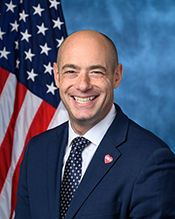
Rep. Greg Landsman
Sponsored bills
Maddy summaryHR 909, the Crime Victims Fund Stabilization Act of 2025, modifies how funds from the False Claims Act are deposited into the Crime Victims Fund. It specifies that from 2025 through 2029, certain False Claims Act proceeds (specifically those for qui tam plaintiff payments and government damage reimbursements) cannot be deposited into the fund. This change directly affects the composition of the Crime Victims Fund by excluding these specific revenue streams during the specified period. The bill does not create new benefits or alter victim services; it only adjusts fund allocation rules for existing False Claims Act revenues.
Maddy summaryHR 7016, the "No Funds for NATO Invasion Act," blocks federal funding for any U.S. military invasion of a North Atlantic Treaty Organization (NATO) member country or territory covered by NATO's Article 5 mutual defense clause. The bill prohibits using any federal funds for such invasions and bans U.S. officials from executing these actions. It directly affects U.S. military operations and funding decisions involving NATO members. The law applies to all federal spending, preventing the use of existing budgets for this specific purpose.
Maddy summaryHR 7002, the Justice for Exploited Children Act, amends the Fair Labor Standards Act to increase penalties for employers violating child labor laws involving minors under 18. It adds criminal penalties for repeated or willful violations, including fines up to $100,000 or 5 years in prison, and significantly higher fines for violations causing death or serious injury to child employees (up to $500,000 or 10 years imprisonment). Civil penalties are also raised, with minimum fines of $1,000 for standard violations and $50,000 for violations causing a child’s death (doubled for repeat or willful cases). The bill directly affects employers who violate child labor protections, aiming to strengthen enforcement through steeper financial and criminal consequences.
Maddy summaryThis concurrent resolution (HCONRES 69) commemorates the 15th anniversary of the January 8, 2011, Tucson shooting that killed six people and injured 13, including former Congresswoman Gabby Giffords. It honors the victims, survivors, and Giffords - now a prominent advocate for gun violence prevention - and recognizes her leadership in promoting civility and reducing gun violence. The resolution also commends Tucson residents and first responders for their resilience and reaffirms Congress’s commitment to respectful dialogue and opposing political violence. As a ceremonial resolution, it does not create new laws or policies.
Maddy summaryHR 1601, the Defending Ukraine’s Territorial Integrity Act, prohibits U.S. federal funds from being provided to any foreign government that recognizes Russian-occupied Ukrainian territories (including Crimea, Donetsk, Kherson, Luhansk, and Zaporizhzhia) or supports Russia's annexation of Ukraine. The bill requires the Secretary of State to publish a list of such countries on the State Department website and allows limited waivers for national security reasons. It directly affects foreign governments that formally acknowledge Russian control over these regions, restricting their access to U.S. aid. The law aims to uphold U.S. policy against recognizing Russia's territorial claims in Ukraine through concrete funding restrictions.
Maddy summaryHR 4611 (EACH Act of 2025) requires all federally funded health programs - including Medicaid, Medicare, military health plans, and the Indian Health Service - to cover abortion services without restrictions, repealing the Hyde Amendment's long-standing ban on federal funding for most abortions. This directly affects millions of people enrolled in these programs, particularly low-income women, women of color (including 25% of Black women and 22% of Hispanic women on Medicaid), and young people. The bill mandates coverage in all federally administered health plans and prohibits state or private insurers from restricting abortion coverage in health insurance. It aims to eliminate current federal and state barriers that deny abortion access to people who rely on government health programs.
Maddy summaryThis bill (HR 6868) streamlines the FDA review process for over-the-counter (OTC) drugs by requiring the agency to use the "least burdensome" approach when evaluating manufacturer requests to add new products to standardized OTC safety guidelines. It mandates that the FDA meet with companies if existing data is insufficient, provide written recommendations for necessary studies, and document these meetings in the public administrative record. The bill directly affects drug manufacturers seeking to market new OTC products, reducing review barriers without changing safety standards or altering the criteria for FDA approval. This focuses on improving efficiency in the regulatory process for OTC drug innovations.
Maddy summaryThis bill requires the President to reimburse the U.S. Treasury for Secret Service protection and related government costs when traveling for personal business interests tied to entities owned by or benefiting the President (Section 2). It bans the President from soliciting donations for presidential libraries or museums while in office and mandates annual reports from the President and private library entities (Section 4). Additionally, it prohibits the President from operating businesses, serving on boards, or engaging in day-to-day business operations during their term, with any income from such activities subject to a 100% tax (Section 5). Immediate family members engaging in prohibited business activities must submit quarterly reports to Congress. The bill directly affects the President and their immediate family by imposing financial accountability measures for potential conflicts of interest.
Maddy summaryThe Public Health Air Quality Act of 2025 requires the Environmental Protection Agency to establish a national network for monitoring hazardous air pollutants near communities, focusing on facilities emitting specific chemicals linked to health risks like cancer and respiratory issues. The bill mandates fenceline monitoring at 100 high-priority facilities that emit chemicals such as benzene, formaldehyde, ethylene oxide, and other hazardous air pollutants, with public reporting of data within 7 days of collection. It also requires deployment of 1,000 low-cost air quality monitoring systems in communities disproportionately impacted by pollution, with data made accessible in multiple languages and formats. The Act authorizes $146 million for implementation during fiscal years 2026-2027 to support these monitoring requirements and public transparency efforts.