

Maddy summaryHR 1548, the "Leveling the Playing Field 2.0 Act," amends U.S. trade laws to strengthen enforcement of antidumping and countervailing duty regulations. The bill creates new rules for handling multiple investigations on the same merchandise (successive investigations), addresses market distortions in foreign countries that affect production costs, and improves mechanisms to prevent companies from circumventing existing duties. It also establishes procedures for investigating currency undervaluation as a form of subsidy and strengthens requirements for importers to certify compliance with trade laws. These changes primarily affect U.S. importers of foreign goods, foreign exporters, and the Department of Commerce, which administers these trade enforcement mechanisms.
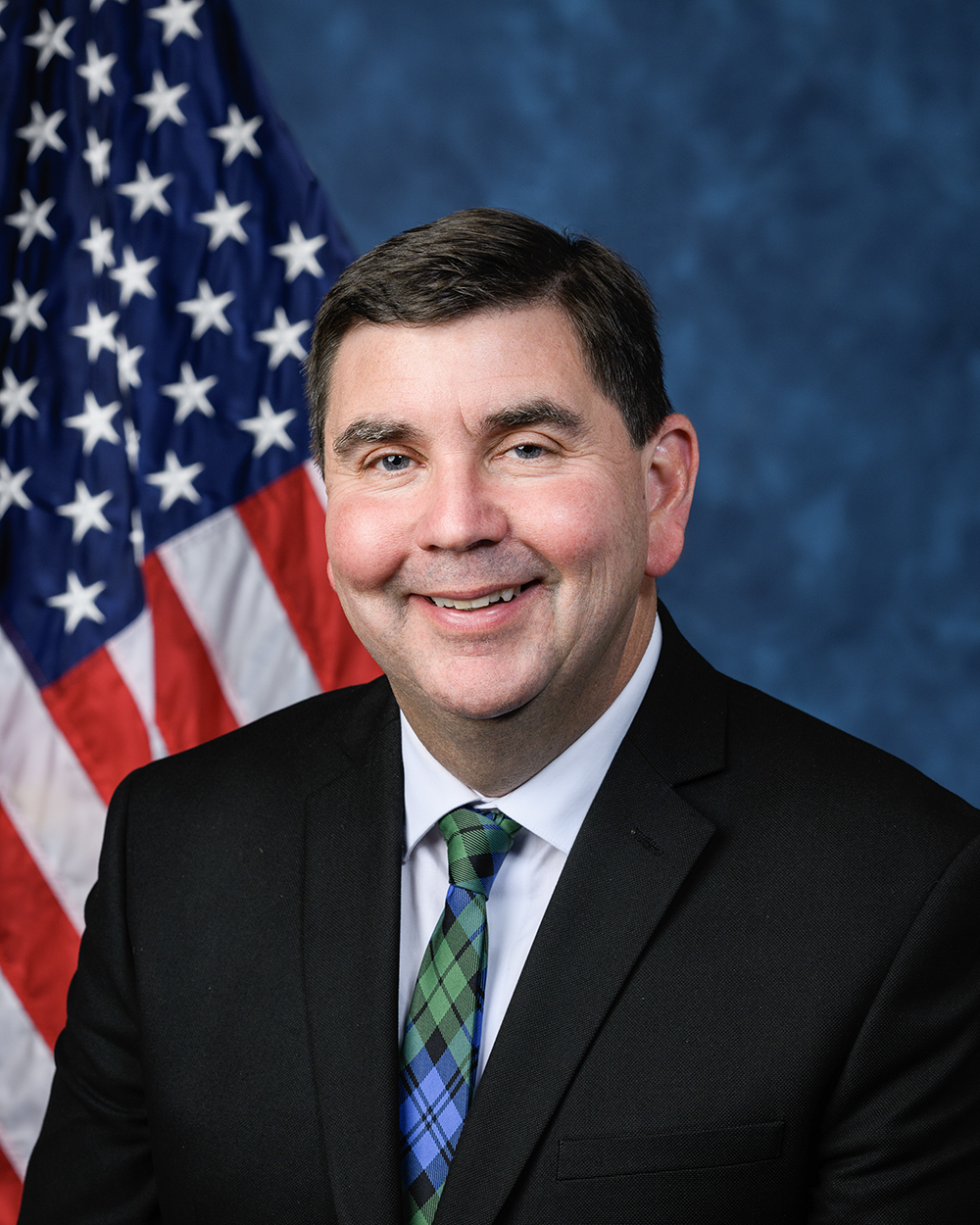
Rep. John W. Mannion
Sponsored bills
Dentist and Optometric Care Access Act of 2025 or the DOC Access Act of 20 25 This bill prohibits private health insurance plans from setting rates for items and services, except for dental cleanings, provided by a doctor of optometry, of dental surgery, or of dental medicine (or an employer of such a doctor) for which the plan does not pay a substantial amount. Additionally, an agreement between a plan and such a doctor for limited scope dental or vision benefits may last longer than two years only with the prior acceptance of the doctor for each term extension. Plans also may not restrict such a doctor's choice of laboratories or suppliers. Such doctors may elect to waive the application of the payment amount and choice of laboratories provisions of this bill. The bill does not supersede state laws regarding health insurers and dental or vision benefit plans.
Maddy summaryThe American Victims of Terrorism Compensation Act amends the Justice for United States Victims of State Sponsored Terrorism Act to increase funding for victims of terrorism. It directs the transfer of approximately $1.5 billion from the Binance Holdings Limited case, plus 50% of excess unobligated balances from Department of Justice and Treasury forfeiture funds, into the Victims Fund. The bill establishes deadlines for agencies to deposit funds (within 30 days of receipt or 15 days after enactment), requires annual reports on fund activity, and authorizes annual payments to eligible claimants starting in 2026. This legislation directly affects terrorism victims who receive compensation from the fund and federal agencies that handle forfeited assets from terrorism-related cases.
Maddy summaryHR 1410 expands access to mental health care for 9/11 responders and survivors by allowing licensed mental health providers (not just physicians) to conduct initial health evaluations and certifications under the World Trade Center Health Program. It adjusts the program’s funding formula to account for changing enrollment numbers by linking annual funding to the previous year’s enrollment ratio, and clarifies that deceased individuals are excluded from enrollment counts. The bill also extends the timeframe for adding new health conditions to the program’s list and requires a 2028 report assessing long-term funding needs through 2090. These changes aim to streamline eligibility, improve care access, and ensure sustainable funding for the program.
Maddy summaryThis bill removes marriage restrictions that previously caused Disabled Adult Children (DACs) to lose Social Security disability benefits upon marriage. It amends Social Security rules to treat married DACs the same as unmarried ones for eligibility, ensuring they retain benefits for child's insurance based on a disability. Key provisions prevent states from counting a spouse's income/resources against a married DAC and guarantee Medicaid eligibility remains unchanged if the DAC would qualify as unmarried. The bill directly affects DACs receiving Social Security Disability Insurance (SSDI) through a parent's account who are married, ensuring they maintain access to Medicare, Medicaid, and SSDI benefits without geographic or marital status barriers.
This concurrent resolution declares that Congress should not impose any new performance fee, tax, royalty, or other charge relating to the public performance of sound recordings on a local radio station for broadcasting sound recordings over the air, or on any business for such public performance of sound recordings.
Maddy summaryThis bill creates a new federal tax credit for family child care providers who operate from their primary residence. It allows eligible providers to claim up to $5,000 annually toward specific startup costs like licensing fees, supplies (diapers, toys), insurance, fencing, playground equipment, and required renovations. To qualify, providers must be licensed/registered, serve at least two non-family children, and operate from their home. The credit is limited to one year per provider (no repeat claims) and expires after seven years. It directly affects small-scale home-based child care operators seeking to establish or improve their licensed services.
United States-Israel Defense Partnership Act of 2025 This bill requires or authorizes certain actions to increase defense-related cooperation between the United States and Israel. Specifically, the bill requires the Department of Defense (DOD) to establish a cooperative program, with the concurrence of Israel's Ministry of Defense (MOD), to develop and deploy advanced technologies for countering unmanned systems that threaten the United States and Israel; establish in Israel an office of the Defense Innovation Unit (an organization that focuses on rapidly fielding and scaling commercial technology across the U.S. military); and seek to engage Israel's MOD on the ascension of Israel into the national technology and industrial base (currently defined in law as the persons and organizations engaged in research, development, production, integration, services, or information technology activities conducted within the United States, the United Kingdom, Australia, New Zealand, and Canada). The bill authorizes DOD, upon request of Israel's MOD, to jointly conduct research, development, test, and evaluation (RDT&E) of emerging technologies such as artificial intelligence and robotics to meet defense challenges. Additionally, the bill extends the authority for DOD to (1) carry out RDT&E on a joint basis with Israel to establish anti-tunnel and counter unmanned aerial systems capabilities through 2028, and (2) transfer defense articles intended for use as reserve stocks for Israel through January 1, 2029.
Maddy summaryThis bill restricts access to Treasury payment systems (including the Bureau of the Fiscal Service) to only Treasury employees with a "fully successful" performance rating and at least one year of civil service, or contractors/outsiders with security clearances, required privacy/cybersecurity training, ethics agreements, and no conflicts of interest. It treats non-government users accessing these systems as government employees for ethics rules and defines specific actions (like stopping payments) as "personal and substantial participation" in government matters. The Treasury Inspector General must investigate any unauthorized access within 30 days and report to Congress, detailing the breach, security risks, and any halted payments. The bill directly affects Treasury staff, contractors, and any external entities accessing federal payment systems.
Maddy summaryThis bill amends the Omnibus Crime Control and Safe Streets Act to include Transportation Security Administration (TSA) employees as eligible for public safety officers' death benefits. It specifically covers TSA officers who die while performing duties related to protecting transportation systems, ensuring their families receive financial support similar to other public safety officers. The key change adds a new definition (subparagraph H) to the existing law, expanding eligibility to TSA personnel who are actively safeguarding transportation infrastructure. This directly affects TSA employees and their dependents by granting access to these death benefits for on-duty fatalities. The amendment applies to incidents occurring on or after October 31, 2013.