

Maddy summaryThe International Human Rights Defense Act of 2023 creates a permanent Special Envoy at the State Department to coordinate U.S. efforts against discrimination and violence targeting LGBTQI+ people globally. The bill requires the development of an annual global strategy to address criminalization, discrimination, and violence based on sexual orientation, gender identity, or sex characteristics. It also mandates that U.S. country reports on human rights practices include detailed information about laws and practices affecting LGBTQI+ communities. The legislation authorizes U.S. foreign assistance programs to support LGBTQI+ rights through health services, legal protections, and community capacity building. This bill aims to strengthen U.S. diplomatic engagement on LGBTQI+ rights as part of broader human rights policy.
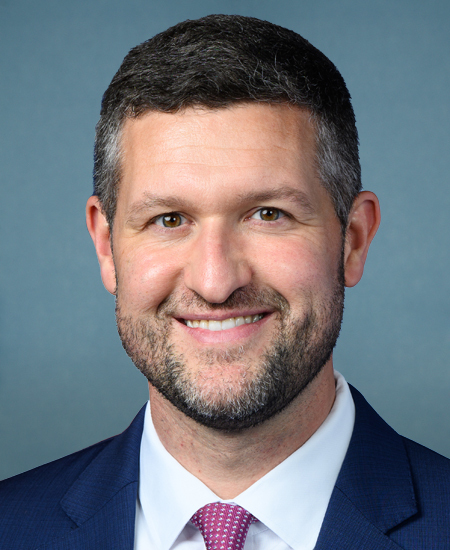
Rep. Patrick Ryan
Sponsored bills
Maddy summaryThis bill requires the Veterans Affairs Secretary to expand or modify an existing national cemetery (under National Cemetery Administration control) before Arlington National Cemetery reaches capacity, ensuring it provides full military honors using the same standards and eligibility criteria that applied to Arlington as of March 31, 2023. It directly affects veterans and their families seeking burial with full military honors at national cemeteries nationwide. The bill also mandates a joint report within one year to Congress on expanding cemetery capacity and assessing whether interment criteria should recognize exceptional service, including impacts on women, non-combat veterans, and other groups. The key mechanism is preserving current military honors standards at alternative cemeteries to prevent Arlington's capacity limits from disrupting existing burial practices.
Maddy summaryHR 2382, the September 11 Day of Remembrance Act, would establish September 11 as a federal public holiday to honor the victims of the 2001 terrorist attacks. This change would require all federal offices to close on September 11 each year, directly affecting federal employees and government operations. The bill amends Title 5 of the U.S. Code to add this day to the list of designated federal holidays, ensuring consistent observance without altering existing holiday rules.
Maddy summaryHR 1139, the GUARD VA Benefits Act, amends federal law to strengthen penalties for individuals or organizations charging veterans unauthorized fees when helping with VA benefit claims. It directly affects veterans seeking assistance with VA claims and the representatives (like advocates or attorneys) who might charge them fees. The bill adds a new provision making it a violation to solicit, charge, or receive any fee for preparing, presenting, or prosecuting VA claims, punishable by fines under Title 18. This change specifically targets unauthorized fee-charging while excluding fees covered under existing exceptions in sections 5904 or 1984 of the law.
Maddy summaryThis bill restores benefits for surviving spouses of military members who died in service and later remarried. It amends two key laws: it prevents termination of Survivor Benefit Plan annuities solely due to remarriage (with a specific provision to restart payments for those who remarried before age 55), and it ensures remarriage doesn't block Dependency and Indemnity Compensation (DIC) payments, requiring the government to restart DIC for eligible spouses who remarried before age 57. The bill directly affects surviving spouses who lost benefits due to remarriage under prior rules. It makes concrete policy changes by removing remarriage as a barrier to ongoing financial support for these families.
Maddy summaryHR 1818, the Aviation Workforce Development Act, expands tax-advantaged savings plans (529 plans) to cover costs for specific aviation training programs. It allows funds from these plans to pay for tuition, fees, and required materials at FAA-certified aviation maintenance technician schools (Part 147) or commercial pilot training programs (Part 61 or 141). This directly affects students pursuing careers as aircraft maintenance technicians or commercial pilots by making these training costs more affordable through existing tax-advantaged savings. The bill amends the tax code to include these programs under "qualified higher education expenses" for 529 plan distributions.
Maddy summaryHR 1831 would award Billie Jean King a Congressional Gold Medal to honor her lifelong advocacy for equal rights in sports and society. The bill directs the Secretary of the Treasury to strike the medal and have it presented by congressional leaders, recognizing her pivotal role in advancing women's equality through tennis (including founding the Women’s Tennis Association and securing equal prize money) and her broader impact on society through initiatives like Title IX advocacy.
Maddy summaryThis bill changes how U.S. foreign aid is provided to international health organizations. It prevents U.S. agencies from denying aid to foreign non-governmental organizations (NGOs) solely because they offer health services (like counseling or referrals) using their own funds, as long as those services follow local laws. It also stops applying stricter rules about how foreign NGOs can use their own funds for advocacy compared to U.S. NGOs receiving similar aid. The bill directly affects foreign health-focused NGOs that rely on U.S. foreign assistance funding.
Maddy summaryHR 1814, the FIRE STATION Act, creates a federal grant program to help fire departments and emergency medical services (EMS) organizations upgrade or build facilities. It directly affects career, volunteer, and combination fire departments, as well as fire training facilities and nonaffiliated EMS organizations (non-hospital-based EMS groups). The program allocates $750 million for fiscal year 2024, with grants covering facility construction/renovation, safety upgrades (like HVAC or mold remediation), and requiring compliance with current safety codes. Grants are capped at $7.5 million per recipient, must follow Davis-Bacon wage standards, and require annual reporting on fund usage and program effectiveness.
Maddy summaryHR 1777 establishes a $50 million annual fund (2024-2028) for collaborative defense research between the U.S. and Israel in emerging technologies like artificial intelligence, cybersecurity, directed energy, and automation. The bill directly supports U.S. and Israeli military forces by enabling joint development of new warfare capabilities to address current and future defense challenges. Key provisions include authorizing $50 million per year for collaborative projects, building on existing U.S.-Israel defense partnerships like counter-tunnel and counter-drone systems. This funding aims to strengthen bilateral defense innovation without altering existing military aid structures.