

This resolution urges all participants in the Good Friday agreement and subsequent agreements to honor their obligations. The resolution also supports efforts to (1) prevent a hard border within the island of Ireland and (2) promote peace and prosperity for all communities. (The island of Ireland is divided between Northern Ireland, which is part of the United Kingdom, and the Republic of Ireland, a European Union member state.)
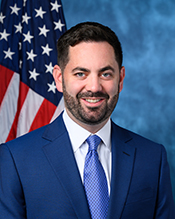
Rep. Michael Lawler
Sponsored bills
Maddy summaryThis bill creates new federal crimes for killing or assaulting law enforcement officers, judges, and certain public safety officers (including firefighters) while they are on duty or for past duties, with penalties including minimum 10-year sentences for killing and varying assault penalties based on severity. It adds a new factor that would make the federal death penalty more likely for killing such officers, limits federal legal challenges for convictions related to these killings, and expands law enforcement officers' rights to carry firearms in certain circumstances. The bill also provides funding for grants to improve community-law enforcement relationships through transparency, accountability, and officer wellness programs. It directly affects law enforcement officers, judges, and public safety personnel across the country, establishing new federal protections and procedures for violence against these personnel.
Authorization for the Use of Military Force to Combat, Attack, Resist, Target, Eliminate, and Limit Influence Resolution or the AUMF CARTEL Influence Resolution This joint resolution authorizes the President to use the Armed Forces against foreign nations, foreign organizations, or foreign persons affiliated with foreign organizations that the President determines are involved in trafficking fentanyl or fentanyl-related substances into the United States. The joint resolution also authorizes the use of force against those determined to have used force or violence in specified ways, such as engaging in violence or intimidation to control territory to be used for illicit means. The joint resolution deems nine named cartels as having met the criteria for the President to use force against them. Force authorized by this joint resolution may only be used against organizations and persons located outside of the United States. The authority expires five years after the date of this joint resolution's enactment.
This resolution reaffirms support for the Belfast/Good Friday agreement on the 25th anniversary of its signing. The resolution also calls for full implementation of the agreement and commends those who have worked to further peace and reconciliation in Northern Ireland in accordance with the principles of the agreement.
Maddy summaryHR 345, the TRUST in Congress Act, requires Members of Congress, their spouses, and dependent children to place certain investments into a "blind trust" within 90 days of taking office or after the bill's enactment. It directly affects current and future lawmakers and their immediate family members by mandating that covered investments - such as stocks, commodities, or derivatives (excluding Treasury bonds and some mutual funds) - be placed in a trust they cannot manage. Members must certify the trust setup to House or Senate officials within 15 days, and trusts cannot be dissolved until 180 days after leaving office. The law excludes investments providing primary income (e.g., from a spouse's job) but requires transparency through public website disclosures of certifications.
Maddy summaryThe Protect Local Farms Act (HR 353) would override state laws that require overtime pay for agricultural workers after fewer than 60 hours in a workweek. It amends federal labor law to preempt any state regulation setting a lower maximum workweek threshold (e.g., 40 or 50 hours) for farm employees. This directly affects agricultural employers and workers in states with stricter overtime rules, such as California or New York, by replacing those state standards with the federal 60-hour threshold. The bill does not change federal overtime rules but ensures states cannot impose more stringent requirements on farm labor.
Improving the Federal Response to Organized Retail Crime Act of 2023 This bill requires various federal agencies to develop a strategy to improve coordination with state and local law enforcement entities to address organized retail crime. Specifically, the bill requires the Department of Justice, the Department of Homeland Security, the U.S. Postal Service, and other relevant agencies to improve federal information sharing about organized retail crime networks; assist state and local law enforcement in compiling materials and evidence necessary to prosecute organized retail crime; and increase cooperation and information sharing between federal agencies, the retail industry, and retail crime task forces. The bill also requires the Government Accountability Office to report on coordination between the private sector and law enforcement to deter and investigate organized retail crime.
Stop Enabling Repeat Violence and Endangering Our Communities Act or the SERVE Our Communities Act This bill authorizes the Bureau of Justice Assistance to make grants to states and local governments for mentoring, transitional services, and training to help offenders successfully reintegrate back into the community after incarceration. To be eligible for a grant, a state or local government must take steps to prevent repeat offenses by violent offenders and allow a state court or magistrate to consider the danger an individual poses to the community when determining bail or pretrial release conditions.
Qualified Immunity Act of 2023 This bill provides statutory authority for qualified immunity for law enforcement officers in civil cases involving constitutional violations. Current law provides a statutory civil cause of action against state and local government actors (e.g., law enforcement officers) for violations of constitutional rights, also known as Section 1983 lawsuits. The Supreme Court has also found an implied cause of action against federal law enforcement officers in certain situations (e.g., Fourth Amendment violations), also known as Bivens lawsuits. However, under the judicial doctrine of qualified immunity, government officials performing discretionary duties are generally shielded from civil liability, unless their actions violate clearly established rights of which a reasonable person would have known. The bill provides statutory authority for these principles with respect to law enforcement officers. Specifically, under the bill, law enforcement officers are entitled to qualified immunity if (1) at the time of the alleged violation, the constitutional right at issue was not clearly established or the state of the law was not sufficiently clear for every reasonable officer to know that the conduct was unconstitutional; or (2) a court has held that the specific conduct at issue is constitutional. The bill applies to federal, state, and local law enforcement officers. It also specifies that law enforcement agencies and local governments may not be held liable if their officers are entitled to qualified immunity.
Maddy summaryHR 263, the STOVE Act, prohibits federal agencies from creating or implementing rules that ban or restrict gas-powered stoves, cooktops, ranges, or ovens in the United States. It blocks agencies like the EPA or DOE from proposing or finalizing regulations that would limit the sale or use of these appliances. The bill directly affects federal rulemaking processes related to home energy appliances, preventing new restrictions from being enacted. This is a policy change that stops federal action on appliance bans, not a change to existing appliance use.