

Maddy summaryThe No 9/11 Family Left Behind Act of 2026 provides an additional lump-sum payment to certain eligible families of victims of state-sponsored terrorism. This extra payment equals 5.8573 percent of the original judgment amount awarded to those who have not yet received a prior payment under the existing law. The bill requires the Special Master to notify eligible claimants within 90 days of the act's enactment and to process their claims for this additional amount within 90 days of receiving the necessary information. Funding for these payments will come from any unappropriated funds in the U.S. Treasury.
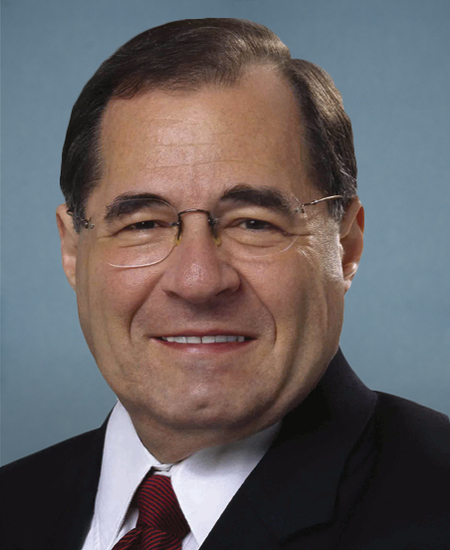
Rep. Jerrold Nadler
Sponsored bills
Maddy summaryThe Know Your Rights Act directs the Attorney General to create a new Office of Legal Access Programs within the immigration review system to educate detained noncitizens about their legal rights and immigration procedures. This office would develop orientation programs that provide information in English and the five most common languages spoken by detainees, aiming to help individuals make informed decisions while reducing costs and delays in immigration proceedings. The law requires these educational services to be offered within five days of a person entering custody and mandates that the government consider vulnerable groups, such as unaccompanied children and those with serious mental disabilities, for special attention. Importantly, the bill explicitly states that providing this information does not create any new legal rights or benefits that can be enforced in court.
Maddy summaryThe Celiac Safety Act of 2026 officially classifies gluten-containing grains as a major food allergen under federal law, directly impacting the food industry and individuals with celiac disease or gluten intolerance. This change requires manufacturers to label products containing wheat, rye, barley, or their crossbred hybrids with the same prominence as other major allergens like milk. The new labeling requirements will not take effect until 18 months after the law is enacted, giving businesses time to adjust their packaging and production processes.
Maddy summaryThis bill authorizes $5 billion annually for each fiscal year from 2026 to 2035 to fund affordable housing programs, but restricts these funds to areas designated by the Secretary of Housing and Urban Development as having high housing costs. It also requires the Secretary to conduct a comprehensive study on alternative ways to calculate income limits for urban housing assistance, with a final report due two years after enactment. The study will analyze how current income metrics affect rent affordability and explore options like using ZIP Code-level data to better support low- and middle-income families in expensive cities.
Maddy summaryThis bill, titled the No Presidential Self-Serving Lawsuits Act of 2026, prevents the current or former President of the United States from filing civil lawsuits against the federal government. It specifically invalidates an existing settlement agreement between a former President and the Internal Revenue Service and bars the use of federal funds to create compensation for such lawsuits. Additionally, the legislation authorizes the Treasury Secretary to recover any money already spent in violation of these new restrictions. The primary goal is to stop a President from using taxpayer money to settle legal disputes with the government they lead.
Maddy summaryThis bill authorizes the U.S. Mint to produce commemorative $5 gold and $1 silver coins marking the 25th anniversary of the September 11, 2001, terrorist attacks. The coins must feature designs honoring victims and first responders (including the inscription "Never Forget") and will be sold only during 2027-2028. All surcharges ($35 per gold coin, $10 per silver coin) collected from sales will fund the National September 11 Memorial and Museum at the World Trade Center, with no net cost to the federal government. The coins are legal tender but primarily intended for collectors, not circulation.
Maddy summaryThe Smithsonian American Women’s History Museum Act authorizes the creation of a new Smithsonian museum dedicated to women’s history, to be located within the National Mall Reserve in Washington, D.C. If the site is managed by another federal agency, the bill requires that agency to transfer the land after notifying Congress and relevant committees. The museum must ensure exhibits and programs accurately represent diverse women’s experiences by consulting a broad range of experts and community voices. The Smithsonian will submit biennial reports to Congress detailing how the museum meets these representation standards.
Maddy summaryThis concurrent resolution directs the President to withdraw U.S. military forces from active hostilities with Iran. The measure relies on the War Powers Resolution, requiring the President to end combat operations unless the forces are needed to defend the United States or its allies from an immediate attack. Any continued use of troops in such defensive scenarios must still follow specific reporting and notification rules, and full military engagement is only permitted if Congress explicitly authorizes it through a formal declaration of war or a specific authorization for force.
Maddy summaryThe No Taxpayer-Funded Settlement Slush Funds Act of 2026 prohibits the use of federal money to pay specific settlements involving high-ranking government officials and their close associates. It bars payments to the President, Vice President, their immediate families, cabinet members, senior executive staff, political appointees, and individuals connected to these roles, as well as any entity owned by the President or Vice President. Additionally, the bill restricts settlements related to claims about the January 6 Capitol attack, foreign election interference, or previously dismissed lawsuits, while requiring Treasury reports for large settlements and allowing the government to seek repayment if rules are broken.
This bill designates the facility of the United States Postal Service located at 5951 Riverdale Avenue in Bronx, New York, as the "Eliot L. Engel Post Office".