

Give Kids a Chance Act of 2025 This bill expands the Food and Drug Administration’s (FDA’s) authority with respect to research on rare pediatric diseases, including by permitting the FDA to take enforcement action against drug sponsors that fail to satisfy pediatric study requirements and by reauthorizing programs that support pediatric research. Specifically, the bill modifies requirements relating to molecularly targeted pediatric cancer investigations to permit research on new drugs in combination with active ingredients that have already been approved, provided certain conditions are met; permits the FDA to take enforcement action against drug sponsors that fail to comply with pediatric study requirements, if such sponsors demonstrated a lack of due diligence in satisfying the requirement; renews the FDA’s authority to award priority review vouchers to sponsors of new products intended to treat rare pediatric diseases through September 30, 2029; and reauthorizes through FY2027 certain funding for the National Institutes of Health to support priority pediatric research. The bill also provides statutory authority for the FDA’s interpretation of the orphan drug exclusivity period. The bill specifies, consistent with FDA regulations, that the seven-year market exclusivity period for drugs for rare diseases or conditions (i.e., orphan drugs) prohibits the approval of the same drug for the same approved use or indication with respect to the disease or condition. (In Catalyst Pharmaceuticals, Inc. v. Becerra , a court rejected the FDA’s interpretation and held that orphan drug exclusivity extends to all uses or indications for the disease or condition.)
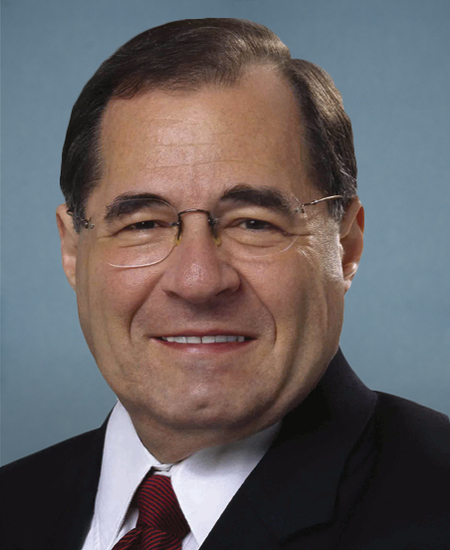
Rep. Jerrold Nadler
Sponsored bills
Maddy summaryHR 6318, the No GOUGE Act, prohibits large businesses from excessively raising prices on goods affected by tariffs or planned tariffs (e.g., imports subject to new tariffs) for five years after the tariff takes effect. It specifically targets companies with over $100 million in U.S. revenue, banning price hikes that exceed the actual cost of the tariff plus legitimate operational expenses (excluding executive pay or stock buybacks). The Federal Trade Commission (FTC) enforces this by presuming violations if large firms (over $1 billion revenue) raise prices beyond pre-tariff averages during "tariff shock" periods, though companies can rebut this by proving costs were genuinely tied to the tariff. The law aims to prevent price gouging by ensuring tariff costs - not profit motives - drive price changes for consumers.
Maddy summaryHR 6268, the LEAD Act of 2025, requires the use of non-lead ammunition on all lands and waters managed by the U.S. Fish and Wildlife Service (USFWS), effective one year after enactment. It directly affects hunters and recreational shooters using USFWS lands, with exceptions for law enforcement, military personnel, and government officials performing official duties. The bill mandates the USFWS to establish a list of certified non-lead ammunition (defined as containing ≤1% lead by weight) and imposes civil penalties of up to $500 for first violations and $1,000-$5,000 for repeat offenses. This policy aims to protect wildlife, human health, and food safety by reducing lead exposure from spent ammunition, which the bill cites as a documented risk to ecosystems and consumers.
Maddy summaryHRES 899 is a symbolic House resolution recognizing the Transgender Day of Remembrance and memorializing transgender people killed by violence in 2024-2025. It directly affects transgender individuals, particularly transgender women of color, by acknowledging the epidemic of violence against them - citing 27 U.S. victims (including names like Rick Alastor Newman and Kyla Jane Walker) and 241 global cases in 2025. The resolution’s key provisions include formally recognizing the violence epidemic, memorializing specific lives lost, and affirming the need for solutions to protect transgender people. It does not create new laws but expresses congressional support for addressing systemic violence and discrimination faced by transgender communities.
Maddy summaryHR 6212, the Good Samaritan Menstrual Products Act, protects donors and nonprofits from liability when providing menstrual products in good faith. It shields people, manufacturers, distributors, and nonprofits from civil or criminal liability for the condition of "apparently usable" donated products (those meeting all safety standards but not necessarily marketable). The law applies to products like tampons, cups, and liners distributed to individuals in need through nonprofits. Liability protection does not apply if gross negligence or intentional misconduct causes injury or death.
Maddy summaryThis bill amends a section of U.S. law governing national park air tours to explicitly require federal officials to consider the "well-being of communities overflown by aircraft" when making decisions about commercial air tour operations in national parks. It directly affects commercial air tour operators and park management officials by adding community impact as a mandatory factor alongside air traffic control needs. The key mechanism inserts this community well-being consideration into existing decision criteria, ensuring it is formally weighed in regulatory choices. The bill does not create new restrictions but changes how existing rules are applied to prioritize community concerns.
Maddy summaryThe Global Respect Act (HR 6151) requires the U.S. President to publicly list foreign officials responsible for severe human rights violations against LGBTQI individuals, including torture, prolonged detention, or violence based on sexual orientation or gender identity. It mandates denying visas and entry to listed individuals and requires annual reports on the list's updates and impacts. The bill also directs the State Department to track global violence against LGBTQI people and update annual human rights reports to include discrimination based on sexual orientation or gender identity. These provisions directly affect foreign government officials and entities implicated in such abuses, aiming to increase accountability through U.S. visa restrictions.
Maddy summaryThe EXPERTS Act of 2025 requires agencies to disclose funding sources and potential conflicts of interest for studies submitted during rulemaking, including who funded research and any financial relationships that might influence findings. It establishes an Office of the Public Advocate within the Office of Management and Budget to assist public participation in rulemaking, conduct social equity assessments, and improve outreach to underrepresented groups. The bill also mandates that agencies consider social equity impacts when creating rules and requires detailed explanations for withdrawing proposed regulations. These provisions aim to increase transparency, inclusivity, and accountability in the federal regulatory process.
Maddy summaryThis bill amends Section 1983 of federal law (42 U.S.C. 1983) to explicitly allow lawsuits against federal officials who violate constitutional rights while acting under federal authority. It directly affects individuals whose constitutional rights were allegedly infringed by federal employees, such as law enforcement or agency staff. The key provision inserts "of the United States" before "of any State" in the statute, expanding the existing legal remedy for state officials to cover federal officials as well. This creates a clear, standalone legal path for citizens to seek redress for federal constitutional violations without relying on precedent.
Maddy summaryHR 6056, the International Human Rights Defense Act of 2025, establishes a permanent Special Envoy at the State Department to lead U.S. foreign policy efforts addressing discrimination and violence against LGBTQI+ people globally. The bill requires the U.S. government to develop and update a biannual global strategy to prevent criminalization and violence against LGBTQI+ individuals, mandate detailed reporting on such abuses in annual country reports, and ensure all U.S. foreign assistance programs include inclusive nondiscrimination policies. This legislation directly affects U.S. foreign policy implementation, federal agencies receiving funding, and LGBTQI+ communities facing persecution worldwide. The bill aims to coordinate U.S. government efforts across departments and with international partners to advance LGBTQI+ rights globally through concrete policy mechanisms.