

Maddy summaryThis bill authorizes Congress to award a Congressional Gold Medal to individuals who fought for or with the United States in the Pacific theater during World War II and subsequently became prisoners of war. The legislation specifically recognizes the service and sacrifice of those who defended locations such as Bataan and Corregidor, including Filipino soldiers and civilians who served alongside U.S. forces. To implement this award, the Speaker of the House and the President pro tempore of the Senate will arrange for the creation of a gold medal by the Secretary of the Treasury, which will be presented to the Smithsonian Institution for display. The act also allows for the production of duplicate bronze medals to cover the costs of the original gold medals, with any proceeds from these sales deposited into the United States Mint Public Enterprise Fund.
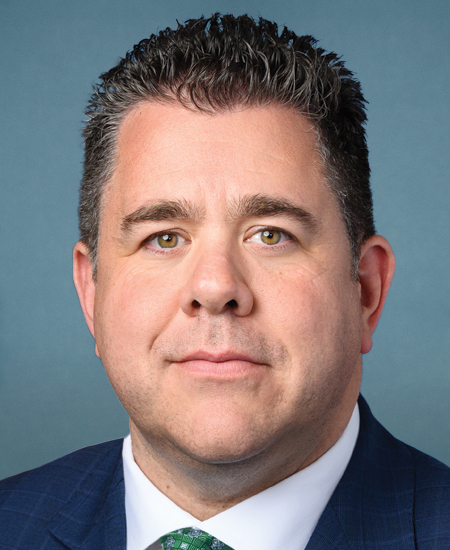
Rep. Nick LaLota
Sponsored bills
Maddy summaryThis bill, known as the COVID-19 Commuter Benefits Distribution Act, changes tax rules for employees who have employer-sponsored commuter benefits accounts. It allows these employees to take a one-time cash payment from their accounts during a six-month window starting when the law is passed, treating this money as taxable income rather than tax-free. The amount they can withdraw is limited to the highest balance in their account held between March 13, 2020, and December 31, 2023. Additionally, the bill ensures that taking this cash payment does not reduce the amount of future tax-free benefits the employee can receive from the same account.
Maddy summaryThis bill requires the U.S. Customs and Border Protection Commissioner to connect applications for family members living in the same household during the NEXUS trusted traveler program process. Under the new rules, eligible relatives such as parents, children, and siblings can schedule interviews together and may choose to attend joint interviews, while children under 14 are exempt from appearing in person. The changes aim to streamline the application experience for families by allowing them to manage their travel credentials as a unit rather than submitting separate, disconnected requests.
Maddy summaryThis bill redesignates the existing National Parks and Public Land Legacy Restoration Fund as the America's Legacy Restoration Fund to address deferred maintenance on federal lands. It directs revenue from recreation fees and a portion of energy development income into the fund, which must be used primarily for repairing critical infrastructure like roads, trails, and buildings managed by agencies such as the National Park Service and the Forest Service. The legislation establishes strict rules requiring that most funds go toward non-transportation projects, mandates transparency through public dashboards tracking project status, and sets aside a small percentage for matching private donations. Additionally, the bill increases entrance fees for foreign visitors to ensure they contribute to the fund, while prohibiting the use of these specific funds for land acquisition or employee bonuses.
Maddy summaryThe Next Mission Act establishes a three-year pilot program that awards multiyear grants to private, nonprofit organizations to help military service members and their spouses transition to civilian careers. Eligible organizations must demonstrate a history of successful job training, rigorous evaluation methods, and the ability to offer online services to reach rural participants. These grants fund free services such as career assessments, mock interviews, industry-specific training pathways, and job placement assistance, with priority given to entities verified by third parties. The Department of Defense will track performance using metrics like job placement rates and median salaries, and must submit a final report to Congress after the program concludes.
Maddy summaryThe No 9/11 Family Left Behind Act of 2026 provides an additional lump-sum payment to certain eligible families of victims of state-sponsored terrorism. This extra payment equals 5.8573 percent of the original judgment amount awarded to those who have not yet received a prior payment under the existing law. The bill requires the Special Master to notify eligible claimants within 90 days of the act's enactment and to process their claims for this additional amount within 90 days of receiving the necessary information. Funding for these payments will come from any unappropriated funds in the U.S. Treasury.
Repealing Big Brother Overreach Act This bill repeals the Corporate Transparency Act. The act requires existing companies and newly created companies to report beneficial ownership information to the Department of the Treasury’s Financial Crimes Enforcement Network for purposes of addressing the financing of terrorism and money laundering.
Maddy summaryHR 5408, the Faster Labor Contracts Act, requires employers to begin negotiating a first contract with a newly certified union within 10 days of written request. If no agreement is reached within 90 days, the parties must seek mediation, and if unresolved after 30 days of mediation, the dispute moves to binding arbitration by a three-member panel. The arbitration decision, based on factors like employer finances, industry standards, and cost of living, becomes binding for two years. This bill directly affects newly certified unions and their employers during initial contract negotiations, aiming to reduce delays that currently average 465 days.
Maddy summaryThis bill requires the Commerce and State Departments to develop strategies preventing U.S. and allied technology exports to Iran for drone production. It specifically targets microchips, GPS modules, and other critical components (like microcontrollers and voltage regulators) used in Iranian drones that have been linked to attacks in Ukraine and against Israel via groups like Hamas. The strategy must identify U.S. and foreign manufacturers, track third-party distributors circumventing controls, and coordinate with allies to block these exports. It directly affects U.S. technology companies, global distributors, and foreign partners whose exports could enable Iran's drone program. The bill aims to disrupt technology flows supporting Iranian drones used in conflicts without making speculative claims about outcomes.
Maddy summaryThe LEASH Act of 2026 requires law enforcement agencies seeking federal Byrne Justice Assistance Grants to report data on felony animal cruelty convictions, including the names of those convicted. To qualify for these grants, local governments must submit information on such crimes to the Attorney General and join a specific category of jurisdictions that provide this data. The bill also mandates the creation of a publicly accessible database by the Attorney General to store and periodically update these animal cruelty records. These changes directly affect law enforcement agencies and local governments that apply for federal crime prevention funding.