

Maddy summaryThis bill aims to remove a tax disadvantage known as the "marriage penalty" for couples filing jointly under the State and local tax deduction. It achieves this by adjusting the dollar limits and income thresholds so that married couples filing jointly receive twice the deduction amount available to single filers, while married individuals filing separately receive half. These changes are designed to ensure that married couples do not pay more in taxes solely because they are married. The provisions would take effect for tax years beginning after December 31, 2026.
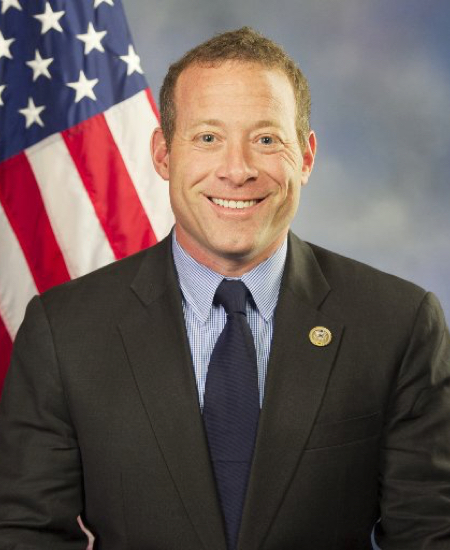
Rep. Josh Gottheimer
Sponsored bills
Maddy summaryThe Jewish American Security Act aims to combat antisemitism by strengthening protections for Jewish students, securing Jewish communities, and increasing transparency regarding online hate speech. For educational institutions receiving federal funds, the bill mandates the creation of specific coordinators to handle discrimination complaints, requires annual training on handling antisemitism, and establishes a new federal clearinghouse to share best practices for campus safety. To support physical security, the legislation expands grant funding for nonprofit organizations and directs the Attorney General to provide resources for law enforcement agencies protecting houses of worship. Additionally, the act requires major online platforms with over 50 million monthly users to submit detailed reports to the Federal Trade Commission on how they detect, remove, and moderate antisemitic content.
Maddy summaryThis joint resolution directs Congress to disapprove a specific foreign military sale of defense articles and services to Turkey. The measure targets the provision of engines, technical data, and related support for the TF-X aircraft, which was proposed for sale in June 2026. By prohibiting this transaction, the bill prevents the transfer of these specific defense capabilities to the Turkish government. It directly affects the proposed sale and the entities involved in supplying the F110-GE-129E/F engines.
Maddy summaryThe Advancing American Quantum Leadership Act of 2026 updates the Export-Import Bank Act to broaden the scope of technology covered under export restrictions. Specifically, it changes the language from "Quantum computing" to "Quantum information science and technology" within the section governing exports to China. This modification allows the Export-Import Bank to apply existing transformational export controls to a wider range of quantum-related innovations. The change directly impacts how the bank evaluates and regulates the sale of advanced quantum technologies to foreign entities.
Maddy summaryThis bill, titled the National Service Animals Monument Location Act, directs the placement of a specific commemorative monument within the National Service Animals Reserve. It overrides previous legal restrictions to ensure the monument is situated inside this designated reserve rather than elsewhere. The legislation directly affects federal land management by specifying the exact location for this memorial project.
Maddy summaryThe Spot the Fakes Act requires owners of AI-generated content to label videos, images, audio, and text as artificial intelligence using metadata or other technological verification methods. The Federal Trade Commission is tasked with enforcing this requirement and can penalize violations as unfair or deceptive acts under existing federal law. Additionally, the bill mandates that the FTC work with the National Institute of Standards and Technology to establish specific disclosure rules within six months of enactment. This legislation directly impacts creators and platforms distributing AI content to ensure transparency about the origin of digital media.
Maddy summaryThe Shandra Eisenga TB Study Act of 2026 directs the Department of Health and Human Services to conduct a study on creating a standardized test for detecting tuberculosis in human cadaver tissue. This initiative aims to improve donor screening and transplant safety by evaluating current scientific knowledge, testing methodologies, and potential implementation barriers. The study will involve collaboration with various health agencies and stakeholders, with a focus on diverse populations and multiple collection sites. By the end of 2029, the department must submit a report to Congress detailing its findings and recommending necessary steps to develop or implement this new testing strategy.
Maddy summaryThe Child Care Small Business Insight and Improvement Act of 2026 directs the Small Business Administration to submit a report to Congress within 120 days of enactment. This report will analyze the challenges and needs faced by for-profit child care providers, evaluate current SBA support, and identify any gaps in those resources. Additionally, the study will assess fraud instances among these providers and propose legislative changes to prevent misuse of federal funds. The bill does not authorize new funding, as it relies on existing resources to conduct this analysis.
Maddy summaryThe Cloud Security Act amends existing laws to allow cloud service providers to share specific customer data with the U.S. government under certain conditions. This permission applies when the provider believes in good faith that a customer is using advanced cloud computing resources or artificial intelligence models to benefit a designated foreign entity. The bill defines these advanced technologies by specific technical metrics, such as the number of parameters in AI models and the processing power of computer chips, while limiting the shared information to only what is necessary for verification. By creating these exceptions, the legislation enables the Department of Commerce to monitor and report on the use of sensitive technology by foreign actors without requiring a separate warrant for each instance.
Maddy summaryThe Veterans STAND Act requires the Department of Veterans Affairs to provide annual preventative health assessments to veterans with spinal cord injuries or disorders. These assessments cover risks for health complications, chronic pain management, dietary needs, prosthetic equipment, and access to assistive technologies like spinal cord neuromodulation devices. The VA must consult with medical specialists and device manufacturers when creating guidelines and submit yearly reports to Congress on veterans' use of these services and devices. This policy directly affects veterans with spinal cord injuries by ensuring regular, tailored health evaluations to improve long-term management and independence.