

Maddy summaryThis bill expands the use of 529 college savings accounts to cover career training and credentialing costs. It allows funds to pay for tuition, fees, books, and testing expenses related to recognized postsecondary credential programs (like vocational certifications) that meet specific standards under the Workforce Innovation and Opportunity Act. The change directly affects workers seeking industry-recognized credentials - such as nursing certifications or IT certifications - instead of traditional degrees. It treats these expenses the same as traditional college costs for 529 account withdrawals, making it easier to save for career-focused training. The provision applies to expenses paid after the bill's enactment date.
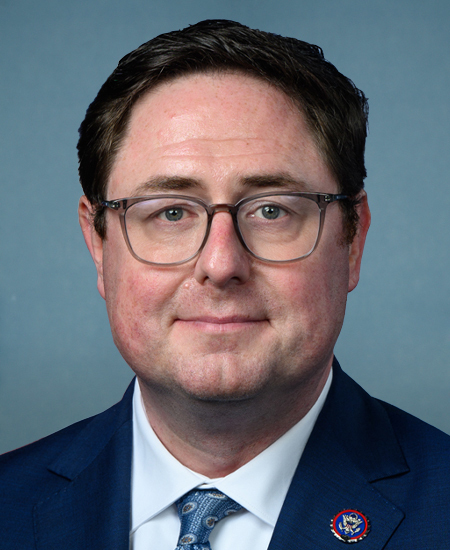
Rep. Mike Flood
Sponsored bills
Maddy summaryThis bill prohibits foreign governments (specifically China, Iran, North Korea, and Russia) from acquiring or transferring interests in two types of U.S. land: agricultural land used for growing corn or soybeans destined for renewable energy production, and land designated for wind energy infrastructure. It amends the Defense Production Act to add a new restriction (subsection (r)) blocking such transactions involving these lands. The policy directly affects foreign entities from the listed countries seeking to invest in U.S. renewable energy agriculture or wind projects. This creates a clear legal barrier to foreign ownership of these specific energy-related assets without altering existing renewable energy incentives.
Maddy summaryHR 1379, titled the *Access to Small Business Investor Capital Act*, simplifies reporting requirements for investment companies that hold shares in business development companies (BDCs). The bill allows registered investment companies (like mutual funds) to exclude BDC-related fees and expenses from their standard "Acquired Fund Fees and Expenses" calculations in registration statements, instead disclosing these costs in a footnote. This change directly affects investment companies managing portfolios with BDC investments and the BDCs themselves, reducing administrative complexity. The provision modifies existing SEC disclosure rules under the Investment Company Act of 1940 without creating new capital access for small businesses.
Maddy summaryThe TABS Act of 2023 would rename the Consumer Financial Protection Bureau (CFPB) to the Consumer Financial Empowerment Agency (CFEA) throughout U.S. federal law. This bill would change the agency's name in the Consumer Financial Protection Act of 2010 and over 25 other federal statutes, including the Dodd-Frank Act and Truth in Lending Act. The bill does not alter the agency's responsibilities, authority, or budget structure - only its name. This is a procedural change affecting all federal documents, regulations, and references to the agency.
Maddy summaryThe Military Spouse Hiring Act expands the Work Opportunity Tax Credit to include military spouses. Employers who hire a spouse of an active-duty military member - certified by a local agency as meeting eligibility requirements on the hiring date - can claim this tax credit. The credit reduces the employer's federal tax liability for hiring such individuals. This provision applies to new hires after the bill's enactment date.
Maddy summaryHR 1313, the Transparency in CFPB Cost-Benefit Analysis Act, requires the Consumer Financial Protection Bureau (CFPB) to include detailed cost-benefit analyses in all proposed financial regulations. The bill mandates that the CFPB explain the need for a regulation, assess costs and benefits for small businesses and the economy, evaluate alternatives, and justify decisions where benefits don't outweigh costs. It also requires consultation with the Small Business Administration if a rule increases costs for small businesses and a distribution analysis of burdens. This bill directly affects the CFPB's rulemaking process by increasing transparency in how financial regulations are developed.
Maddy summaryThis bill establishes pay equity for federal firefighters by adjusting how their retirement benefits are calculated and setting a standard workweek. It requires retirement annuities to include overtime hours worked as part of a firefighter's regular schedule (e.g., overtime during standard shifts), rather than excluding them. The bill also mandates a maximum 60-hour regular workweek for federal firefighters, set by the Office of Personnel Management within one year of enactment. These changes directly affect federal firefighters, aiming to improve pay comparability with municipal firefighters and other federal employees while supporting recruitment and retention.
Maddy summaryThis bill amends the Higher Education Act to exempt certain family-owned assets from being counted when calculating federal student aid eligibility. Specifically, it excludes family farms where the family resides and small businesses with 100 or fewer full-time equivalent employees owned and controlled by the family. These assets will no longer be considered when determining a student's financial need for aid programs. The change directly affects students from qualifying family farms or small businesses when applying for federal financial aid. The exemption applies to assets held by the family, not just the business itself.
Maddy summaryHR 1200, the National Right-to-Work Act, prohibits requiring workers to join a union or pay dues as a condition of employment in both private-sector workplaces (covered by the National Labor Relations Act) and railroad industries (covered by the Railway Labor Act). The bill amends key sections of these laws to eliminate provisions that allowed union security agreements, meaning workers in unionized settings would no longer be forced to pay dues to retain their jobs. This directly affects employees in unionized workplaces across the U.S., particularly those in industries with existing union contracts that included mandatory dues. The law changes the legal framework to ensure union membership and dues payment remain voluntary for all workers.
CBDC Anti-Surveillance State Act This bill limits the ability of the Federal Reserve to (1) provide direct services to individuals, and (2) use a central bank digital currency. A central bank digital currency is a digital currency (e.g., Bitcoin or Ether) issued by a government-backed central bank. Specifically, the bill prohibits the Federal Reserve and the Federal Open Market Committee from using any central bank digital currency to implement monetary policy. In addition, a Federal Reserve bank is prohibited from offering products or services directly to an individual, maintaining an account on behalf of an individual, or issuing a central bank digital currency directly to an individual. The Federal Reserve must (1) consult with each Federal Reserve bank with respect to any central bank digital currency study or pilot program, and (2) issue quarterly reports on the findings and determinations of any such study or program.