

Sustainable Agriculture Research Act This bill revises the goals of the Agriculture Advanced Research and Development Authority (AGARDA). Specifically, the bill expands the goals to require AGARDA to enhance the role of sustainable agriculture in innovative voluntary resilience solutions in the United States through the development of agricultural technologies that may address the impact of extreme weather on crop production; the effects of drought and the potential of building water holding capacity in soils on croplands and rangelands; the expansion of the potential for long-term carbon storage through sustainable agriculture; increased economic and practical feasibility for renewable and sustainable energy on farms and in the agriculture industry; increased voluntary adoption of conservation practices that sequester carbon and build on-farm climate resilience; and increased economic and practical feasibility for, and voluntary adoption of, precision agriculture technology. The bill defines precision agriculture as managing, tracking, or reducing crop or livestock production inputs (including seed, feed, fertilizer, chemicals, water, and time) at a heightened level of spatial and temporal granularity to improve efficiencies, reduce waste, and maintain environmental quality.
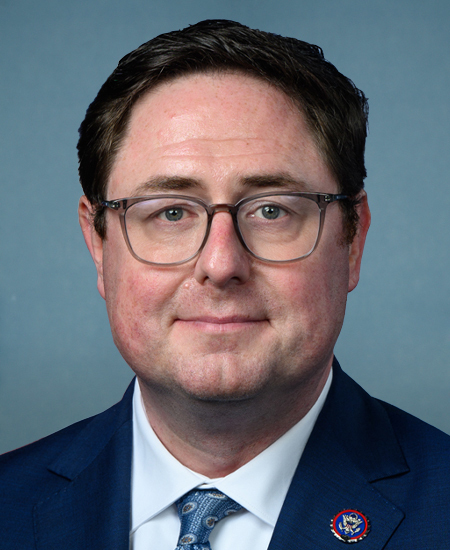
Rep. Mike Flood
Sponsored bills
This resolution condemns Iran for the 1988 massacre of political prisoners. It also urges the Biden Administration and U.S. allies to publicly condemn the massacre and to pressure Iran to provide information to the families of the victims.
Maddy summaryThis bill expands employee ownership in S corporations by extending tax deferral for selling company stock to employee ownership plans (ESOPs), creating a Treasury Department office to provide education and technical assistance for ESOPs, and amending small business rules to maintain eligibility for government programs after ESOP ownership exceeds 49%. It establishes a new Labor Department "Advocate for Employee Ownership" to coordinate federal efforts, educate stakeholders, and recommend policy improvements. The bill directly affects S corporations using ESOPs, their employees who become owners, and small businesses that might lose government program access due to ESOP acquisitions. Key provisions include tax incentive extensions, new support offices, and updated small business classification rules.
Maddy summaryThis bill establishes a single, uniform definition for sustainable aviation fuel (SAF) that must be used across all U.S. aviation operations and Federal Aviation Administration (FAA) programs. It requires SAF to meet specific ASTM standards, not be derived from palm oil or petroleum, and achieve at least a 50% reduction in lifecycle greenhouse gas emissions compared to conventional jet fuel. The definition includes detailed technical requirements for feedstocks and certification processes. This standardization will directly affect airlines, fuel producers, and FAA programs by creating consistent criteria for qualifying fuels. The bill mandates the FAA to implement this definition within 60 days of enactment.
Maddy summaryHR 3933, the TAP Promotion Act, requires standardized presentations about Veterans Affairs (VA) benefits during military transition counseling for service members separating from the armed forces. These presentations must be approved by the VA, delivered by authorized veterans service organizations (VSOs), and include information on how VSOs assist with VA claims - without encouraging membership in specific organizations. The bill mandates a one-hour limit per presentation and requires the VA to submit annual reports to Congress detailing which VSOs presented, attendance numbers, and recommendations for improvement. This policy directly affects service members preparing for civilian life and the VSOs providing these transition resources.
Maddy summaryThis bill directs the U.S. Treasury to mint commemorative coins marking the Marine Corps' 250th anniversary in 2025. It authorizes three coin types: $5 gold coins (max 50,000), $1 silver coins (max 400,000), and half-dollar coins (max 750,000), with surcharges of $35, $10, and $5 respectively. The surcharge proceeds will fund the Marine Corps Heritage Center's educational programs, with no net cost to taxpayers as the Treasury must recover all minting costs through the surcharges. The coins can only be issued during 2025, and the Treasury must ensure all costs are covered before distributing funds to the Heritage Foundation.
Maddy summaryHR 984, the Commitment to Veteran Support and Outreach Act, authorizes $50 million annually (2024-2028) for grants to states and tribes to improve outreach to veterans and their families. The bill provides funding to hire more county/Tribal veterans service officers, expand existing outreach programs, and ensure equitable access to benefits for vulnerable groups like American Indian veterans, elderly veterans, and women veterans. States and tribes must submit detailed plans, track how quickly veterans receive benefits, and report annually on progress toward outcome measures set by the Veterans Affairs Secretary. Grants must supplement, not replace, existing state/local funding and prioritize areas with critical officer shortages or high veteran suicide rates.
Strategy To Oppose Purposeful CCP Aggression at the United Nations Act of 2023 or the STOP CCP at UN Act of 2023 This bill requires actions to address efforts by China to expand its influence on the United Nations. Specifically, the bill requires the Department of State to establish the Office of Multilateral Strategy, which must implement a strategy to counter China at the United Nations. The office must report on its work to Congress. The State Department must also increase the number of U.S.-sponsored junior professional officers at the United Nations to match or exceed the number of such officers sponsored by China. Furthermore, the State Department and the U.S. Permanent Representative to the United Nations must report to Congress annually about China's actions to expand its influence on the United Nations, including through coercion, intimidation, and other illegitimate means.
Maddy summaryHR 4157, the "Not Just a Number Act," requires the Department of Veterans Affairs (VA) to produce annual reports on veteran suicide rates and their connection to VA healthcare and benefits. The reports must break down suicide rates by age, gender, and race, and examine how engagement with VA services (like Vet Centers, healthcare enrollment, benefits claims, and housing loans) correlates with suicide trends. The bill also mandates a VA toolkit for state/local coroners to improve veteran suicide death reporting, and a study on creating a dedicated VA suicide prevention office. These measures aim to standardize data collection and identify effective prevention strategies, directly affecting VA operations, congressional oversight, and veteran care systems.
Maddy summaryHR 4769, the PFAS Alternatives Act, funds research and training to develop PFAS-free turnout gear for firefighters. It authorizes $25 million annually (2024-2028) for grants to eligible organizations to research, develop, and test next-generation gear without per- and polyfluoroalkyl substances (PFAS), which are linked to firefighter cancer risks. The bill requires partnerships with firefighting organizations to ensure research translates into practical training and gear care guidance, including decontamination protocols. It also allocates $2 million yearly for training programs on proper gear use and maintenance, aiming to reduce exposure to hazardous chemicals during fire operations.