

Maddy summaryThis bill amends the Natural Gas Act to give the Federal Energy Regulatory Commission (FERC) exclusive authority to approve U.S. LNG export terminal projects, requiring FERC to deem such exports consistent with the public interest. It directly affects natural gas companies seeking to build or expand export facilities and streamlines FERC's review process by removing prior requirements for interagency coordination. The bill clarifies that FERC's decisions won't override existing sanctions laws, including restrictions on trade with countries designated as state sponsors of terrorism under current law. This change aims to accelerate domestic LNG export projects while maintaining legal safeguards for national security and foreign policy.
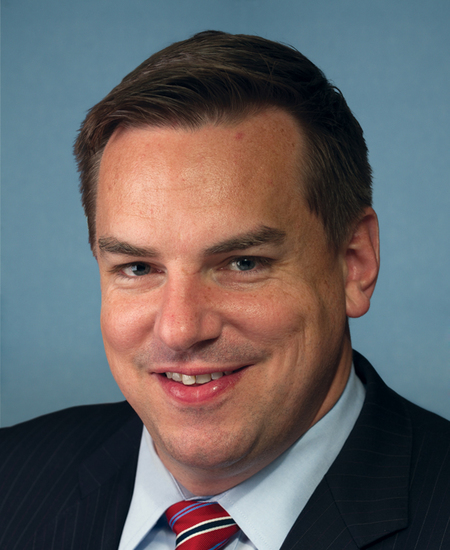
Rep. Richard Hudson
Sponsored bills
Maddy summaryThis bill would require Medicare to cover early detection screening tests for Alzheimer's disease and related dementias starting January 1, 2028. It defines eligible tests as FDA-cleared genomic blood tests, blood product analyses, or equivalent medical imaging methods (like protein expression or whole genome sequencing) that detect pre-symptomatic or early-stage conditions. Medicare beneficiaries would receive this coverage without cost-sharing for these specific screenings. The bill amends Medicare coverage rules to explicitly include these tests under Section 1861(nnn) of the Social Security Act.
Maddy summaryThis bill requires all new passenger vehicles manufactured for sale in the U.S. to include AM radio as standard equipment (not an optional add-on) by 2027-2028, depending on manufacturer size. It mandates that AM radio receivers must be easily accessible to drivers and allows compliance through digital AM broadcast technology. During a transition period, manufacturers must clearly label vehicles without AM radio but cannot charge extra for this feature. The bill also mandates a GAO study on AM radio's role in emergency alerts and includes a 10-year sunset provision for the rule. It preempts state laws regarding AM radio access in vehicles.
Maddy summaryHRES 864 is a ceremonial resolution honoring U.S. veterans on Veterans Day 2025. It does not create new laws or policies but formally recognizes veterans' service and sacrifice, calling on all Americans to observe Veterans Day. The resolution references historical context about Veterans Day's origins (from Armistice Day to honoring all veterans) but contains no concrete policy changes. It directly addresses the general public, urging them to participate in the observance. As a non-binding resolution, it affects no specific individuals or groups through legislative action.
Maddy summaryHR 3484, the Business Owners Protection Act of 2025, terminates unused regulatory powers held by the Securities and Exchange Commission (SEC) under the Dodd-Frank Act. Specifically, it ends SEC authorities that grant discretion to create new requirements for businesses but were not actively used - meaning no proposed rules or guidance was issued by January 1, 2025. The bill requires the SEC to publish a list of all terminated authorities within 180 days of enactment. This directly affects business owners by preventing potential future regulatory burdens that were never implemented. The law focuses on eliminating dormant SEC powers, not creating new rules.
Maddy summaryThis bill ensures that critical firearm-related government operations continue during federal shutdowns. It designates background checks (via the FBI's National Instant Criminal Background Check System), Bureau of Alcohol, Tobacco, Firearms and Explosives enforcement, and firearm export licensing (handled by Commerce and State Departments) as essential services that must remain operational. These functions would be treated as "excepted" under federal law, meaning their employees would continue working even if other government services halt. The bill affects how background checks and firearm export licenses are processed during shutdowns but does not change gun ownership laws or eligibility.
Maddy summaryThis bill adds Medicare coverage for multi-cancer early detection screening tests (blood or biological tests analyzing cell-free DNA) starting January 1, 2028. It directly affects Medicare beneficiaries aged 68 and older (starting in 2028, with the age limit increasing by 1 year annually), requiring tests to be FDA-cleared and deemed reasonable/necessary by the Secretary for early cancer detection across multiple organ sites. Payment will initially match current stool DNA test rates before 2031, then shift to a lower rate or new payment system after 2031, with limits preventing more than one test per year. The bill explicitly states it does not alter coverage for existing cancer screenings like breast, colorectal, or prostate cancer tests.
Maddy summaryThis bill would require all states to recognize valid concealed carry permits issued by other states, allowing permit holders to carry concealed handguns (excluding machine guns) in any state that either issues such permits or doesn't prohibit concealed carry. It directly affects law-abiding gun owners with valid permits from their home state, ensuring they can carry in states with similar permit systems or no prohibitions. Key provisions include treating valid permit documents as proof of legal carry (reducing officer stops), shifting the burden of proof to prosecutors if challenged, and allowing civil lawsuits for violations with attorney's fee awards. The bill does not override state laws restricting firearms on private property or government land, nor does it affect federal gun restrictions like those in section 922(q).
Maddy summaryHRES 719 is a House resolution honoring Charles "Charlie" James Kirk, the founder of Turning Point USA who was assassinated on September 10, 2025. The resolution condemns his assassination and all political violence, extends condolences to his family, and calls on Americans to reject violence while promoting civil discourse. It specifically recognizes Kirk's legacy as a defender of constitutional principles and his role in inspiring youth through free speech and faith-based civic engagement. As a commemorative resolution, it does not enact policy changes but formally expresses the House's stance on honoring his life and legacy.
Maddy summaryThis bill requires health plans and insurers to create a clear, timely process for patients or doctors to request exceptions when step therapy protocols (which force patients to try cheaper drugs first) might harm them. It mandates approval for exceptions in six specific cases, such as when prior treatments failed, delaying care risks severe harm, or the required drug causes adverse reactions. Plans must respond within 72 hours (24 hours for emergencies) and cover the requested drug for at least one year if approved. Additionally, health plans must report annual data on exception requests, approvals, denials, and reasons to the government for transparency.