This resolution condemns Iranian state-sponsored terrorist attacks against U.S. citizens and officials and Iranian dissidents and expresses support for the people of Iran who are engaged in legitimate and peaceful protests against the Iranian regime.
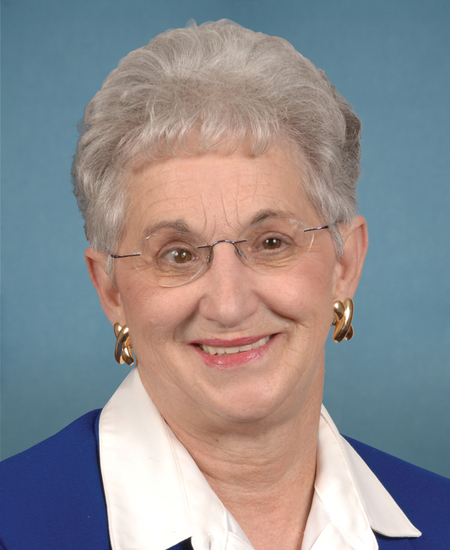
Rep. Virginia Foxx
Sponsored bills
Pandemic Preparedness, Response, and Recovery Act of 2021 This bill establishes in the legislative branch the Pandemic Preparedness, Response, and Recovery Commission to make recommendations and propose legislation for modification, consolidation, harmonization, or repeal of regulations to reduce compliance costs, encourage growth and innovation, improve competitiveness, and protect public safety. The commission must give priority to regulations (1) the repeal or modification of which may assist recovery or response to the COVID-19 (i.e., coronavirus disease 2019) pandemic and future pandemics, (2) that impose disproportionately high costs on a small entity, (3) that create substantial recurring paperwork burdens or transaction costs, or (4) that could be made more effective while reducing regulatory costs. The bill sets forth reporting requirements for the commission and procedures for congressional consideration of commission reports, recommendations, and proposed legislation.
State Tax Freedom Act This bill removes a prohibition on states and territories using COVID-19 relief funding under the American Rescue Plan Act of 2021 to offset a reduction in revenue resulting from a reduction in taxes or a delay in the imposition of a tax or tax increase. Additionally, the bill requires the Department of the Treasury to refund the state, territory, or tribal government any money that was repaid to the federal government since enactment of the American Rescue Plan Act of 2021 due to the state cutting taxes.
Facilitating the Deployment of Infrastructure with Greater Internet Transactions And Legacy Applications Act or the Facilitating DIGITAL Applications Act This bill requires the National Telecommunications and Information Administration (NTIA) to submit a report every 60 days describing whether the Department of the Interior and the Department of Agriculture have established online portals for the acceptance, processing, and disposal of a Form 299, as well as any barriers to the establishment of such portals. Form 299 is the application form for the right to install, construct, modify, or maintain a communications facility on federal real property. Both departments shall notify the NTIA not later than three business days after establishing their online portals.
Rural Broadband Permitting Efficiency Act of 2021 This bill authorizes federal departments to delegate federal environmental compliance for broadband projects to states and Indian tribes. Specifically, the bill requires the Department of Agriculture (USDA) and the Department of the Interior to establish a voluntary program whereby states or Indian tribes may opt-in to an agreement allowing them to take on the responsibility of environmental review for the permitting of broadband projects. Such projects must be located within an operational right-of-way (all real property interests acquired for the construction or operation of a project) on (1) national forest system land, (2) land managed by Interior, or (3) Indian lands. USDA and Interior shall also establish broadband permit streamlining teams to coordinate and expedite permitting decisions for broadband projects.
Expediting Federal Broadband Deployment Reviews Act This bill requires the National Telecommunications and Information Administration to establish an interagency strike force to increase specified agencies' prioritization of reviews for communications use authorizations on federal property. A communications use authorization is an easement, right-of-way, lease, license, or other authorization to locate or modify a communications facility on certain public land.
Unfunded Mandates Accountability and Transparency Act This bill revises rulemaking requirements with respect to unfunded mandates. Specifically, the bill requires federal agencies to prepare and publish in the Federal Register an initial and final regulatory impact analysis prior to promulgating any proposed or final major rule. The analysis must include regulatory alternatives to the rule. Major rule means a rule that the Office of Information and Regulatory Affairs determines is likely to cause an annual effect on the economy of $100 million or more; a major increase in costs or prices for consumers, individual industries, federal, state, local, or tribal government agencies, or geographic regions; or significant adverse effects on competition, employment, investment, productivity, innovation, public health and safety, or the ability of U.S.-based enterprises to compete with foreign-based enterprises in domestic and export markets. Before promulgating any proposed or final major rule, an agency shall select the regulatory alternative that maximizes net benefits, taking into consideration only the costs and benefits that arise within the scope of the statutory provision that authorizes the rulemaking, with exceptions. The bill prohibits Congress from considering a bill that increases private sector costs more than a certain amount unless certain conditions are met.

Just and Unifying Solutions To Invigorate Communities Everywhere Act of 2021 or the JUSTICE Act This bill addresses policies and issues regarding policing practices and law enforcement accountability. The bill funds state and local grants, incentivizes state and local reporting on the use of certain policing practices, creates new federal offenses for certain misconduct, and establishes best practices and training requirements. The bill funds state and local grants, including to support the use of body-worn cameras, to implement information sharing systems for disciplinary records of law enforcement officers, and to prohibit officers from engaging in sexual acts under color of the law. Further, it requires state and local governments that receive grants under the Edward Byrne Memorial Justice Assistance Grant program to report information related to use-of-force incidents and the use of no-knock warrants. At the federal level, the bill establishes new criminal offenses related to falsifying police reports and engaging in sexual acts under color of law. The bill directs the Department of Justice to develop training on de-escalation tactics, behavioral health crises, alternatives to the use of force, and the duty to intervene when another officer uses excessive force. Finally, the bill establishes and funds the National Criminal Justice Commission. Among other tasks, the commission must develop best practices for policing tactics and procedures.
Born-Alive Abortion Survivors Protection Act This bill establishes requirements for the degree of care a health care practitioner must provide in the case of a child born alive following an abortion or attempted abortion. Specifically, a health care practitioner who is present must (1) exercise the same degree of care as would reasonably be provided to any other child born alive at the same gestational age, and (2) ensure the child is immediately admitted to a hospital. Additionally, a health care practitioner or other employee who has knowledge of a failure to comply with the degree-of-care requirements must immediately report such failure to law enforcement. A health care practitioner who fails to provide the required degree of care, or a health care practitioner or other employee who fails to report such failure, is subject to criminal penalties—a fine, up to five years in prison, or both. An individual who intentionally kills or attempts to kill a child born alive is subject to prosecution for murder. The bill bars the criminal prosecution of a mother of a child born alive under this bill and allows her to bring a civil action against a health care practitioner or other employee for violations.
This resolution removes Representative Eric Swalwell from the House Permanent Select Committee on Intelligence.