

Protecting Individuals with Down Syndrome Act This bill creates new federal crimes related to the performance of an abortion on an unborn child who has Down syndrome. It subjects a violator to criminal penalties—a fine, a prison term of up to five years, or both. It also authorizes civil remedies, including damages and injunctive relief. A woman who undergoes such an abortion may not be prosecuted or held civilly liable.
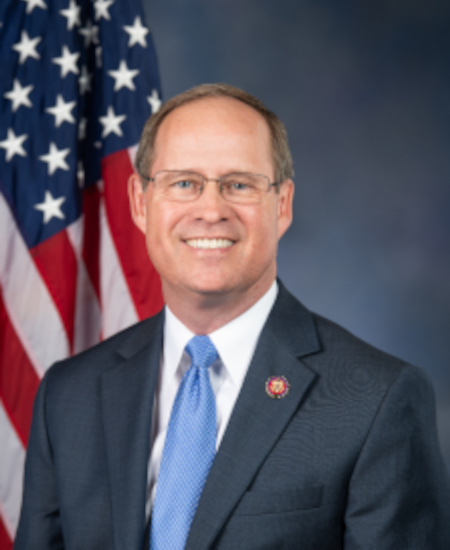
Rep. Gregory F. Murphy
Sponsored bills
Pregnant Women Health and Safety Act of 2021 This bill establishes requirements for physicians who perform abortions and abortion clinics. Specifically, the bill requires a physician who performs an abortion (1) to have admitting privileges at a nearby hospital; and (2) at the time of the abortion, to notify the patient of the hospital location where the patient can receive follow-up care if complications arise. A physician who fails to comply is subject to criminal penalties—a fine, a prison term of up to two years, or both. A woman who undergoes an abortion may not be prosecuted. The bill also requires an abortion clinic, in order to receive federal funds or assistance, to (1) be licensed by the state in which it is located, and (2) be in compliance with federal standards for ambulatory surgical centers.
This joint resolution proposes a constitutional amendment limiting Representatives to three terms and Senators to two terms. Terms beginning before the ratification of this amendment do not count towards these term limits.
This joint resolution proposes an amendment to the Constitution to require that the Supreme Court consist of nine Justices.
This resolution honors Officers Brian Sicknick and Howard Liebengood of the U.S. Capitol Police, and it commends the bravery and service demonstrated by officers of the U.S. Capitol Police, the Metropolitan Police Department of the District of Columbia, and the other law enforcement agencies and protective entities that assisted in responding to the January 6, 2021, attack on the U.S. Capitol.
Support Peaceful Protest Act This bill imposes additional penalties upon an individual who is convicted of a federal offense related to conduct during the course of a protest (e.g., rioting). First, in addition to the penalty for the conviction, the individual must pay restitution to cover the cost of federal policing during the protest. Second, the individual is ineligible for pandemic unemployment assistance.
No Social Media Accounts for Terrorists or State Sponsors of Terrorism Act of 2021 This bill bars access to certain social media platforms by individuals designated as terrorists or senior officials of a government that is a state sponsor of terrorism. Specifically, the bill requires the President to prohibit providers of social media platforms (i.e., platforms that allow users to generate and share content and that have over 100,000 active users) from making such platforms available to barred individuals or officials. The bill does, however, allow officials to use these platforms solely for legitimate emergency alert purposes. Violations of this prohibition are subject to civil and criminal penalties. In addition, the President may waive the prohibition in the interests of U.S. national security. The Department of the Treasury must report to Congress on (1) the status and impact of the prohibitions of this bill, and (2) efforts to facilitate the free flow of information and access to communications technologies by civil society and democratic activists in Iran, Syria, North Korea, Cuba, and other countries controlled by authoritarian regimes.
Research Investment to Spark the Economy Act of 2021 or the RISE Act of 2021 This bill authorizes the Departments of Agriculture, Commerce, Defense, Education, Energy, the Interior, Health and Human Services, and Transportation, National Aeronautics and Space Administration (NASA), National Science Foundation, and Environmental Protection Agency to provide support for research regarding COVID-19 (i.e., coronavirus disease 2019) or research disrupted by the COVID-19 pandemic. Support may be used to provide supplemental funding to extend the duration of a grant to a research institution, national laboratory, or individual that was awarded prior to the enactment of this bill, or to expand the purposes of such a grant as specified; issue awards to research the effects of the current pandemic and potential future pandemics; and provide flexibility on awards to account for facility closures or other limitations during the COVID-19 public health emergency. Agencies must provide the support as rapidly as possible. Provided funds shall remain available through FY2021.
Military Spouses Retirement Security Act This bill allows a small business employer a tax credit for each employee who is a military spouse and eligible to participate in the employer's defined contribution retirement plan.
Hearing Protection Act This bill removes silencers from the definition of firearms for purposes of the National Firearms Act. It also treats persons acquiring or possessing a firearm silencer as meeting any registration and licensing requirements of such Act. The Department of Justice must destroy certain records relating to the registration, transfer, or making of a silencer. The bill also revises the definitions of firearm silencer and firearm muffler under the federal criminal code and includes such items in the 10% excise tax category.