This resolution censures Representative Marjorie Taylor Greene and calls on her to resign from office.
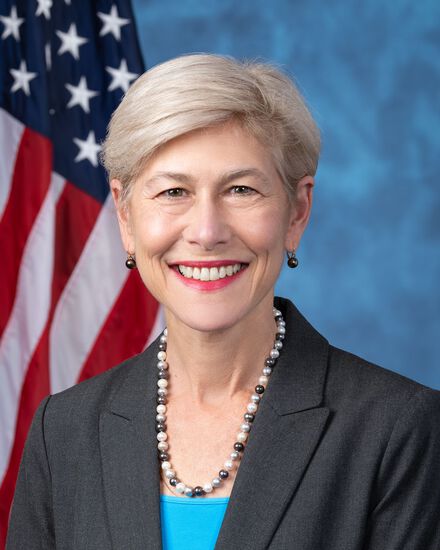
Rep. Deborah K. Ross
Sponsored bills
This resolution mourns the death of U.S. Capitol Police Officer Brian D. Sicknick, and it honors his lifelong commitment to service and his selfless acts of heroism on January 6, 2021.
This resolution calls for the federal government to establish a national biodiversity strategy, which must include a goal of conserving at least 30% of U.S. lands and waters to protect biodiversity and address climate change by 2030 and other goals necessary to reduce the threats to biodiversity.
Global Health, Empowerment and Rights Act This bill establishes that a foreign nongovernmental organization shall not be disqualified from receiving certain U.S. international development assistance solely because the organization provides medical services using non-U.S. government funds if the medical services are legal in both the United States and the country in which they are being provided. Such foreign organizations shall not be subject to requirements relating to their use of non-U.S. funds for advocacy or lobbying activities, other than those that apply to U.S. nongovernmental organizations. Current U.S. policy prohibits various foreign assistance from going to a foreign nongovernmental organization unless it agrees to not perform or actively promote abortions.
Officer Brian D. Sicknick Congressional Gold Medal Act This bill requires the Speaker of the House of Representatives and the President pro tempore of the Senate to arrange for the presentation of a Congressional Gold Medal commemorating Officer Brian D. Sicknick for giving his life to protect the Capitol and Members and staff of Congress on January 6, 2021. Following its award, the medal shall be given to Officer Sicknick's parents, Charles and Gladys Sicknick.
Raise the Wage Act of 2021 This bill increases the federal minimum wage for regular employees over a 5-year period, for tipped employees, and for newly hired employees who are less than 20 years old. The bill sets forth a schedule of annual increases in the federal minimum wage for individuals with disabilities. The Department of Labor shall no longer issue special certificates for the payment of subminimum wages to such individuals after the final wage increase under this bill for such individuals takes effect. Labor shall provide, upon request, technical assistance and information to employers to (1) help them transition their practices to comply with wage increases and other requirements under this bill for individuals with disabilities, and (2) ensure continuing employment opportunities for such individuals. The bill eliminates the separate minimum wage requirements for tipped, newly hired, and disabled employees. After a specified period, these employees shall be paid the same minimum wage as regular employees. Labor must publish any increase in the minimum wage in the Federal Register and on its website 60 days before it takes effect.

Health Care Fairness for Military Families Act of 2021 This bill modifies the extension of dependent coverage under TRICARE by allowing a dependent under the age of 26 to be covered without an additional premium. Additionally, the bill authorizes such coverage of dependents without a premium regardless of whether they are eligible to enroll in an employer sponsored plan.
Federal Firefighter Pay Equity Act This bill modifies certain pay calculations that are used to determine retirement and annuity benefits for federal firefighters. Specifically, the bill adjusts the method of determining the average pay of a federal firefighter by adding one-half of a firefighter's basic hourly rate multiplied by the number of overtime hours included as part of such firefighter's regular tour of duty.
Incentivizing Medicaid Expansion Act of 2021 This bill provides an enhanced federal matching rate to every state that expands Medicaid coverage for individuals who are newly eligible under the Patient Protection and Affordable Care Act, regardless of when such expansion takes place. Under current law, the enhanced Federal Medical Assistance Percentage (FMAP) is equivalent to 100% in 2014 through 2016, 95% in 2017, 94% in 2018, 93% in 2019, and 90% thereafter. The bill retains this enhanced FMAP, but bases it on a term of years rather than on specific dates. The bill applies retroactively.
This resolution expresses the sense of the House of Representatives that Congress should ensure that the U.S. Postal Service is not privatized and remains an independent establishment of the federal government.