

Maddy summaryThis bill requires federal agencies to provide detailed information about payments they authorize, including the purpose, funding source, and activity type. It mandates agencies to verify bank account information before payments are made and gives the Treasury Department access to the National Directory of New Hires, tax information, and Social Security data to help identify and prevent improper payments. Agencies must periodically verify payment information accuracy and report on payments exempt from these requirements due to sensitive operations. These provisions apply to all federal agencies using Treasury disbursement systems, aiming to improve government spending efficiency through better data sharing and verification processes.
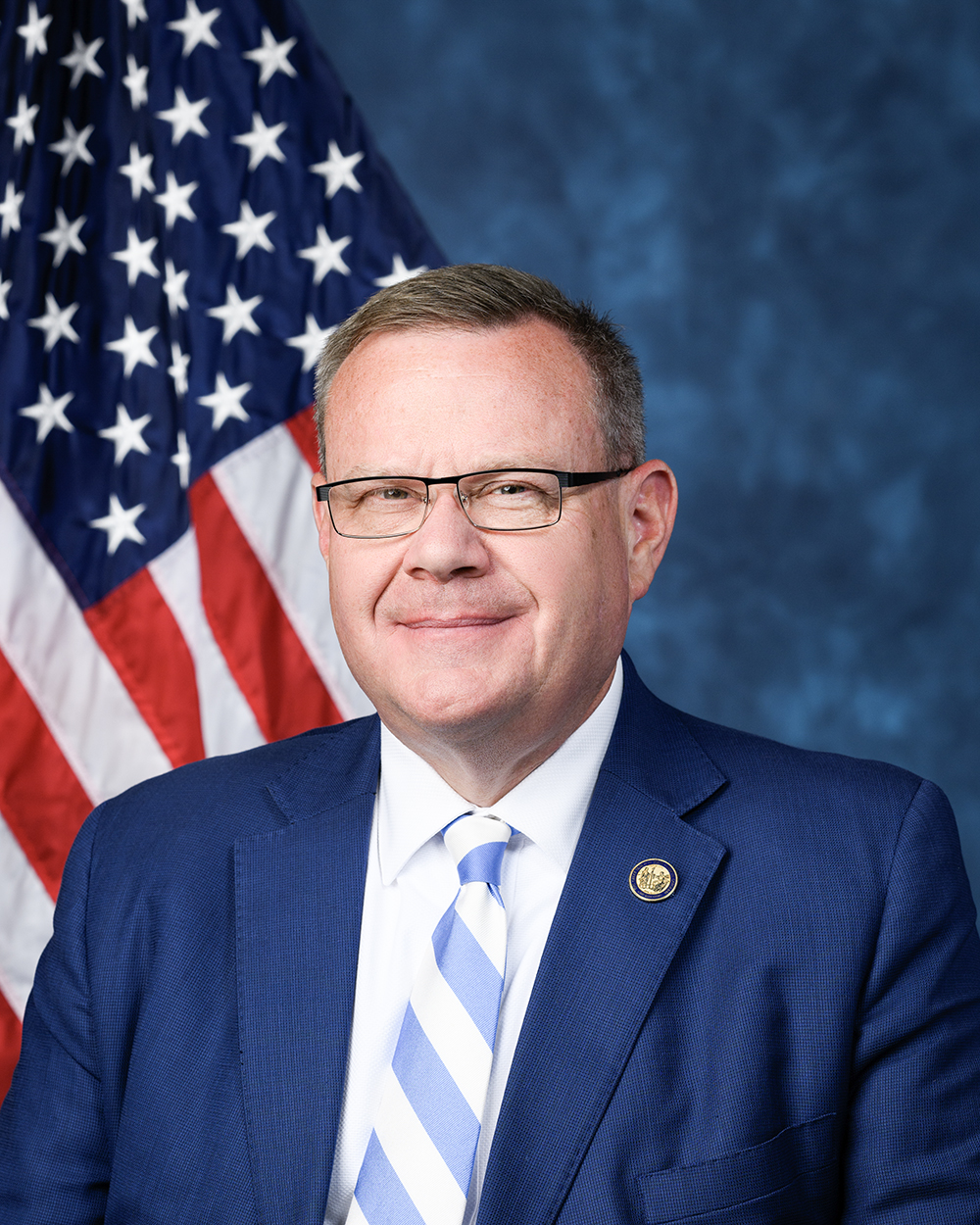
Rep. Tim Moore
Sponsored bills
Maddy summaryThe PBM Reform Act of 2025 aims to increase transparency and fairness in pharmacy benefit manager (PBM) operations within Medicare Part D and Medicaid programs. The bill requires Medicare Part D plans to allow any pharmacy meeting standard terms to join their networks, establishes "essential retail pharmacies" in underserved areas (with limited pharmacy access), and mandates detailed reporting on drug pricing, rebates, and reimbursement rates. It creates a process for pharmacies to report PBM violations of reasonable contract terms and prohibits "spread pricing" in Medicaid, where PBMs retain the difference between what they pay pharmacies and what they charge plans. These provisions aim to improve pharmacy access for Medicare beneficiaries and ensure fairer reimbursement practices for pharmacies.
Maddy summaryThis bill adds a new penalty for using fire or incendiary devices during certain federal crimes. Specifically, it mandates an extra minimum of one year in prison for anyone who knowingly uses fire or such devices while committing federal offenses involving property damage, obstruction of government operations, or public endangerment - including burning the U.S. flag as part of that crime. The law explicitly excludes First Amendment-protected expressive conduct (like peaceful flag desecration not tied to criminal acts) from this penalty. It applies only to individuals already charged with federal crimes where fire use escalates the offense.
Maddy summaryHRES 565 designates the week of June 30-July 4, 2025, as "National Tire Safety Week" to promote education about tire maintenance for American motorists. The resolution supports existing safety practices like checking tire pressure monthly (when tires are cold), verifying tread depth (using the penny test), and rotating tires per manufacturer guidelines. It encourages drivers to inspect tires for damage and follow recommended maintenance to reduce risks like underinflation, hydroplaning, and premature wear. As a non-binding resolution, it expresses congressional support for public awareness efforts but does not create new legal requirements.
Maddy summaryThis bill makes technical corrections to the Camp Lejeune Justice Act of 2022 to streamline claims for individuals harmed by water contamination at Camp Lejeune. It clarifies the evidence required (30+ days at the base plus a link between contaminants and health harm), specifies that cases must be handled in North Carolina courts (with limited transfer options), and sets attorney fee caps (20% before suit, 25% after). These changes directly affect veterans and civilians who lived at Camp Lejeune and filed claims under the 2022 law. The bill does not create new eligibility but aims to improve the legal process for existing cases.
Maddy summaryHR 4119 requires the U.S. State Department to submit a detailed report within 180 days of enactment on the Polisario Front’s leadership, military activities, and ties to Iran, Russia, Hezbollah, the IRGC, and the PKK. It also mandates that the State Department and Treasury submit within 90 days whether the Polisario Front meets criteria for designation as a foreign terrorist organization or for sanctions under existing laws. The bill establishes a process for potential sanctions but includes a waiver if the Polisario Front engages in good-faith negotiations toward Morocco’s 2007 autonomy plan for Western Sahara. This legislation focuses on gathering evidence for future designations rather than immediately imposing sanctions. It directly affects U.S. foreign policy decisions regarding the Polisario Front and Western Sahara.
Maddy summaryThe LEDGER Act (HR 4091) requires the Treasury Department to create a system tracking every government payment within 180 days of enactment. It mandates that all federal departments, agencies, and branches (executive, legislative, judicial) must report disbursements from every funding source, including how long funds remain available for spending. This system will detail each payment's origin, recipient, and timing across all government accounts. The bill directly affects all federal spending entities by standardizing expenditure tracking previously handled inconsistently.
Maddy summaryThe FIRM Act (HR 2702) prohibits federal banking agencies from considering "reputational risk" in supervising banks and credit unions. It requires agencies to remove all references to reputational risk - defined as concerns about negative publicity affecting an institution's reputation - from regulations, examinations, and enforcement actions. The bill directly affects depository institutions (banks and credit unions) and federal regulators like the FDIC and CFPB, banning them from using reputational risk as a basis for supervision or enforcement. This policy change aims to limit regulatory actions based on subjective public opinion rather than financial safety and soundness.
Maddy summaryHR 4012, the National Airport Supersonic Readiness Act of 2025, directs the Federal Aviation Administration (FAA) to study whether major U.S. airports can safely accommodate supersonic and hypersonic commercial aircraft. The study will assess runway length, ground equipment, noise regulations, air traffic systems, and economic impacts at large hub airports. The FAA must report findings and recommendations to Congress within one year, including cost estimates and timelines for potential infrastructure upgrades. This bill does not fund changes or create new rules, but rather evaluates current airport capabilities for future high-speed air travel.
Maddy summaryH.J. Res. 87 (Public Law 119-15) is a congressional disapproval resolution that prevents an Environmental Protection Agency (EPA) rule from taking effect. The rule, submitted by the EPA on April 6, 2023 (88 Fed. Reg. 20688), related to California’s authority to enforce stricter vehicle emission standards, including for heavy-duty trucks, zero-emission airport shuttles, and advanced clean truck requirements. By disapproving this rule, Congress blocks California from implementing these specific pollution controls under its existing waiver authority. This directly affects California’s ability to regulate motor vehicle emissions independently, as the rule would have allowed the state to enforce its own standards beyond federal requirements.