Maddy summaryHR 2293, the Cormorant Relief Act of 2025, expands an existing federal regulation allowing cormorant control at aquaculture facilities. It requires the Secretary of the Interior to reissue a 2016 depredation order to apply to aquaculture facilities in 12 additional states (including California, Illinois, and Ohio) and to include private lake and pond managers licensed by state agencies. The bill directly affects aquaculture businesses and private water managers in those states by permitting regulated cormorant control to protect fish stocks. It does not create new rules but broadens the geographic and organizational scope of an existing 2016 regulation.
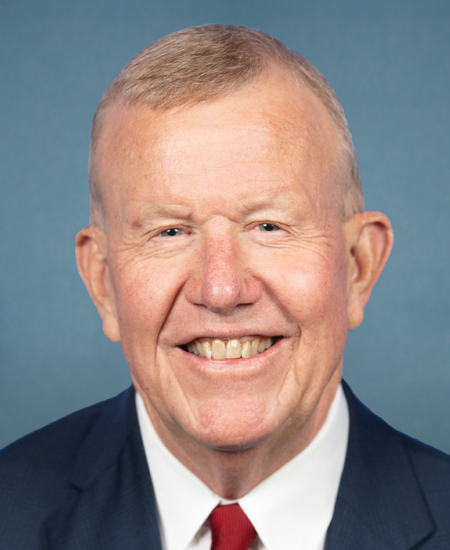
Rep. Mike Ezell
Sponsored bills
Maddy summaryThis bill suspends payment limits for agricultural subsidies for the 2025 crop year, removing caps on payments to farmers. It also establishes a new option for farmers to receive 50% of their expected 2025 crop payments as an advance by December 1, 2025, if they opt in. The remaining balance is paid later after the marketing year ends, with farmers required to repay any overpayment if the final amount exceeds the advance. The bill directly affects farmers growing covered commodities (like corn, soybeans) who choose to participate in the advance payment program.
Give Kids a Chance Act of 2025 This bill expands the Food and Drug Administration’s (FDA’s) authority with respect to research on rare pediatric diseases, including by permitting the FDA to take enforcement action against drug sponsors that fail to satisfy pediatric study requirements and by reauthorizing programs that support pediatric research. Specifically, the bill modifies requirements relating to molecularly targeted pediatric cancer investigations to permit research on new drugs in combination with active ingredients that have already been approved, provided certain conditions are met; permits the FDA to take enforcement action against drug sponsors that fail to comply with pediatric study requirements, if such sponsors demonstrated a lack of due diligence in satisfying the requirement; renews the FDA’s authority to award priority review vouchers to sponsors of new products intended to treat rare pediatric diseases through September 30, 2029; and reauthorizes through FY2027 certain funding for the National Institutes of Health to support priority pediatric research. The bill also provides statutory authority for the FDA’s interpretation of the orphan drug exclusivity period. The bill specifies, consistent with FDA regulations, that the seven-year market exclusivity period for drugs for rare diseases or conditions (i.e., orphan drugs) prohibits the approval of the same drug for the same approved use or indication with respect to the disease or condition. (In Catalyst Pharmaceuticals, Inc. v. Becerra , a court rejected the FDA’s interpretation and held that orphan drug exclusivity extends to all uses or indications for the disease or condition.)

Maddy summaryHR 5563, the DRIVE-SAFE Act, creates a structured apprenticeship program for commercial drivers under age 21. It requires employers to provide a two-phase training program: a 120-hour probationary period focused on basic driving skills (like traffic navigation and safety awareness), followed by a 280-hour period covering advanced tasks (such as pre-trip inspections and load management). During both phases, apprentices must operate vehicles equipped with automatic transmissions, collision mitigation systems, and video capture, and must be accompanied by an experienced driver (26+ years old with no recent accidents or violations). The bill does not change existing commercial driver’s license requirements and mandates employers to maintain records and provide remediation for preventable accidents or violations during training.
Maddy summaryHR 4802, the Securing Infrastructure from Adversaries Act of 2025, bans the use of federal funds for certain foreign-made LiDAR technology in transportation projects. It prohibits the Secretary of Transportation from procuring, obtaining, or contracting for LiDAR technology from specified "covered foreign countries," "covered LiDAR companies," or "covered LiDAR technology" starting June 30, 2026. Contractors must certify they will not use banned technology, and the Secretary may grant limited waivers for national security reasons, requiring congressional notification. This directly affects transportation infrastructure projects funded by the Department of Transportation, including grants and contracts.
Maddy summaryThis bill requires the Army Corps of Engineers (acting through the Chief of Engineers) to improve coordination for maintenance dredging contracts. It mandates consulting stakeholders and prioritizing dredging in waters used for commercial navigation, emergencies, environmental timing windows, or national interests over recreational or non-essential uses. The bill also requires the Corps to notify local project partners within three business days of any changes affecting contract timelines and to provide capability numbers for dredging activities upon request. These provisions directly affect commercial ports, navigation infrastructure, and local entities partnering with the federal government on dredging projects.
Maddy summaryThis bill would require Medicare to cover early detection screening tests for Alzheimer's disease and related dementias starting January 1, 2028. It defines eligible tests as FDA-cleared genomic blood tests, blood product analyses, or equivalent medical imaging methods (like protein expression or whole genome sequencing) that detect pre-symptomatic or early-stage conditions. Medicare beneficiaries would receive this coverage without cost-sharing for these specific screenings. The bill amends Medicare coverage rules to explicitly include these tests under Section 1861(nnn) of the Social Security Act.
Maddy summaryThe Fisheries Data Modernization and Accuracy Act of 2025 reforms how recreational fishing data is collected and used by the National Marine Fisheries Service. It establishes a standing committee with the National Academies to advise on data collection methods, sets a 30% threshold for data reliability (percent standard error), and requires consultation when data falls below this level. States can develop their own data collection programs that may replace federal MRIP data when they meet specific standards, and the bill creates a grant program to help states improve their systems. The bill requires annual reports on implementation and data quality improvements, affecting recreational fishing management across all coastal states and federal fisheries agencies.
Maddy summaryHR 1514 establishes the Mississippi River Basin Fishery Commission within the Department of the Interior to coordinate management of interjurisdictional fisheries across 31 U.S. states, two Canadian provinces, federal agencies, and tribal nations. The Commission oversees six sub-basin management plans, develops strategies to control invasive carp (like bighead and silver carp), and administers grant programs for conservation projects. It provides $30 million annually (2027-2029) and $50 million annually (2030-2032) to fund collaborative efforts, with grants prioritizing projects aligned with the existing MICRA Joint Strategic Plan. The Commission’s authority is nonbinding, requiring consensus among member entities but not overriding state or federal management laws.
Maddy summaryHR 6044, the Pay Our Patriots Act, ensures military personnel and essential Federal Aviation Administration (FAA) staff continue receiving pay during a government shutdown. It appropriates funds from the Treasury to cover "covered pay and allowances" for active-duty military members and specific FAA employees (like air traffic controllers) deemed essential for air safety during any lapse in regular appropriations. The bill mandates that payments be made at the rate in effect before the shutdown began, with funds immediately available and not subject to reductions. This funding continues until either a new appropriations bill is passed or the end of the fiscal year in which the shutdown began.