

Maddy summaryThis concurrent resolution expresses Congress's support for law enforcement officers and honors those who have died or been injured while performing their duties. The document highlights the dangers officers face, noting high rates of assaults and suicide, as well as current staffing shortages compared to pre-2020 levels. It calls for increased measures to improve officer safety, including more personnel, better training and equipment, stricter penalties for assaulting officers, and expanded mental health resources. This non-binding measure does not create new laws or allocate funding but serves to formally recognize the contributions of police professionals and urge government bodies to provide necessary support.
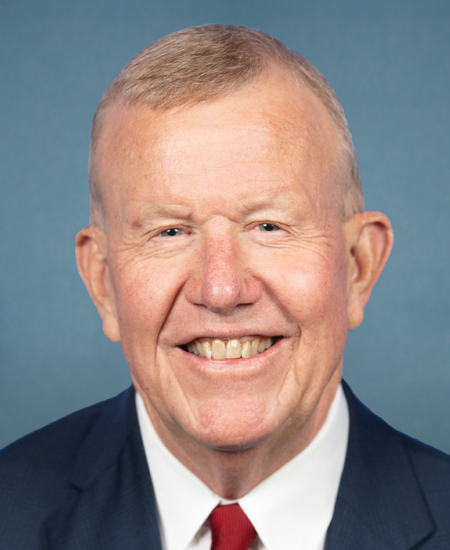
Rep. Mike Ezell
Sponsored bills
Maddy summaryThis bill establishes an independent, nonpartisan Commission on Natural Disaster Risk Management and Insurance to study how the United States can better manage risks and financial costs from natural disasters. The Commission would consist of 26 members appointed by congressional leaders and committee chairs, including two state insurance commissioners, who would serve without pay and meet to conduct assessments. Its main duties include examining current disaster risks, insurance availability and affordability, building codes, and various risk-sharing mechanisms like catastrophe bonds and alternative insurance products. After two years, the Commission must submit a detailed report with findings and recommendations to relevant congressional committees before it is dissolved.
Maddy summaryThis bill, known as the Post-Disaster Protection Act, extends the time limit for appealing federal disaster assistance decisions from 60 to 90 days. It directly affects individuals and communities seeking aid after natural disasters by amending the Robert T. Stafford Disaster Relief and Emergency Assistance Act. The change provides applicants with additional time to contest decisions regarding their eligibility or the amount of assistance they receive. This adjustment aims to give affected parties more time to review and challenge assistance determinations without rushing the appeals process.
Equal Representation Act This bill requires that the statement sent by the President to Congress after the decennial census indicating the number of persons in each state exclude noncitizens. (This statement is the basis for reapportionment of U.S. Representatives.) The bill also requires any questionnaire used in the decennial census to include a checkbox or other similar option for respondents to indicate whether the respondent and each household member is (1) a U.S. citizen, (2) a U.S. national but not a citizen, (3) a non-U.S. national ( alien under federal law) lawfully residing in the United States, or (4) a non-U.S. national unlawfully residing in the United States. The Department of Commerce must make public the number of persons in each state, disaggregated by each of these four categories.
Maddy summaryThis House Resolution recognizes the efforts and public safety contributions of linemen and the important role they play in maintaining the nation's energy infrastructure. It expresses support for designating April 18, 2026, as "National Lineman Appreciation Day" and acknowledges linemen as first responders.
Maddy summaryThe ESA Amendments Act of 2025 makes significant changes to the Endangered Species Act of 1973 to streamline conservation efforts and reduce regulatory burdens. It establishes a national listing work plan with priority classifications for species to better allocate resources, and creates "Candidate Conservation Agreements with Assurances" that provide private landowners with regulatory certainty in exchange for conservation actions. The bill also requires the government to publish the basis for listings online, streamlines permitting processes for projects that comply with conservation measures, and modifies critical habitat designation to better accommodate existing conservation plans on private lands. These changes aim to improve conservation outcomes while reducing delays for landowners, developers, and federal agencies working with listed species.
Maddy summaryThis bill establishes a regional management framework for double-crested cormorants across four U.S. flyways, requiring the Secretary of the Interior to develop plans within 180 days that specify allowed hunting methods, time periods, and authorized entities including state and tribal agencies, lake managers, and pond managers. The framework must ensure cormorant populations remain sustainable while addressing impacts on fisheries, vegetation, other bird species, human safety, water quality, and endangered species. The bill mandates population surveys every five years and requires the management plans to be reviewed and updated every five years based on survey results and current data.
Maddy summaryThe ALERT Act (HR 7613) requires the Federal Aviation Administration to improve aviation safety through several key measures. It mandates the evaluation and potential implementation of enhanced collision avoidance systems (ACAS-Xa) for commercial aircraft and ACAS-Xr for rotorcraft, with specific deadlines for rulemaking and installation. The bill establishes committees to develop recommendations for safety technology requirements, requires safety risk assessments for air traffic controllers, and addresses operational procedures at high-traffic airports like Ronald Reagan Washington National. These provisions affect air carriers, air traffic controllers, rotorcraft operators, and Department of Defense aircraft operations. The act aims to enhance situational awareness and reduce midair collision risks through technology upgrades and improved safety protocols.
Maddy summaryThe FETCH Act of 2026 expands funding from federal Byrne grants to support police dog programs across the United States. This legislation allows law enforcement agencies to use these funds for acquiring, training, and caring for police dogs, including expenses for veterinary care, medications, food, equipment, and housing. The bill also permits funding for retired service dogs, covering post-service medical needs and administrative costs. Directly affected entities are police departments that operate K9 units and seek financial assistance for canine-related operational expenses. The act amends existing federal crime control statutes to explicitly include police dog programs as eligible uses of Byrne grant money.
Maddy summaryThis bill requires the U.S. State Department to produce annual reports assessing national security risks posed by foreign adversaries using generative AI for malicious purposes. Within 180 days of enactment (and annually for three years), the Secretary of State must submit unclassified reports to Congress detailing specific incidents - such as disinformation campaigns, weapons development support, cyber attacks, or surveillance enhancements - and emerging trends. The reports must include recommendations to counter these threats and will be posted publicly online. This directly affects the State Department’s reporting obligations and informs congressional oversight on international AI security risks.