

Environmental Justice Mapping and Data Collection Act of 2021 This bill establishes an interagency Environmental Justice Mapping Committee that must create a tool to identify environmental justice communities. Environmental justice communities are communities with significant representation of communities of color, low-income communities, or tribal and indigenous communities that experience, or are at risk of experiencing, higher or more adverse human health or environmental effects, as compared to other communities. The Environmental Protection Agency (EPA) must establish an environmental justice data repository to maintain the data collected by the committee. The EPA must make the repository available to regional, state, local, and tribal governments.
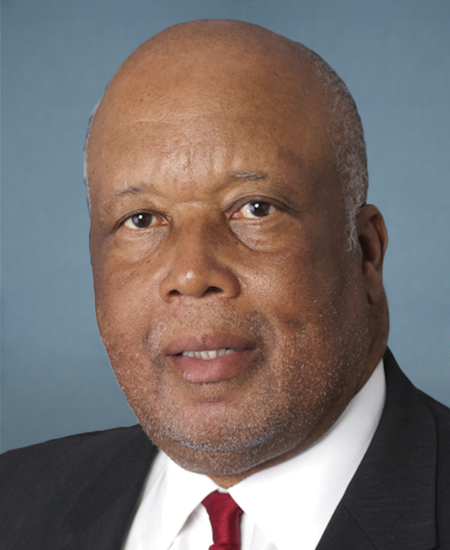
Rep. Bennie G. Thompson
Sponsored bills
Energy Resilient Communities Act This bill requires the Department of Energy to establish a program that awards grants to make critical energy infrastructure more resilient to climate change hazards, such as grants for developing clean energy microgrids that support critical community infrastructure or customers of electric utilities with special energy needs due to medical conditions.
Comprehensive Breast Reconstruction Act of 2021 This bill provides for Medicare, Medicaid, and private health insurance coverage of certain tattooing services in connection with post-mastectomy breast reconstruction, and aligns the scope of Medicare and Medicaid coverage of such breast reconstruction with that of private health insurance. Specifically, the bill provides for coverage of reconstructive tattooing services that are performed by a health care practitioner or state-licensed tattoo artist pursuant to a physician prescription, and expands Medicare and Medicaid coverage to include all stages of reconstruction, surgery to produce a symmetrical appearance, and prostheses and physical complications of mastectomies (e.g., lymphedemas).
Insular Area Medicaid Parity Act This bill eliminates Medicaid funding limitations for U.S. territories beginning in FY2021.
Byron Nash Renal Medullary Carcinoma Awareness Act of 2021 This bill allows states to receive federal payment under Medicaid for 50% of their costs for providing education on the risk of renal medullary carcinoma to individuals with sickle cell disease. (Renal medullary carcinoma is a rare kidney disease usually found in individuals with the sickle cell trait.)
Nationally Enhancing the Well-being of Babies through Outreach and Research Now Act or the NEWBORN Act This bill establishes a pilot program through which the Health Resources and Services Administration must award grants to territorial, tribal, and local health departments in areas with the highest rates of infant mortality to address birth defects, premature births, and other leading causes of infant death.
This resolution censures Representative Marjorie Taylor Greene and calls on her to resign from office.
COVID-19 Mine Worker Protection Act This bill requires the Department of Labor to issue health and safety standards to protect coal miners from occupational exposure to COVID-19 (i.e., coronavirus disease 2019). Labor shall provide for emergency standards within seven days of this bill's enactment, and such emergency standards shall be in force until permanent standards are promulgated. Labor shall also collect data to track and investigate cases of exposure to COVID-19 among coal miners.
This resolution acknowledges that child poverty prevents children from reaching healthy development and an economically secure future. It also encourages all levels of government to enact and support anti-poverty policies and programs.
Save Education Jobs Act This bill establishes through FY2030 the Education Jobs Fund, from which the Department of Education (ED) must award grants to state educational agencies and, through them, subgrants to local educational agencies (LEAs) to retain and create education jobs. ED must also provide grants to outlying areas and the Bureau of Indian Education. Specifically, LEAs must use subgrants for compensation and benefits to retain existing employees, rehire former employees, and hire new employees. Further, subgrants may be used for certain activities such as training and professional development, providing salary increases to cover extended days or school years to make up for lost instructional time due to COVID-19 (i.e., coronavirus disease 2019), and developing teacher leadership roles in high-need schools. The bill prohibits the use of subgrants for certain activities, such as funding voucher programs, tax-credit scholarships, or education savings accounts.