National Right-to-Work Act This bill repeals those provisions of the National Labor Relations Act and the Railway Labor Act that permit employers to make an agreement with a labor union to require employees to join such union as a condition of employment. Currently, at least 27 states have enacted laws prohibiting employers from compelling employees to become members of a union as a condition of employment.
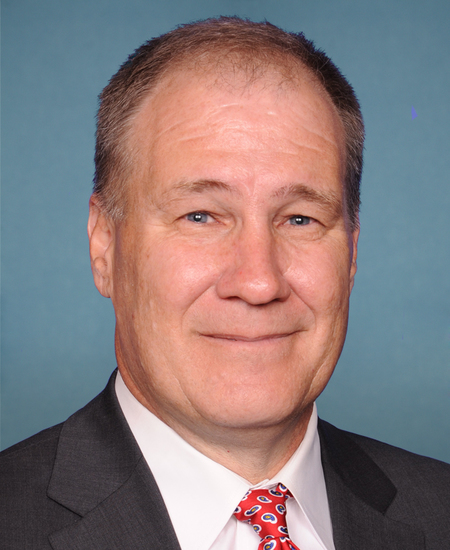
Rep. Trent Kelly
Sponsored bills
Fair and Open Competition Act or the FOCA Act This bill prohibits federal construction contracts or controlling documents for federally supported construction projects from requiring or prohibiting project labor agreements. Such documents also may not discriminate against or give preference to a bidder or contractor who signs or refuses to sign a project labor agreement. An agency may exempt a project from this prohibition to avert an imminent threat to public health or safety or to serve the national security.
Gold Star Altitude Act This bill authorizes the Department of Defense to offer, on a space-available basis, transportation on military aircraft to the children, surviving spouses, parents, and siblings of members of the Armed Forces who die during active service.
Iran Hostages Congressional Gold Medal Act This bill requires the Speaker of the House of Representatives and the President pro tempore of the Senate to arrange for the award of a Congressional Gold Medal commemorating the bravery and endurance of the 53 hostages of the Iran Hostage Crisis. Following its award, the medal shall be given to the National Museum of American History of the Smithsonian Institution for display and research. The Department of the Treasury must strike duplicate medals in silver for presentation to a hostage (or the personal representative of a deceased hostage), and Treasury may also strike and sell duplicate medals in bronze.
This resolution requests that the President transmit to the House of Representatives documents related to the amount of funding that was provided in specified laws regarding COVID-19 (i.e., coronavirus disease 2019) and is currently unspent. The specified laws include the Coronavirus Preparedness and Response Supplemental Appropriations Act, 2020; the Families First Coronavirus Response Act; the Coronavirus Aid, Relief, and Economic Security Act (CARES Act); the Paycheck Protection Program and Health Care Enhancement Act; and Division N of the Consolidated Appropriations Act, 2021.
"Six Triple Eight" Congressional Gold Medal Act of 2021 This bill directs the Speaker of the House of Representatives and the President pro tempore of the Senate to arrange for the award of a Congressional Gold Medal in honor of the women of the 6888th Central Postal Directory Battalion (commonly known as the Six Triple Eight) in recognition of their pioneering military service, devotion to duty, and contributions to increase the morale of personnel stationed in the European theater of operations during World War II. The medal shall be given to the Smithsonian Institution and made available for display and research.
Veteran Overmedication and Suicide Prevention Act of 2021 This bill requires the Department of Veterans Affairs (VA) to contract with the National Academies of Sciences, Engineering, and Medicine to report on the deaths of covered veterans who died by suicide during the last five years, regardless of whether information relating to such deaths has been reported by the Centers for Disease Control and Prevention. A covered veteran is any veteran who received VA hospital care or medical services during the five-year period preceding the veteran's death. Among other elements, the report shall include the total number of covered veterans who died by suicide, violent death, or accidental death, as well as certain demographic information.
This resolution expresses the opposition of the House of Representatives to any plans by the Department of Defense to deliver COVID-19 (i.e., coronavirus disease 2019) vaccines to prisoners held at United States Naval Station, Guantanamo Bay, Cuba, until all Americans have had the opportunity to be vaccinated. Additionally, the resolution asserts that the government should prioritize U.S. citizens for COVID-19 vaccinations.
Safe Responsible Ethical Scientific Endeavors Assuring Research for Compassionate Healthcare Act or the Safe RESEARCH Act This bill prohibits the National Institutes of Health (NIH) from conducting or supporting research on human fetal tissue obtained from an abortion procedure. It also imposes other restrictions on human fetal tissue research. Under the bill, the NIH may conduct or support research on human fetal tissue only if it was obtained from a stillbirth. Current law allows research on tissue from stillbirths or from spontaneous or induced abortions. The bill also applies informed consent and other requirements applicable to research on the transplantation of human fetal tissue for therapeutic purposes to all research with human fetal tissue. This includes research on stem cells and other human fetal tissue alternatives. Additionally, human fetal tissue used for this research must be obtained in accordance with state anatomical gift laws. These laws govern organ and tissue donation for therapeutic, research, and other purposes. Some states already apply anatomical gift laws to human fetal tissue donation. Currently, executive branch officials may not prohibit the NIH from conducting or supporting research on the transplantation of human fetal tissue for therapeutic purposes. The bill repeals this limitation on executive branch officials. It also repeals a requirement that the NIH fund certain proposals for this research.

Second Chance at Life Act of 2021 This bill requires abortion providers to disclose information about the possibility of reversing a medication abortion. This is a procedure that uses a medication regimen to terminate a pregnancy, typically with a two-drug protocol. Providers must inform patients that it may be possible to reverse the effects of a medication abortion after taking the first drug. They must also let patients know that more information and assistance is available on the Department of Health and Human Services (HHS) website. At least 24 hours before the procedure, the provider must share this information with the patient in person or by telephone. The provider must also include the information in written discharge instructions after the first drug is dispensed. The bill sets out an exception to these notification requirements when an abortion is necessary to resolve a physical injury or condition that threatens the life of the woman. The provider must document the circumstances giving rise to the exception in the patient's medical file. Furthermore, providers must post signs with this information in their offices or facilities, and HHS must maintain information about reversing medication abortions on its website.