

Maddy summaryHJRES 45 is a congressional disapproval resolution targeting a specific Department of Education rule about federal student loans. It seeks to block the rule implementing "One-Time Federal Student Loan Debt Relief" (including modifications to Perkins, FFEL, and Direct Loan programs) by invoking the Congressional Review Act. If passed, this resolution would nullify the rule, preventing the Department of Education from using it to modify or waive student loan obligations. The bill directly affects borrowers who might have qualified for debt relief under the targeted rule.
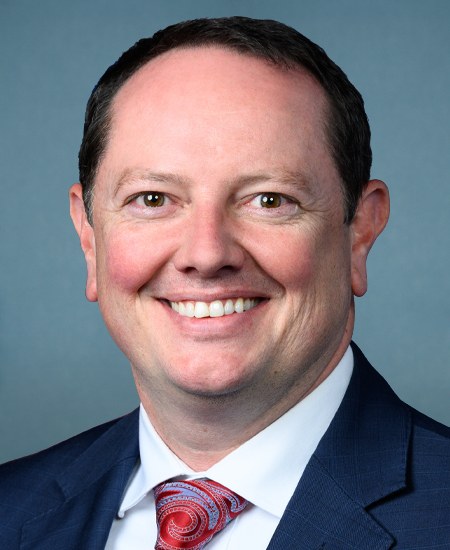
Rep. Eric Burlison
Sponsored bills
Maddy summaryHRES 521 is a formal resolution censuring Representative Adam Schiff (D-CA, 30th District) for conduct deemed "unbecoming" of a House member. The resolution alleges Schiff repeatedly made false claims about Trump-Russia collusion, including spreading Steele Dossier information and releasing a flawed FISA memo, and misled the public during impeachment proceedings. If passed, it would require Schiff to appear in the House chamber for a public reading of the censure resolution. The resolution also directs the House Ethics Committee to investigate Schiff's "falsehoods and misrepresentations." This is a symbolic procedural action, not a law changing policy or affecting constituents.
Maddy summaryHR 277 would require Congress to approve major federal regulations before they take effect. Major rules are defined as those with significant economic impact ($100 million+ annually), major cost increases for consumers or industries, or significant adverse effects on competition, employment, or innovation. Agencies must submit detailed information about these rules to Congress, including cost-benefit analyses, before they can take effect. Congress would have 70 session days to approve the rule with a joint resolution; if they don't act within that timeframe, the rule would not take effect. This would increase congressional oversight of federal regulations and require more detailed information about proposed rules before they become law.
Stop Government Overreach in Ranching Act This bill repeals the guidance that was issued by the Food and Drug Administration (FDA) on June 11, 2021, relating to over-the-counter (OTC) antimicrobial drugs for animals. The guidance provides information for sponsors of medically important antimicrobial new animal drug products who wish to change the status of these drugs from OTC to veterinary prescription, in accordance with the FDA's recommendation that these drugs be administered with veterinary oversight to reduce the possibility of antimicrobial resistance.
Maddy summaryHR 1640, the Save Our Gas Stoves Act, prevents the Department of Energy from implementing energy efficiency standards for gas stoves that would make them unavailable in the U.S. market. It amends federal law to require that any new standard for gas stoves must not result in the unavailability of gas stove types, directly affecting gas stove manufacturers and consumers who rely on these appliances. The bill specifically blocks the implementation of the 2023 proposed rule (Energy Conservation Program: Energy Conservation Standards for Consumer Conventional Cooking Products) and any similar rule. This is a policy change focused on maintaining the availability of gas stoves by altering the criteria for energy standard approval.
Maddy summaryThis resolution formally censures Rep. Adam Schiff (CA-30) for alleged misconduct related to his role on the House Intelligence Committee. It demands he appear before the House for a public censure and directs the Ethics Committee to investigate claims that he made false statements and misused classified information during investigations into the Trump-Russia matter. The resolution does not create new laws or policies but is a procedural action expressing the House's disapproval. It directly affects Rep. Schiff as the named recipient of the censure.
Maddy summaryHR 4114, the Agency Accountability through Appropriations Act, requires the President to annually report to Congress on agency rules funded through regular appropriations. Congressional committees must then hold hearings to assess if those rules followed the original congressional intent for the agency's funding. If non-compliance is found, the bill mandates automatic 0.5% funding cuts per rule in the next year's budget for the affected agency. It also imposes weekly 0.5% cuts on the Executive Office for each week the President misses the October 31 report deadline. The law directly affects federal agencies receiving regular appropriations and the White House.
Symmetry in Rules Act This bill prohibits the Securities and Exchange Commission (SEC) from issuing a proposed rule or finalizing a rule that conflicts with an existing rule or another proposed rule. The SEC must also take a specific industry's costs of compliance with multiple rules into consideration before a rulemaking.
Maddy summaryHR 4113, the No Altering Public Comments Act, prohibits federal agencies from removing or altering public comments posted on their websites. This applies to all agencies defined under 5 U.S.C. §551, including departments like the EPA or Department of Transportation. The bill only allows removal for comments that are threatening or pose a national security risk. It directly affects how agencies manage public input on their official websites.
Freights First Act This bill eliminates Amtrak's preference over freight transportation in using a rail line, junction, or crossing if such rail line, junction, or crossing is located within 50 miles of a port or rail yard. Currently, Amtrak's priority status does not apply if there is an emergency.