

Maddy summaryHRES 764 is a symbolic House resolution recognizing persistent disparities in mental health access and treatment for Black youth. It cites alarming statistics, including a 149% rise in suicide rates among Black adolescents (2007-2023) and higher rates of suicide attempts among Black high school students. The resolution calls on the current administration to continue previous efforts addressing these disparities, incorporate recommendations from the Congressional Black Caucus’s "Ring the Alarm" report, and protect the Substance Abuse and Mental Health Services Administration (SAMHSA) as an independent agency. It does not create new laws or allocate funds but serves as a formal acknowledgment of the crisis and a request for policy continuity.
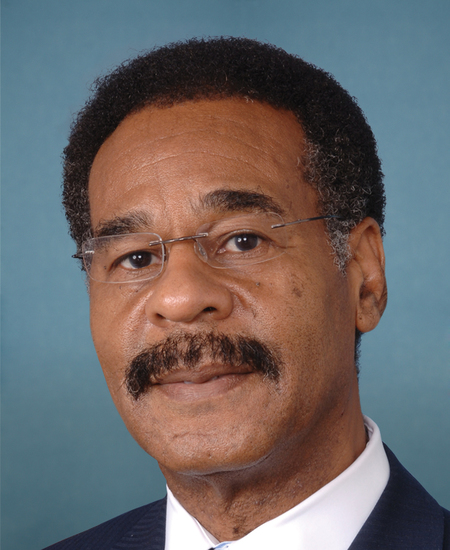
Rep. Emanuel Cleaver
Sponsored bills
Maddy summaryThis resolution condemns the use of federal regulatory agencies (like the FCC) or lawsuits to suppress lawful speech critical of political parties or the President, specifically referencing concerns about tactics mirroring authoritarian practices. It does not create new laws but formally warns that such actions undermine First Amendment protections and democratic norms. The resolution directly affects media organizations, journalists, and public discourse by calling on government agencies to avoid using their power for political retaliation. It reaffirms the House’s commitment to protecting free expression and urges officials to refrain from pressuring media to silence criticism.
Maddy summaryThis resolution (HRES 756) is a symbolic House of Representatives measure supporting the designation of September 2025 as "National Voting Rights Month." It directly affects the public by encouraging nationwide awareness campaigns, voter registration drives, and educational efforts about voting rights. Key mechanisms include urging Congress to pass voting rights legislation (like the Freedom to Vote Act), recommending schools teach about voting history and current restrictions, and promoting media campaigns to share election dates and registration deadlines. The resolution does not create new laws or policies but aims to foster civic engagement around voting access.
Maddy summaryThis bill requires health plans and insurers to create a clear, timely process for patients or doctors to request exceptions when step therapy protocols (which force patients to try cheaper drugs first) might harm them. It mandates approval for exceptions in six specific cases, such as when prior treatments failed, delaying care risks severe harm, or the required drug causes adverse reactions. Plans must respond within 72 hours (24 hours for emergencies) and cover the requested drug for at least one year if approved. Additionally, health plans must report annual data on exception requests, approvals, denials, and reasons to the government for transparency.
Maddy summaryHRES 746 is a non-binding resolution passed by the U.S. House of Representatives condemning all political violence - including attacks on elected officials, candidates, and public figures - and rejecting rhetoric that dehumanizes opponents. It specifically urges law enforcement to investigate and prosecute such violence, calls on public officials and media to avoid inflammatory language, and references recent incidents like the 2025 assassination of activist Charlie Kirk and targeted shootings of Minnesota legislators. The resolution does not create new laws but formally expresses the House’s commitment to protecting public servants and promoting peaceful political discourse. It directly affects the House’s public stance and serves as a call to action for officials, media, and communities to foster civil engagement.
Maddy summaryHRES 744 is a non-binding House resolution supporting the designation of September 21-27, 2025, as "Gold Star Families Remembrance Week." It honors families who lost members in military service (Gold Star Families) and families of veterans, recognizing their sacrifices. The resolution encourages Americans to observe the week through community service and by celebrating the lives of those who died defending the U.S. It does not create new laws or policies but formally recognizes these families annually. This is a commemorative measure, not a legislative change.
Maddy summaryThis bill (HR 5467, the PAAT Act) requires Medicare Part D plans to cover specific drugs treating autoimmune diseases, hemophilia, and Von Willebrand disease starting in 2027. It directly affects Medicare beneficiaries with these conditions by mandating plan coverage for relevant medications. Key provisions include requiring plans to include all covered drugs for these conditions and prohibiting prior authorization for such drugs more than once per year, unless the drug is short-term, a controlled substance, or has a risk management strategy. The law aims to reduce coverage barriers for these treatments without altering drug approval or pricing.
Maddy summaryThe Tyler Clementi Higher Education Anti-Harassment Act of 2025 requires U.S. colleges and universities participating in federal financial aid programs to create and distribute clear anti-harassment policies covering harassment based on race, color, national origin, sex (including sexual orientation and gender identity), disability, or religion. These policies must explicitly prohibit harassment in all settings - including online, on campus, off-campus housing, and during school-sponsored activities - and outline reporting procedures and support services for victims. The bill also establishes a $50 million annual grant program to fund schools developing prevention programs, victim support services, or staff/student training on recognizing and addressing harassment. Grants are competitive, require annual reporting on effectiveness, and must be used to improve existing efforts without replacing existing civil rights laws like Title IX.
Maddy summaryThis bill reauthorizes federal funding for diabetes programs targeting Type 1 diabetes. It extends annual funding of $160 million for fiscal years 2026 through 2030, continuing existing support for research, treatment, and prevention initiatives. The funds remain available until expended, directly supporting programs serving people with Type 1 diabetes and the organizations delivering these services. The bill makes no changes to program eligibility or structure, only extending current funding levels.
Maddy summaryThe Redistricting Reform Act of 2025 requires states to use independent redistricting commissions for congressional redistricting, banning partisan gerrymandering and requiring plans to comply with constitutional and Voting Rights Act standards. The bill establishes ranked criteria for redistricting, prioritizing population equality, voting rights protections, and community preservation over partisan advantage. It mandates multi-partisan commission composition with public input and transparency requirements, with states facing court-developed plans if they miss deadlines. The law would apply to redistricting after the 2030 census, affecting all 50 states' congressional district maps.