

Maddy summaryThe Wildfire Response and Readiness Act establishes a national prescribed fire program that requires federal agencies to increase the acreage of controlled burns on public lands by 10 percent annually for a decade. It creates a ten-year national wildfire plan to coordinate landscape-scale forest restoration, reforestation, and watershed protection efforts across federal, state, tribal, and private boundaries. The bill also authorizes new funding for community resilience, including grants for home hardening, satellite monitoring technology, and a joint office dedicated to fire environment data and prediction. Additionally, it modernizes the firefighting workforce by establishing training academies, expanding civilian conservation centers, and providing liability protections for non-federal partners conducting prescribed fires.
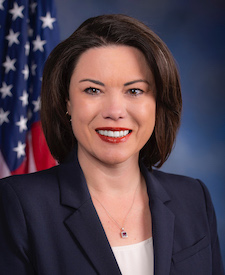
Rep. Angie Craig
Sponsored bills
Maddy summaryHR 4541, the EARLY Act Reauthorization of 2025, extends the funding period for the Young Women’s Breast Health Education and Awareness program. It amends the Public Health Service Act to update the program’s expiration date from 2026 to 2031. The bill directly affects young women aged 15-25 by ensuring continued access to breast health education and awareness resources. The key provision is a simple extension of the existing program’s authorization period, without altering its scope or requirements. This is a procedural reauthorization to maintain current services through 2031.
Maddy summaryThe Temporary Protected Status Review Act restores the ability of courts to review decisions by the Department of Homeland Security to end Temporary Protected Status (TPS) designations for foreign nationals. Under this bill, the government must publish detailed written findings explaining why a country no longer qualifies for TPS protection, and these decisions would be subject to a legal challenge in federal court. If a TPS designation is terminated, the affected individuals would remain in the United States with their current status and work authorization intact while the legal challenge is pending. Additionally, the legislation requires the government to follow specific administrative procedures, such as considering all available evidence and avoiding bias, before making any termination decisions.
Maddy summaryThis bill establishes federal protections and funding to expand access to in vitro fertilization and intrauterine insemination for individuals, military service members, and veterans. It requires most private health plans, Medicaid programs, and Medicare to cover these fertility treatments without imposing higher cost-sharing than other medical services. Additionally, the legislation mandates that the Department of Defense and the Department of Veterans Affairs provide specific fertility preservation and treatment benefits to uniformed service members and eligible veterans. The bill also includes preemption clauses that override state laws restricting these procedures and prohibits discrimination based on marital status, sex, or sexual orientation in the provision of care.
Maddy summaryThis bill reauthorizes and expands the Accelerating Access to Critical Therapies for ALS Act through 2031, extending funding for research into treatments for amyotrophic lateral sclerosis. It requires drug manufacturers to share interim clinical trial data with the FDA to better assess the progress of investigational drugs and clarifies that phase 3 clinical trial definitions include combined phase 2/3 trials and planned trials not yet enrolling participants. The legislation also mandates the FDA to publish an updated five-year action plan for ALS and other rare neurodegenerative diseases, including resource needs and coordination strategies with broader disease communities. Additionally, the bill requires the Government Accountability Office to submit a report on the program's implementation four years after enactment.
Maddy summaryThis bill expands federal election laws to prevent foreign nationals from influencing U.S. elections by tightening restrictions on domestic companies with significant foreign ownership or control. It requires businesses that are at least 50% owned by foreign individuals, or those with specific foreign influence, to file a sworn certification proving they are not foreign-controlled before making any political donations or spending money on election activities. Additionally, the law clarifies that these rules apply to state and local ballot initiatives and mandates that corporate political action funds certify their managers and board members are U.S. citizens or permanent residents. The legislation also prohibits recipients of funds from these businesses from using the money for further political contributions unless they receive and verify the required compliance certification.
Maddy summaryThe Right to Learn Act of 2026 creates a grant program to help schools and community organizations support students and staff affected by immigration enforcement actions. Funds awarded by the Department of Education can be used to hire trauma-informed counselors, provide emergency assistance like food and legal referrals, and train educators on culturally responsive care. The bill strictly prohibits schools from collecting or sharing personal data about a student's immigration status and forbids denying services based on that status. Eligible recipients include public schools, early childhood programs, universities, and legal service providers, with a total funding authorization of $250 million over five years.
Maddy summaryThe Improving CARE for Youth Act modifies Medicaid rules to allow payment for mental health, substance use disorder, and primary care services provided on the same day within the same clinic or health center. This change directly affects youth and adults receiving care by removing previous restrictions that often prevented billing for these combined visits. The bill defines "same-day qualifying services" to include scenarios where a patient sees both a primary care provider and a mental health specialist in one visit, or vice versa, at facilities like Federally qualified health centers or physician offices. By updating the Social Security Act, the legislation aims to streamline access to coordinated care without imposing new limitations on how these services are billed.
Maddy summaryThis bill, titled the Ensuring Kids Have Access to Medically Necessary Dental Care Act, modifies the Children's Health Insurance Program to expand dental coverage for low-income children and pregnant women. It mandates that states remove any lifetime or annual dollar limits on dental benefits for eligible participants and requires states to offer dental-only supplemental coverage instead of allowing them to opt out. The changes take effect six months after the law is enacted, ensuring that these specific groups receive consistent access to necessary dental services without financial caps.
Maddy summaryThis bill amends Medicare to cover dental and oral health services for the first time, affecting all current and future Medicare beneficiaries. It defines covered services to include routine cleanings, fillings, extractions, root canals, crowns, dentures, and emergency care. For most individuals, federal payment for these services will gradually increase from 0% to 80% over an eight-year period, while low-income individuals eligible for prescription drug subsidies will receive 80% coverage immediately. The legislation also establishes frequency limits, such as two cleanings and exams per year and a five-year limit on full dentures, and requires the U.S. Preventive Services Task Force to include at least one oral health professional.