

Workforce Mobility Act of 2021 This bill prohibits the use of noncompete agreements in the context of commercial enterprises except under certain circumstances. The first exception is that the seller of the entirety of a business interest may enter an agreement to refrain from engaging in a similar business in the geographic areas where the business being sold has conducted business prior to the agreement. This exception extends to agreements by senior executive officials who have a severance agreement as part of the conditions of sale (i.e., a buyout provision). Second, a partner of an enterprise, in anticipation of the dissolution of the partnership or disassociation of a partner, may enter an agreement to refrain from engaging in a similar business in the geographic areas where the partnership has conducted business prior to the agreement. Commercial enterprises must post notice of this prohibition in the workplace. The Federal Trade Commission or the Department of Labor shall investigate or enforce the provisions of this bill.
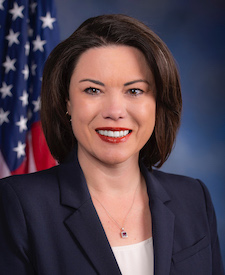
Rep. Angie Craig
Sponsored bills
K2 Veterans Care Act of 2021 This bill establishes a presumption of service-connection for certain diseases becoming manifest in a veteran who served on active duty at Karshi-Khanabad (K2) Air Base in Uzbekistan between January 1, 2001, and December 31, 2005. Specifically, there must be a presumption of service-connection for veterans who manifest illnesses that have a positive association with exposure to jet fuel, volatile organic compounds, high levels of particulate matter, depleted uranium, asbestos, or lead-based paint, as determined by the National Academies of Sciences, Engineering, and Medicine (NASEM). Under a presumption of service-connection, specific conditions diagnosed in certain veterans are presumed to have been caused by the circumstances of their military service. Health care benefits and disability compensation may then be awarded. Veterans who served at K2 Air Base during the specified period are eligible for Department of Veterans Affairs hospital care, medical services, and nursing home care for an illness that has been determined by NASEM to have a positive association with exposure to jet fuel, volatile organic compounds, high levels of particulate matter, depleted uranium, asbestos, or lead-based paint.
This bill provides for the presentation of a Congressional Gold Medal to the Freedom Riders, in recognition of their contribution to civil rights by fighting for equality in interstate travel.
New Markets Tax Credit Extension Act of 2021 This bill makes the new markets tax credit permanent. It also modifies the credit to (1) provide for an inflation adjustment to the limitation amount for the credit after 2021, and (2) allow an offset against the alternative minimum tax for the credit (determined with respect to qualified equity investments initially made after 2020).
Hospitality and Commerce Job Recovery Act of 2021 This bill extends existing and establishes new tax credits that assist the hospitality and restaurant industry. Specifically, it allows a conventionand trade show restart tax credit; extends the employee retention tax credit through 2021; suspends for taxable years 2021 through 2022, the limitation on entertainment expenses related to a trade or business, allows a restaurant and dining restart credit for businesses closed or forced to reduce services due to COVID-19 (i.e., coronavirus disease 2019); allows a 50% tax credit for travel expenditures; and allows a tax credit for unmerchantable inventory for the period between December 31, 2019, and before April 1, 2021.
National Apprenticeship Act of 2021 This bill provides statutory authority for the registered apprenticeship program within the Department of Labor and for related grant programs. The bill provides statutory authority for the Office of Apprenticeship (OA) within Labor. The OA's responsibilities include (1) supporting the development of apprenticeship models; (2) recognizing qualified state apprenticeship agencies, and operating apprenticeship offices in states without a recognized agency; (3) providing technical assistance to state agencies; (4) periodically updating requirements for each occupation in the apprenticeship program and determining whether to approve new occupations for the program; (5) promoting greater diversity in the national apprenticeship system; and (6) awarding grants provided by this bill. The bill also establishes in statute the responsibilities of state apprenticeship agencies and offices, including (1) providing technical assistance to stakeholders, (2) resolving complaints, (3) establishing state performance goals, and (4) including in its written plan a description of how its apprenticeship programs align with the skills needs of the state's employers. The OA shall enter into an agreement with the Department of Education to promote the integration and alignment of apprenticeship programs with secondary, postsecondary, and adult education. The OA shall award grants, contracts, or cooperative agreements to eligible entities to (1) expand national apprenticeship system programs, including by expanding pre-apprenticeship and youth apprenticeship programs; (2) encourage employer participation; and (3) strengthen alignment between the apprenticeship system and education providers. The bill provides statutory authority for criteria for various programs, including (1) quality standards for apprenticeships, (2) requirements for apprenticeship agreements between a program sponsor and an apprentice, and (3) acceptable uses for grant funds awarded by this bill. The bill also provides statutory authority for the National Advisory Committee on Apprenticeships. The committee's duties shall include advising the OA on matters relating to this bill and providing recommendations on topics such as increasing the participation of populations not traditionally involved in the national apprenticeship system. Labor shall engage an independent entity to conduct research on ways to improve the management and effectiveness of national apprenticeship system programs.
Charlotte Woodward Organ Transplant Discrimination Prevention Act This bill expressly prohibits health care providers and other entities involved in matching donated organs with recipients from denying or restricting an individual's access to organ transplants solely on the basis of the individual's disability, except in limited circumstances. Specifically, these entities may consider an individual's disability when making decisions about transplants only if a physician finds, based on an individualized evaluation, that the individual's physical or mental disability is medically significant to the provision of the transplant. A disability shall not be considered medically significant if the individual has an adequate support system in place to comply with transplant-related medical requirements. These entities must also make reasonable changes to their policies to make transplants and related care more available to individuals with disabilities. Aggrieved individuals may bring claims of discrimination to the Office of Civil Rights of the Department of Health and Human Services or before a federal court. The bill provides for expedited resolutions of these claims.
Living Donor Protection Act of 2021 This bill prohibits certain insurance carriers from discriminating against, and provides other protections for, living organ donors. Specifically, carriers may not deny, cancel, or otherwise impose conditions on policies for life insurance, disability insurance, or long-term care insurance based on an individual's status as a living organ donor. The bill also expressly specifies that recovery from organ-donation surgery constitutes a serious health condition that entitles eligible employees to job-protected medical leave. In addition, the Department of Health and Human Services must update educational materials on live organ donation to include information about the benefits of live organ donation and about access to insurance for living organ donors.
Paycheck Protection Clarification for Producers Act This bill expands eligibility for agricultural producers under the Paycheck Protection Program, established to support small businesses in response to COVID-19 (i.e., coronavirus disease 2019), to include certain agricultural producers such as partnerships or limited liability companies. Currently, only certain agricultural producers that are sole proprietorships, independent contractors, or self-employed individuals may receive support under the program.
Next Generation Entrepreneurship Corps Act This bill establishes the Next Generation Entrepreneurship Corps Program to promote entrepreneurship in the most distressed regions of the United States, including those regions affected by COVID-19 (i.e., coronavirus disease 2019), by awarding participating fellows a two-year stipend to start and grow a new small business. Fellows will receive (1) a $120,000, two-year stipend for living and basic startup expenses; (2) health care; and (3) interest-free federal student loan deferral for two years. Further, fellows shall receive mentorship from the Service Corps of Retired Executives and be matched with a full range of lenders, investors, and insurers. The bill also establishes a fund in the Department of the Treasury from which the SBA may provide loans for qualified investors to support a small business owned and operated under the program by a fellow.