

Broadening Online Opportunities through Simple Technologies Act or the BOOST Act This bill allows an individual taxpayer to elect a tax credit for 75% of qualified signal booster expenditures up to $400 in a single taxable year through 2025. The bill defines qualified signal booster expenditures as amounts paid for the purchase of any communications signal booster for use by the taxpayer in a principal residence located in an underserved area. The booster is designed to increase the strength or range of a broadband communications signal.
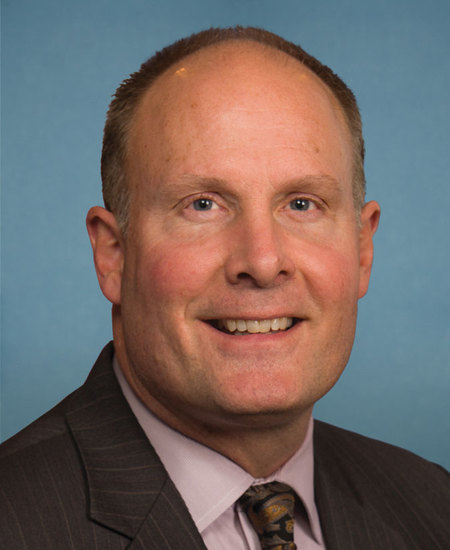
Rep. John R. Moolenaar
Sponsored bills
Main Street Tax Certainty Act This bill makes permanent the tax deduction for qualified business income. (Under current law, the deduction expires after December 31, 2025.) Qualified business income is defined as the net amount of qualified items of income, gain, deduction and loss with respect to any trade or business, excluding capital gains or losses, dividends, interest income, or income earned outside the U.S.
National Right-to-Work Act This bill repeals those provisions of the National Labor Relations Act and the Railway Labor Act that permit employers to make an agreement with a labor union to require employees to join such union as a condition of employment. Currently, at least 27 states have enacted laws prohibiting employers from compelling employees to become members of a union as a condition of employment.
Fair and Open Competition Act or the FOCA Act This bill prohibits federal construction contracts or controlling documents for federally supported construction projects from requiring or prohibiting project labor agreements. Such documents also may not discriminate against or give preference to a bidder or contractor who signs or refuses to sign a project labor agreement. An agency may exempt a project from this prohibition to avert an imminent threat to public health or safety or to serve the national security.
Head Start for Our Future Act This bill adds child development and early learning to the list of community services in which undergraduate, graduate, and professional students may participate under a federal work-study program.
Iran Hostages Congressional Gold Medal Act This bill requires the Speaker of the House of Representatives and the President pro tempore of the Senate to arrange for the award of a Congressional Gold Medal commemorating the bravery and endurance of the 53 hostages of the Iran Hostage Crisis. Following its award, the medal shall be given to the National Museum of American History of the Smithsonian Institution for display and research. The Department of the Treasury must strike duplicate medals in silver for presentation to a hostage (or the personal representative of a deceased hostage), and Treasury may also strike and sell duplicate medals in bronze.
Accelerating Carbon Capture and Extending Secure Storage through 45Q Act or the ACCESS 45Q Act This bill extends the tax credit for carbon oxide sequestration through 2035 and allows taxpayers an election to receive payments in lieu of the credit. The bill also permits an allowance of the carbon oxide tax credit against the base erosion minimum tax. The base erosion minimum tax is a tax on large corporation that is calculated after adding back to taxable income certain deductible payments made to related foreign persons.
"Six Triple Eight" Congressional Gold Medal Act of 2021 This bill directs the Speaker of the House of Representatives and the President pro tempore of the Senate to arrange for the award of a Congressional Gold Medal in honor of the women of the 6888th Central Postal Directory Battalion (commonly known as the Six Triple Eight) in recognition of their pioneering military service, devotion to duty, and contributions to increase the morale of personnel stationed in the European theater of operations during World War II. The medal shall be given to the Smithsonian Institution and made available for display and research.
Small Business PPE Tax Credit Act This bill allows certain small businesses a tax credit for qualified personal protective equipment expenses, up to $25,000 in a taxable year. The entities eligible for such credit include farms, veterans organizations, and tribal business concerns. The bill defines qualified personal protective equipment expenses to include the cost of equipment for reducing the risk of coronavirus (i.e., the virus that causes COVID-19) transmission, including gloves, medical masks and protective gear, and cleaning supplies.
Education Freedom Scholarships and Opportunity Act This bill allows individual and corporate taxpayers a tax credit for cash contributions to tax-exempt scholarship-granting organizations for elementary and secondary education expenses. It imposes a cap of $5 billion on the amount of contributions that qualify for a tax credit. The bill directs the Department of Education, in coordination with the Department of the Treasury, to establish, host, and maintain a web portal that (1) lists all eligible scholarship-granting organizations; (2) enables contributions to such organizations; (3) provides information about the benefits of this bill; and (4) enables a state to submit and update information about its programs and scholarship-granting organizations, including information on student eligibility and allowable educational expenses.