

Maddy summaryThis bill, titled the Dignity and Due Process for Children Act of 2026, restricts how unaccompanied children under 18 are handled by immigration authorities in the United States. It requires immigration judges to issue an arrest warrant before detaining these children pending removal decisions and prohibits the use of military personnel or Department of Defense vehicles to transport them for deportation, except during declared natural disasters. Additionally, the law forbids government agencies from pressuring children to sign legal documents that affect their status without first ensuring they have confidential access to a lawyer, mandating legal referrals within five business days if a child does not already have one.
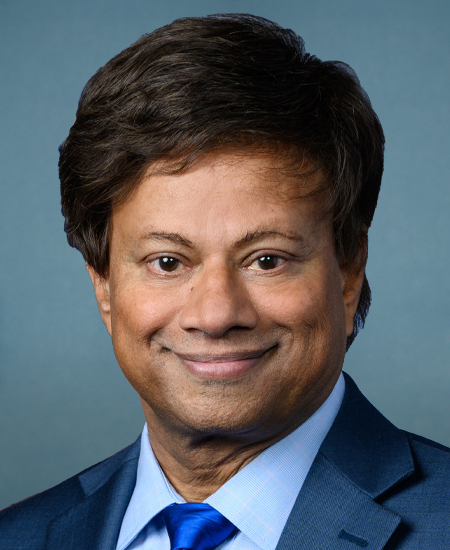
Rep. Shri Thanedar
Sponsored bills
Maddy summaryThis bill requires states and tribal organizations that run school lunch programs to also participate in the Summer EBT program, which provides food assistance to children during summer breaks. For the summers of 2024 through 2026, participation in the summer program remains voluntary for these entities. Starting in summer 2027, joining the summer program becomes mandatory for any state or tribal organization that already participates in the school lunch program. The legislation also updates administrative rules to ensure states submit management plans for these programs by specific deadlines each year.
Maddy summaryHR 5408, the Faster Labor Contracts Act, requires employers to begin negotiating a first contract with a newly certified union within 10 days of written request. If no agreement is reached within 90 days, the parties must seek mediation, and if unresolved after 30 days of mediation, the dispute moves to binding arbitration by a three-member panel. The arbitration decision, based on factors like employer finances, industry standards, and cost of living, becomes binding for two years. This bill directly affects newly certified unions and their employers during initial contract negotiations, aiming to reduce delays that currently average 465 days.
Maddy summaryThis resolution expresses support for designating June 5, 2026, as National Gun Violence Awareness Day and June 2026 as National Gun Violence Awareness Month. The bill calls on the public to wear orange on the designated day to honor victims and promote awareness of gun safety. It highlights statistics on gun-related deaths and injuries to underscore the need for community discussions on making neighborhoods safer.
Maddy summaryThis bill modifies the U.S. Bankruptcy Code to allow individuals to request a court determination of whether their student loans should be discharged based on "undue hardship" at the time they file for bankruptcy. Currently, such a request can only be made after a loan repayment plan has failed, but this legislation would enable debtors to seek this relief immediately upon filing. The change applies only to bankruptcy cases that begin on or after the date the law is enacted. By allowing earlier evaluation, the bill aims to provide a clearer path for borrowers facing financial difficulty to potentially eliminate their student loan debt during the bankruptcy process.
Maddy summaryThis resolution expresses support for designating May 2026 as Mental Health Awareness Month to highlight the importance of mental well-being and reduce stigma. It does not create new laws or allocate funding but serves as a formal statement acknowledging the rising rates of mental illness, suicide, and disparities in care across the United States. The text cites various statistics regarding anxiety, depression, and access to treatment to underscore the need for public awareness and continued efforts by medical and community organizations. Ultimately, the bill encourages citizens and institutions to use this month to promote mental health resources and support for individuals and families affected by mental illness.
Maddy summaryThe Celiac Safety Act of 2026 officially classifies gluten-containing grains as a major food allergen under federal law, directly impacting the food industry and individuals with celiac disease or gluten intolerance. This change requires manufacturers to label products containing wheat, rye, barley, or their crossbred hybrids with the same prominence as other major allergens like milk. The new labeling requirements will not take effect until 18 months after the law is enacted, giving businesses time to adjust their packaging and production processes.
Maddy summaryThe American High-Speed Rail Act expands federal funding and streamlines regulations to support the development of high-speed and higher-speed rail projects across the United States. It authorizes billions of dollars in grants for corridor planning, technology improvements, and construction, while allowing the federal government to cover up to 100% of project costs under specific conditions. The bill also introduces new provisions to facilitate land acquisition, prioritize border projects, and extend labor protections to workers involved in federally funded rail infrastructure. Additionally, the legislation defines higher-speed rail as trains traveling between 110 and 186 miles per hour and includes tax incentives for rail carriers that sell or lease property to support these projects.
Maddy summaryThis resolution condemns specific racist rhetoric directed at Indian and Chinese Americans and calls on all elected officials, including the President, to stop using language that promotes racial or ethnic division. It specifically addresses recent statements made by the President that characterized immigrants from India and China in derogatory terms and linked them to negative stereotypes. The bill affirms that immigrants from all backgrounds are vital to the United States and declares that attacks based on national origin are un-American. While it does not change laws or policies, it serves as a formal statement of disapproval from the House of Representatives regarding the targeted hate speech.
Maddy summaryThe Stay Cool Act establishes a comprehensive framework to help communities prepare for and respond to extreme heat events by creating cooling centers, improving housing conditions, and enhancing urban infrastructure. It directs federal funding to states and local governments to build and equip cooling facilities, install air conditioning in public housing, and develop green spaces and water features to lower temperatures. The bill also creates a national system to track heat-related health risks, mandates checks on vulnerable seniors during heatwaves, and allows tax credits for businesses that keep their doors open during heat emergencies. Additionally, it requires updates to utility assistance programs to account for cooling costs and calls for studies on heat-related mortality and safe residential temperature standards.