

Maddy summaryHCONRES 68 would require the President to remove U.S. military forces from Venezuela unless Congress has explicitly authorized their use through a declaration of war or a specific law. This applies to any U.S. Armed Forces currently stationed in Venezuela without such authorization. The resolution is based on the War Powers Resolution, which mandates congressional oversight of military deployments. It directs the immediate withdrawal of unapproved forces without adding new time limits or conditions.
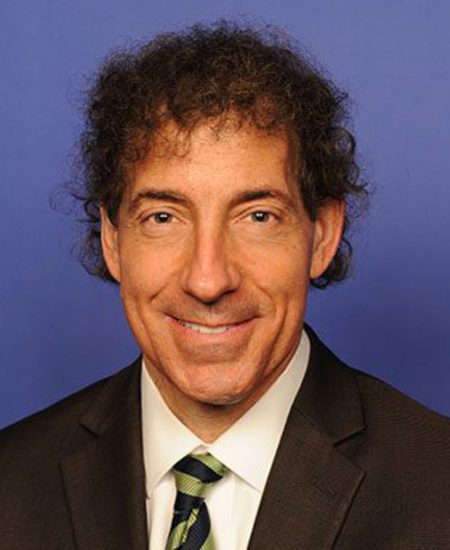
Rep. Jamie Raskin
Sponsored bills
Maddy summaryThis resolution designates July 6, 2025, as "A Day of Compassion" to commemorate the 90th birthday of the Dalai Lama. It expresses congressional support for the Tibetan people's human rights, religious freedom, and cultural/linguistic protections. The resolution affirms that decisions about Tibetan Buddhist religious leadership - including the selection of a future Dalai Lama - must be made by Tibetan Buddhist authorities, not the Chinese government. It does not create new laws or policies but serves as a symbolic expression of support through congressional recognition.
Maddy summaryThis bill amends the Department of Defense's Transition Assistance Program (TAP) and the Department of Veterans Affairs' Solid Start Program to enhance mental health support during military-to-civilian transitions. It requires TAP to provide specific information on suicide risk factors (including depression, homelessness, and relationship strain), treatment options for conditions like PTSD and substance abuse, and the impact of losing social support systems. The Solid Start Program must now assist veterans in enrolling in VA healthcare and educate them about available mental health resources. The Secretaries of Defense and Veterans Affairs must jointly report to Congress within one year on the materials developed under these changes.
Maddy summaryThe Find It Early Act requires most health insurance plans, Medicare, Medicaid, TRICARE, and VA benefits to cover certain breast cancer screenings without cost-sharing for specific at-risk groups. It affects individuals at increased breast cancer risk (as determined by medical guidelines), those with dense breast tissue (as defined by the American College of Radiology), and others requiring screening due to factors like age, race, ethnicity, or family history. The bill mandates coverage for various screening methods including mammograms, ultrasounds, MRI, and other technologies at frequencies recommended by the National Comprehensive Cancer Network. This requirement takes effect for plan years beginning January 1, 2026, removing financial barriers to early detection.
Maddy summaryHR 926, the Fort Pillow National Battlefield Park Study Act, directs the Secretary of the Interior to conduct a special resource study of Fort Pillow Historic State Park in Tennessee. The study will evaluate the site's national significance and determine if designating it as a National Battlefield Park is suitable and feasible. This bill does not change the park's current status as a state park (established 1971) or its existing National Register and National Historic Landmark designations. The study is prompted by the historical importance of the 1864 Fort Pillow Massacre, particularly its impact on U.S. Colored Troops during the Civil War, as detailed in congressional findings. The bill itself is procedural, focusing solely on authorizing the study to inform potential future designation.
Maddy summaryThis symbolic House resolution expresses U.S. congressional support for Iranian protesters demanding democracy and human rights. It condemns the Iranian regime's violent suppression of protests, including killings, mass arrests, and internet restrictions, while urging the regime to release political prisoners and restore communication access. The resolution reaffirms the Iranian people's right to self-determination through free elections and echoes a 2023 resolution (HCR 7) that similarly praised protesters. As a non-binding expression of support, it does not impose new policies or alter U.S. government actions.
Maddy summaryHR 6088, the *Restoring Food Security for American Families and Farmers Act of 2025*, repeals specific sections (10101-10108) from a prior reconciliation law. This action revives previous provisions related to food security programs that were modified by those repealed sections. The bill directly affects federal food assistance and agricultural support programs by restoring their prior legal framework. It does not create new policies but reverses recent changes to existing food security measures.
Maddy summaryThis bill updates federal nutrition law to include Puerto Rico in the Supplemental Nutrition Assistance Program (SNAP), allowing it to transition from its current funding method to the same SNAP benefits available to U.S. states. Puerto Rico must submit a 180-day plan to the USDA detailing its transition to SNAP, with approval required within another 180 days. The transition period lasts up to 5 years from the bill's effective date, during which Puerto Rico would continue receiving block grants while preparing for full SNAP participation. This change directly affects Puerto Rico's 1.4 million residents who currently receive nutrition assistance under a separate funding structure.
Maddy summaryThe MORE Act (HR 5068) would remove cannabis from the federal list of controlled substances, effectively decriminalizing it at the federal level while establishing a new tax on cannabis products. The bill creates an Opportunity Trust Fund that would distribute tax revenues to support communities disproportionately impacted by cannabis prohibition, including funding for expungement programs, job training, and equitable licensing initiatives for minority business owners. It also includes provisions to prevent discrimination based on cannabis use in federal programs, immigration proceedings, and workplace policies. The bill would require federal courts to expunge non-violent cannabis convictions and establish a process for resentencing individuals currently serving time for such offenses. These provisions aim to address racial disparities in cannabis enforcement and create more equitable opportunities in the legal cannabis industry.
Maddy summaryHR 7016, the "No Funds for NATO Invasion Act," blocks federal funding for any U.S. military invasion of a North Atlantic Treaty Organization (NATO) member country or territory covered by NATO's Article 5 mutual defense clause. The bill prohibits using any federal funds for such invasions and bans U.S. officials from executing these actions. It directly affects U.S. military operations and funding decisions involving NATO members. The law applies to all federal spending, preventing the use of existing budgets for this specific purpose.