

Maddy summaryHR 2161 prohibits the creation, transfer, or transport of specific human-animal biological hybrids (called "prohibited human-animal chimeras") as defined in the bill. It directly affects researchers and institutions conducting experiments that would create these hybrids, such as mixing human and nonhuman cells in embryos or engineering animals with human brains or facial features. Key provisions ban activities like transferring human embryos into nonhuman wombs or nonhuman embryos into human wombs, with penalties including up to 10 years in prison or $1 million civil fines for commercial violations. The bill explicitly excludes standard research involving transgenic animals with human genes or human organ transplants into animals, focusing only on the most extreme hybrid configurations.
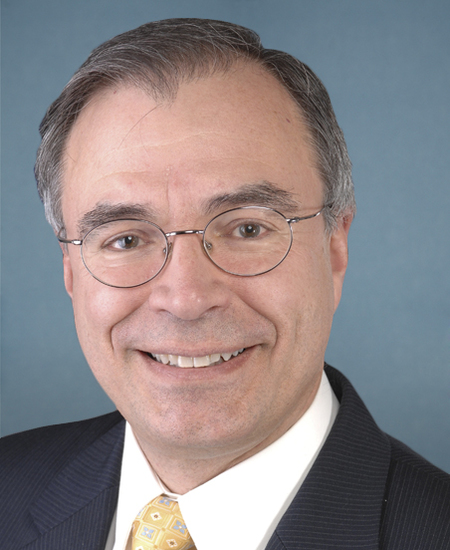
Rep. Andy Harris
Sponsored bills
Maddy summaryThis resolution urges the U.S. Secretary of State to designate Nigeria as a Country of Particular Concern (CPC) under the International Religious Freedom Act of 1998, citing ongoing violence against religious minorities. It specifically calls for Nigeria to protect religious minorities, prosecute perpetrators of attacks, and address displacement of millions caused by religiously motivated violence. The resolution also recommends increased U.S. diplomatic engagement with Nigeria and targeted sanctions against those responsible for religious freedom violations. This follows the State Department's omission of Nigeria from its CPC list in 2021-2023 and its 2024 failure to release an annual report.
Maddy summaryHR 2062 would allow taxpayers to deduct membership fees and medical expenses paid through health care sharing ministries (HCSMs) as medical expenses on their federal tax returns, similar to other health costs. It specifically adds HCSM membership to the list of deductible medical expenses under Internal Revenue Code Section 213(d)(1) and clarifies that HCSMs are not treated as health insurance under Section 7702C. This change directly affects individuals enrolled in HCSMs, which are faith-based or community-based cost-sharing groups operating outside traditional insurance. The bill would take effect for tax years beginning after December 31, 2025.
Resident Education Deferred Interest Act or the REDI Act This bill allows borrowers in medical or dental internships or residency programs to defer student loan payments until the completion of their programs.
Maddy summaryHR 2081, the Donut Dollies Congressional Gold Medal Act, authorizes a Congressional Gold Medal to honor the 627 women who served as Red Cross volunteers in the Supplemental Recreation Activities Overseas (SRAO) program during the Vietnam War. The bill directs the Treasury Secretary to design and strike the medal, which will be presented by Congress and then given to the Smithsonian Institution for display. It also allows the sale of bronze duplicates to cover costs, with proceeds going to the U.S. Mint fund. This commemorative act recognizes the volunteers' service supporting over 280,000 troops through recreation programs across Vietnam from 1965 to 1973.
Maddy summaryThis bill prohibits federal funding, support, or approval for research using human fetal tissue obtained from induced abortions. It allows research on tissue from miscarriages (under 20 weeks) or stillbirths (20+ weeks) under existing Public Health Service Act rules, and permits development of new cell lines for vaccines or genetic vectors if not derived from abortion tissue. The bill amends the Public Health Service Act to restrict federal research to tissue from miscarriages or stillbirths and clarifies definitions for terms like "miscarriage" and "stillbirth." It directly affects federal agencies like the NIH and researchers relying on federal grants for biomedical studies.
Maddy summaryHR 2039, the Protecting the Right to Keep and Bear Arms Act of 2025, prevents the President and Health Secretary from using emergency declarations (under the National Emergencies Act or Public Health Service Act) to implement gun control measures. It amends disaster relief law to explicitly prohibit future rules that would ban firearm possession, sales, or accessories during emergencies. The bill directly affects federal agencies and future emergency declarations, blocking them from being used as a tool for gun regulation. It does not change existing gun laws but restricts how emergency powers can be applied to firearms policy.
Maddy summaryThis resolution (HRES 204) removes Representative Al Green of Texas from the House Committee on Financial Services. It directly affects Rep. Green due to his conduct during the March 4, 2025, State of the Union address, where he repeatedly interrupted the President despite warnings from House staff and the Speaker. The resolution cites House Rule XXIII, which requires Members to behave in a manner reflecting creditably on the House, and notes Green's unrepentant attitude after being censured for his actions. The resolution is a disciplinary measure, not a policy change, and specifies his removal from the Financial Services Committee.
Maddy summaryThis resolution censures Representative Al Green (D-TX) for interrupting the President's State of the Union address on March 4, 2024, despite warnings from House staff and the Speaker. It requires Green to appear in the House chamber for the public reading of the censure resolution, as specified in the resolution's provisions. The resolution states his conduct breached decorum, degraded the joint session proceedings, and discredited the House. This is a procedural disciplinary action targeting Green's specific behavior during the 2024 State of the Union, not a policy change affecting broader groups.
Maddy summaryHR 1851 increases the minimum required fighter aircraft inventory for the Air Force and its reserve components to 1,900 total and 1,200 for the reserve by October 2030, up from current levels (Section 2). The bill allows temporary reductions below these totals for recapitalization, but only for up to two years and with a floor of 1,800 aircraft, requiring congressional notification (Section 2). It mandates quarterly reports to Congress detailing new aircraft acquisitions, assignments, retirements, and recapitalization plans for both active and Air National Guard units (Section 3). The bill specifically protects 25 existing Air National Guard fighter squadrons from fleet reductions until 2030 and requires new aircraft to be assigned to service-retained units at a 3:1 ratio with legacy aircraft retirements (Sections 5, 6).