

Safeguard American Voter Eligibility Act or the SAVE Act This bill requires individuals to provide documentary proof of U.S. citizenship when registering to vote in federal elections. Specifically, the bill prohibits states from accepting and processing an application to register to vote in a federal election unless the applicant presents documentary proof of U.S. citizenship. The bill specifies what documents are considered acceptable proof of U.S. citizenship, such as identification that complies with the REAL ID Act of 2005 that indicates U.S. citizenship. Further, the bill (1) prohibits states from registering an individual to vote in a federal election unless, at the time the individual applies to register to vote, the individual provides documentary proof of U.S. citizenship; and (2) requires states to establish an alternative process under which an applicant may submit other evidence to demonstrate U.S. citizenship. Each state must take affirmative steps on an ongoing basis to ensure that only U.S. citizens are registered to vote, which shall include establishing a program to identify individuals who are not U.S. citizens using information supplied by certain sources. Additionally, states must remove noncitizens from their official lists of eligible voters. The bill allows for a private right of action against an election official who registers an applicant to vote in a federal election who fails to present documentary proof of U.S. citizenship. The bill establishes criminal penalties for certain offenses, including registering an applicant to vote in a federal election who fails to present documentary proof of U.S. citizenship.
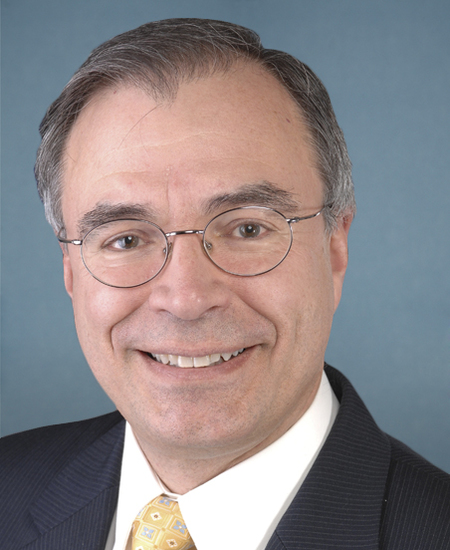
Rep. Andy Harris
Sponsored bills
Maddy summaryThis resolution recognizes Tren de Aragua members as "alien enemies" under the 1798 Alien Enemies Act, affirming the President's authority to apprehend and remove them from the U.S. It does not create new law but supports the executive action taken under existing legal authority. The resolution specifically references the President's March 2025 proclamation declaring Tren de Aragua's activities constitute an invasion, citing its presence in 19 states and alleged violent actions against law enforcement.
Maddy summaryHR 2552, the RIFLE Act, repeals the federal tax on firearm transfers (Section 5811 of the Internal Revenue Code). This directly affects firearm sellers and purchasers by removing the tax paid when transferring firearms. The bill also updates related tax code references to reflect the repeal and specifies the tax removal applies to transfers after the law's enactment. It clarifies that the repeal does not change how firearms are regulated under the National Firearms Act or involve the Consumer Product Safety Commission.
Maddy summaryThe Free Speech Fairness Act (HR 2501) would amend tax law to allow 501(c)(3) organizations, such as charities and educational nonprofits, to make political campaign statements as part of their regular activities without risking their tax-exempt status. The bill specifies that these statements must be made in the ordinary course of the organization's exempt purpose and result in only minimal additional costs. This change clarifies that routine political commentary by these groups does not violate their tax-exempt status under current rules. The provision would apply to tax years beginning after the bill's enactment.
Maddy summaryHJRES 82 disapproves the District of Columbia Council's approval of the Insurance Regulation Amendment Act of 2024 (D.C. Act 25-699), a local law that would have amended insurance regulations in Washington, D.C. This procedural resolution, submitted under the District of Columbia Home Rule Act, allows Congress to reject the District's legislative action. The bill itself does not change insurance regulations but formally expresses disapproval of the District's law, preventing it from taking effect.
Maddy summaryThis bill amends the Immigration and Nationality Act to bar individuals who enter the U.S. unlawfully from becoming naturalized citizens. It directly affects undocumented immigrants seeking citizenship, stating they are ineligible regardless of other immigration pathways. The key provision adds a new rule to Section 312, explicitly prohibiting naturalization for anyone who entered without authorization. The policy change removes a potential avenue for citizenship for this group, making unlawful entry a permanent disqualification.
Maddy summaryThe SHORT Act (HR 2395) redefines federal firearm definitions to exclude antique and collector firearms from being classified as firearms, and removes distinctions between short-barreled rifles and shotguns in federal regulations. It prevents state laws from imposing taxes or registration requirements on short-barreled rifles and shotguns, requiring state rules to align with federal compliance instead. The bill also mandates the federal government to destroy specific records related to these firearms within one year of enactment.
Maddy summaryThe Freedom from Unfair Gun Taxes Act of 2025 would prohibit states and local governments from imposing taxes on the sale of firearms, ammunition, or firearm parts during interstate or foreign commerce. This bill directly affects state tax policies and manufacturers or dealers selling these items across state lines. It explicitly states that the bill does not change the existing federal tax on firearms and ammunition that funds wildlife conservation programs. The key provision bans state-level taxes for these sales in interstate transactions while preserving current federal funding mechanisms.
Maddy summaryThis bill amends Title IX to prohibit individuals assigned male at birth (based on reproductive biology and genetics at birth) from using locker rooms designated for females during active use in school programs. It directly affects transgender girls and schools implementing gender-segregated facilities. The key provision makes it unlawful under federal law to use such facilities when they are actively used by individuals of a different sex. The policy change takes effect 30 days after enactment.
Maddy summaryHR 2387, the "No Harm Act," prohibits federal funding for certain medical treatments for minors that the bill defines as "sex-trait altering treatments," including puberty blockers, hormone therapy, and gender reassignment surgeries (except for specific medical conditions like disorders of sex development). The bill directly affects minors receiving such care, healthcare providers, medical institutions, and schools, requiring parental consent for any treatment and banning federal funds for facilities or schools that provide these treatments without parental approval. Key provisions include banning federal funds for any promotion or facilitation of these treatments, mandating a 72-hour parental consultation period before treatment, and creating civil lawsuits for violations. The bill defines "sex" as biological sex at birth and "gender" as social aspects, excluding only treatments for medically verified conditions.